

The Spearin doctrine in construction decides who carries the cost when work is built exactly as drawn and still fails. It comes from a 1918 Supreme Court case and it turns on one question: did the documents say how to build the work, or only what it had to do? What follows covers the test, the exceptions, and where the rule runs out.
This podcast is also available on YouTube, Spotify, and Apple Podcasts.
Test yourself! This episode has a free 10-question Spearin doctrine quiz at the bottom of this page.
Who Pays When the Drawings Are Wrong?
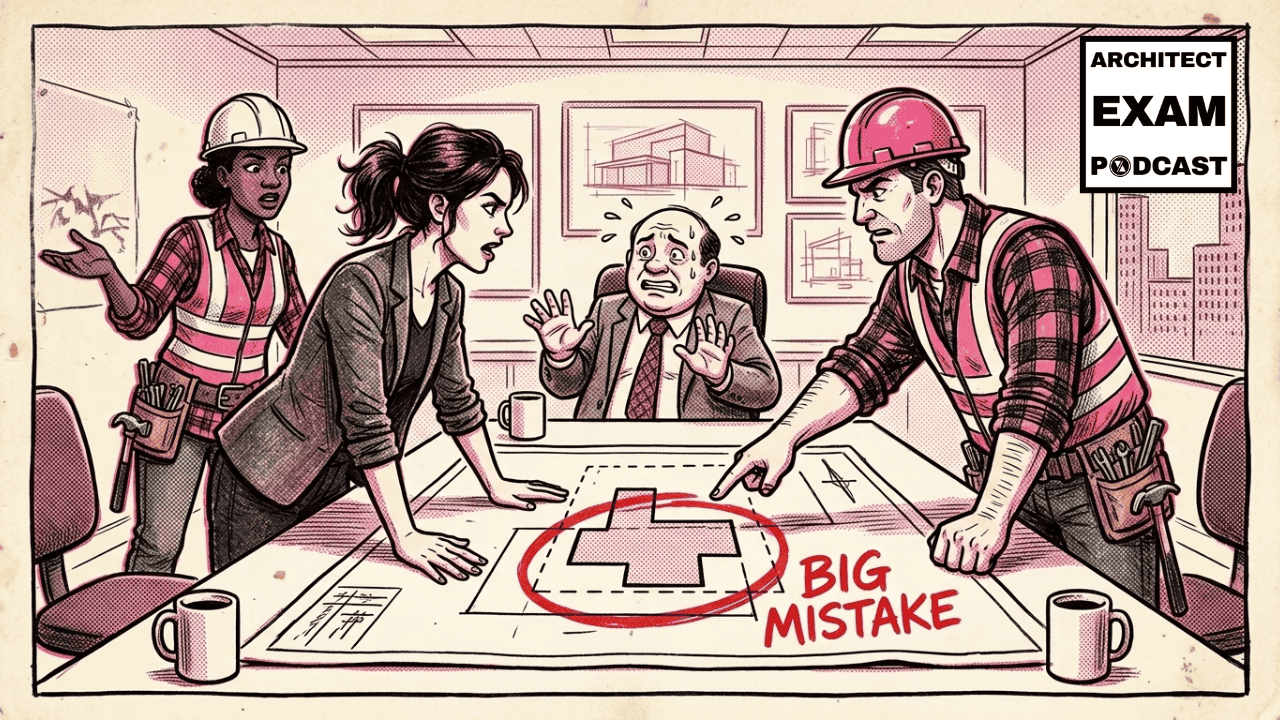
Three people around a conference table. One set of drawings unrolled across it, corners weighted down with coffee cups nobody is drinking.
Nobody is shouting. It is worse than that. Everyone is being extremely polite.

The retaining wall went up last spring, built exactly as the civil drawings showed it.
Specified backfill. Specified compaction. Specified drainage. Every one of those was somebody else’s decision before it was the contractor’s problem.
Inspected. Approved. Signed off.
Four months later the soil behind it slumped and the wall started leaning.
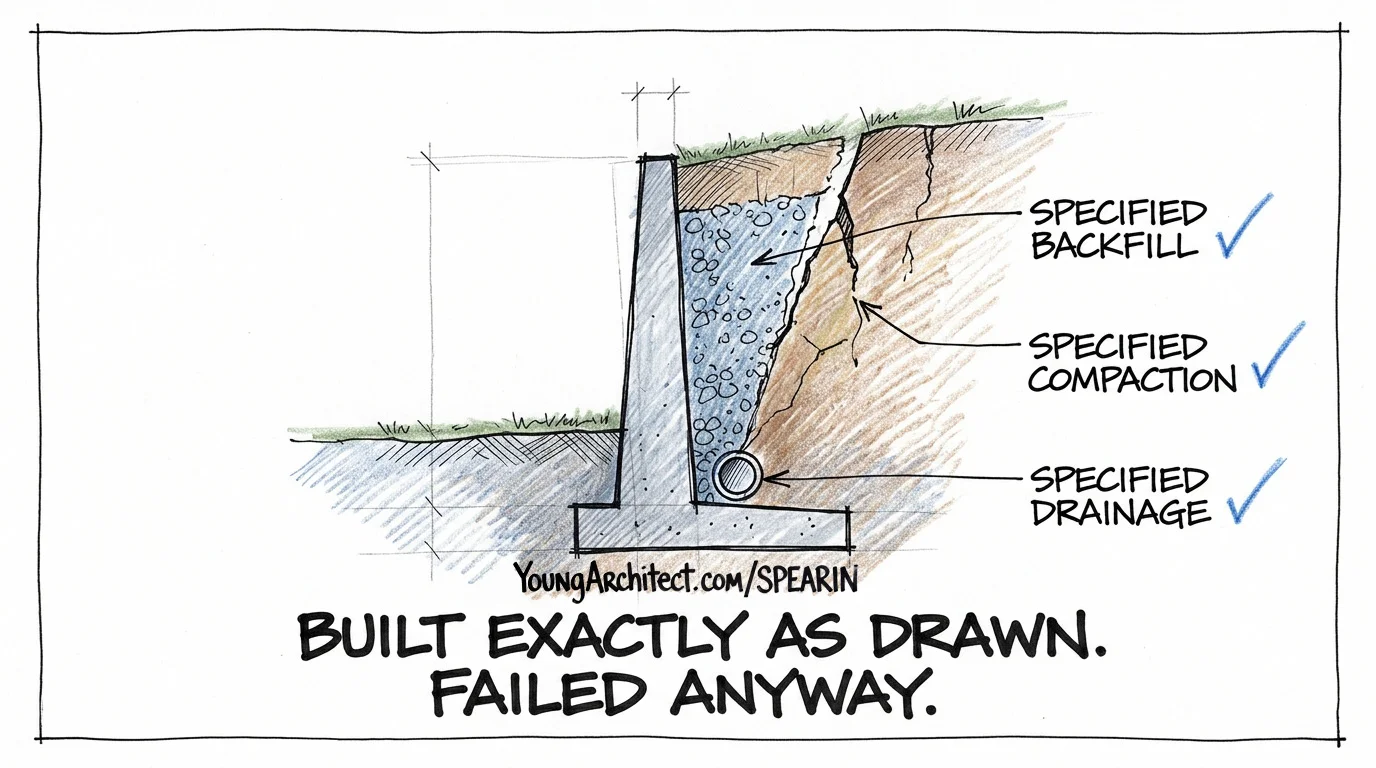
The owner is not paying for it twice. They already bought a complete set of documents and this is what those documents produced.
The contractor built what was drawn. Every line of it.
And somebody, surely, should have caught this before anyone poured concrete.
The strange part is that nobody in that room is wrong. Each of them is describing exactly what happened, accurately, from where they are sitting.
But one of those three people is already right, and has been since 1918. The rule that decides it is the Spearin doctrine, and most people arguing in rooms like that one have never heard of it.
No one in that room is wrong. But one of those three people is already right.
If this is starting to sound like the opening act of a long and expensive fight, that is because construction claims and disputes almost always start exactly here.
What Is the Spearin Doctrine?
When an owner hands a contractor a detailed set of drawings and specifications telling them precisely what to build and how to build it, the owner is making a promise. Not a casual one. A legal one.
The promise is that those documents will work if the contractor follows them.
The Spearin doctrine is a promise about the outcome, not about the effort that went into it.
Think of it like assembling a bookshelf from a box.
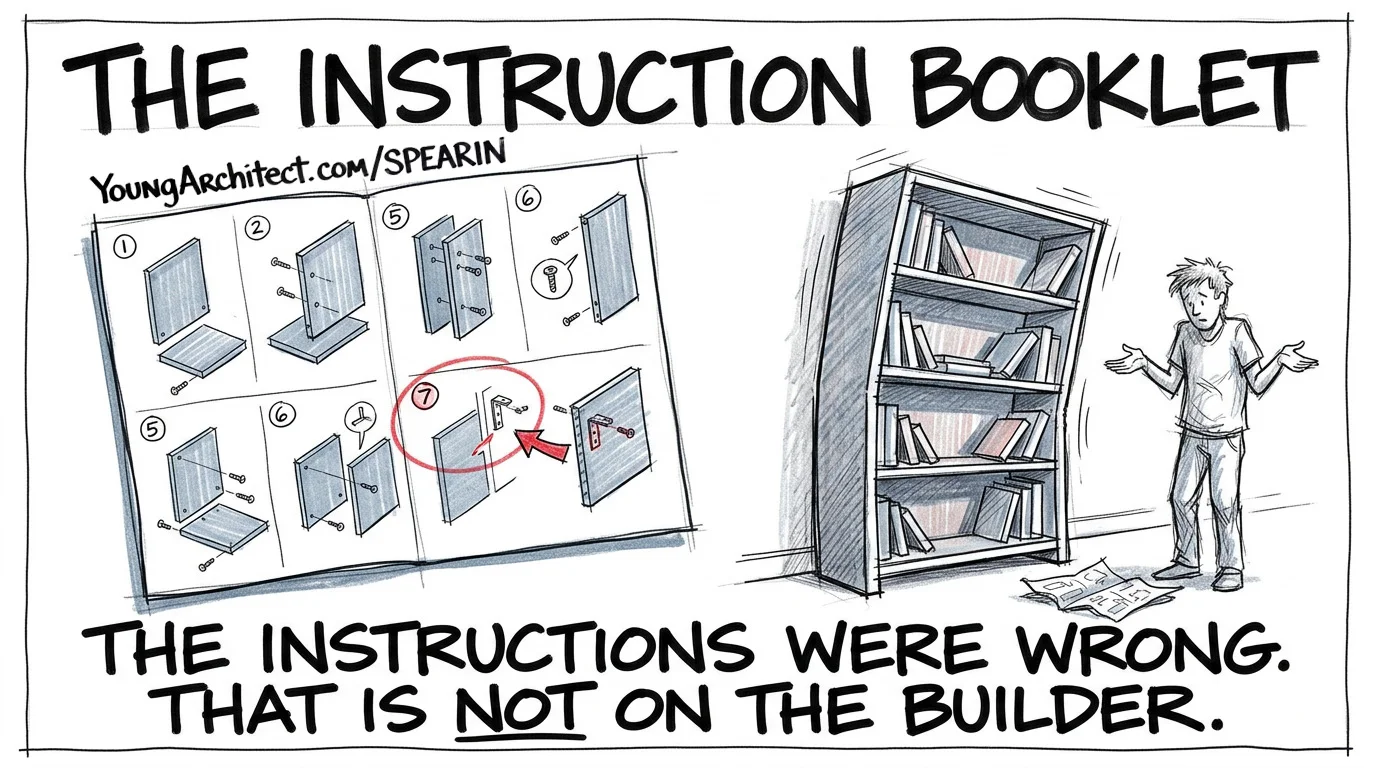
The booklet tells you which panel, which bracket, which screw, in which order. You follow it exactly. You improvise nothing.
If that shelf comes out wobbly, one of those steps was wrong. You did everything you were told and the result still failed. That is not on you.
Now flip it.
No booklet. Just a requirement taped to the wall: hold my record collection, and do not sag.
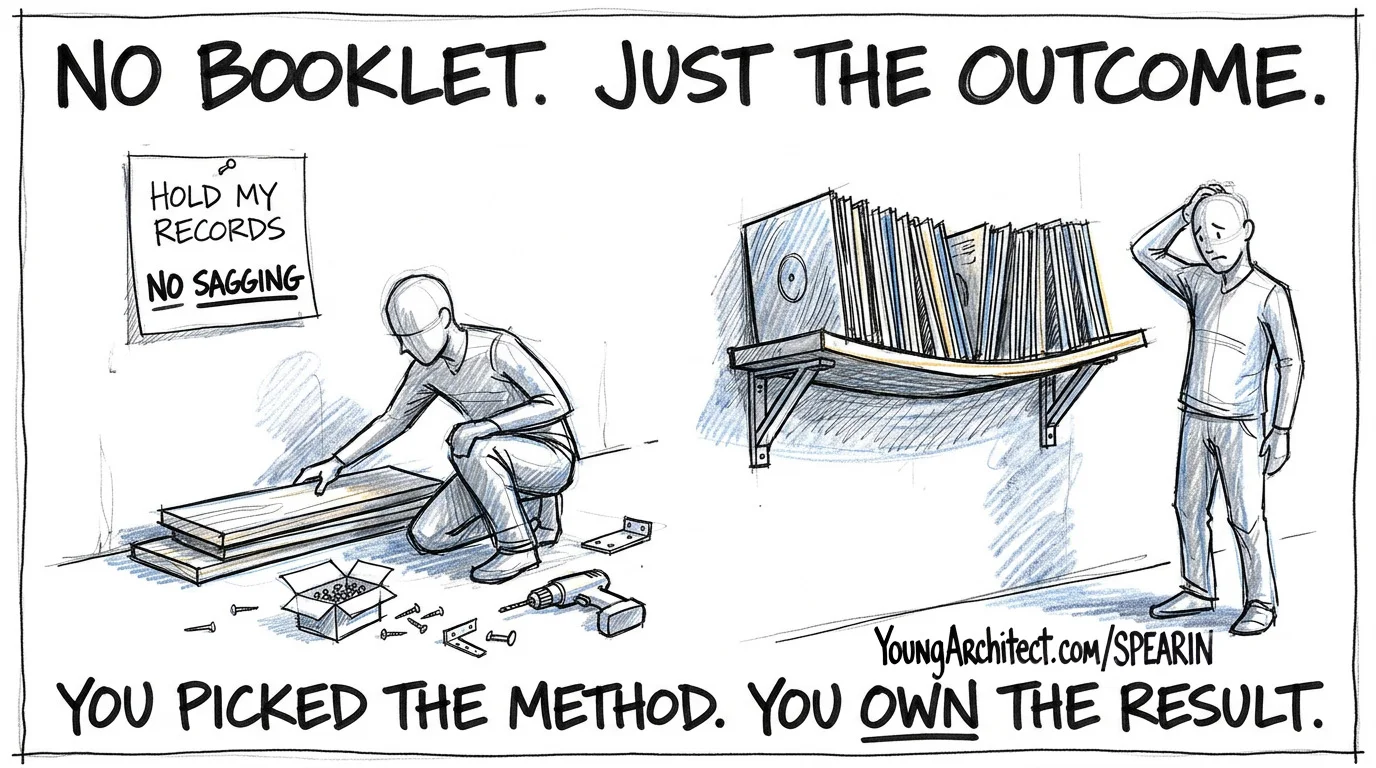
You pick the wood. You pick the joint. You pick how it attaches. Same wobbly shelf at the end of the afternoon, and this time it is completely on you.
Same shelf. Same failure.
The only thing that changed is who wrote the instructions.
That is the whole doctrine, and it got its name from a 1918 Supreme Court case called United States v. Spearin.
The long form name is the implied warranty of plans and specifications, which is the phrasing CDT®, CCCA® and CSI® reference material tends to use. Despite the shared wording, this is not one of the implied warranties that attach to goods under the UCC.
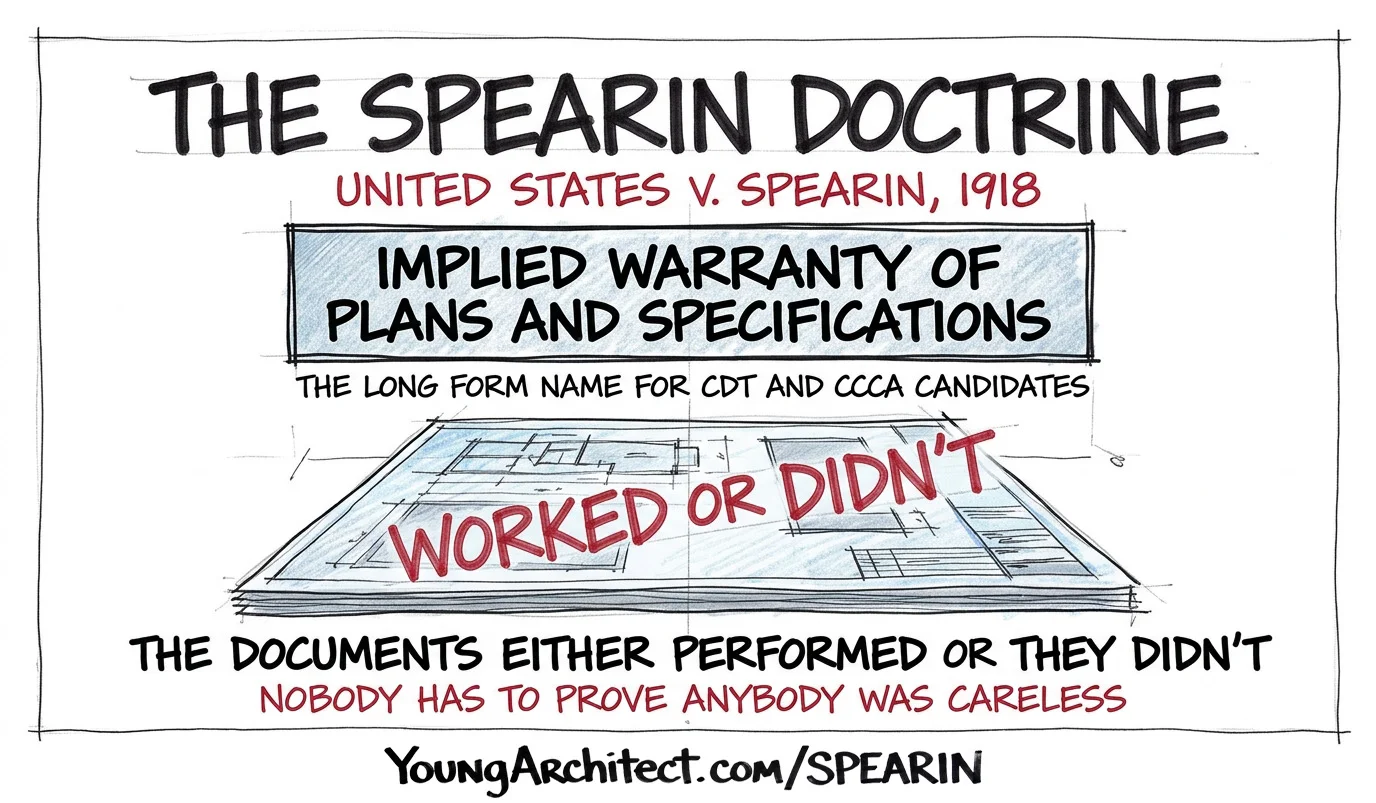
The part that surprises people: nobody has to prove anybody was careless.
In most fights over who owes whom money, somebody has to show the other side did something wrong. Here that question never comes up.
The documents either worked, or they didn’t.
Design Specifications vs Performance Specifications
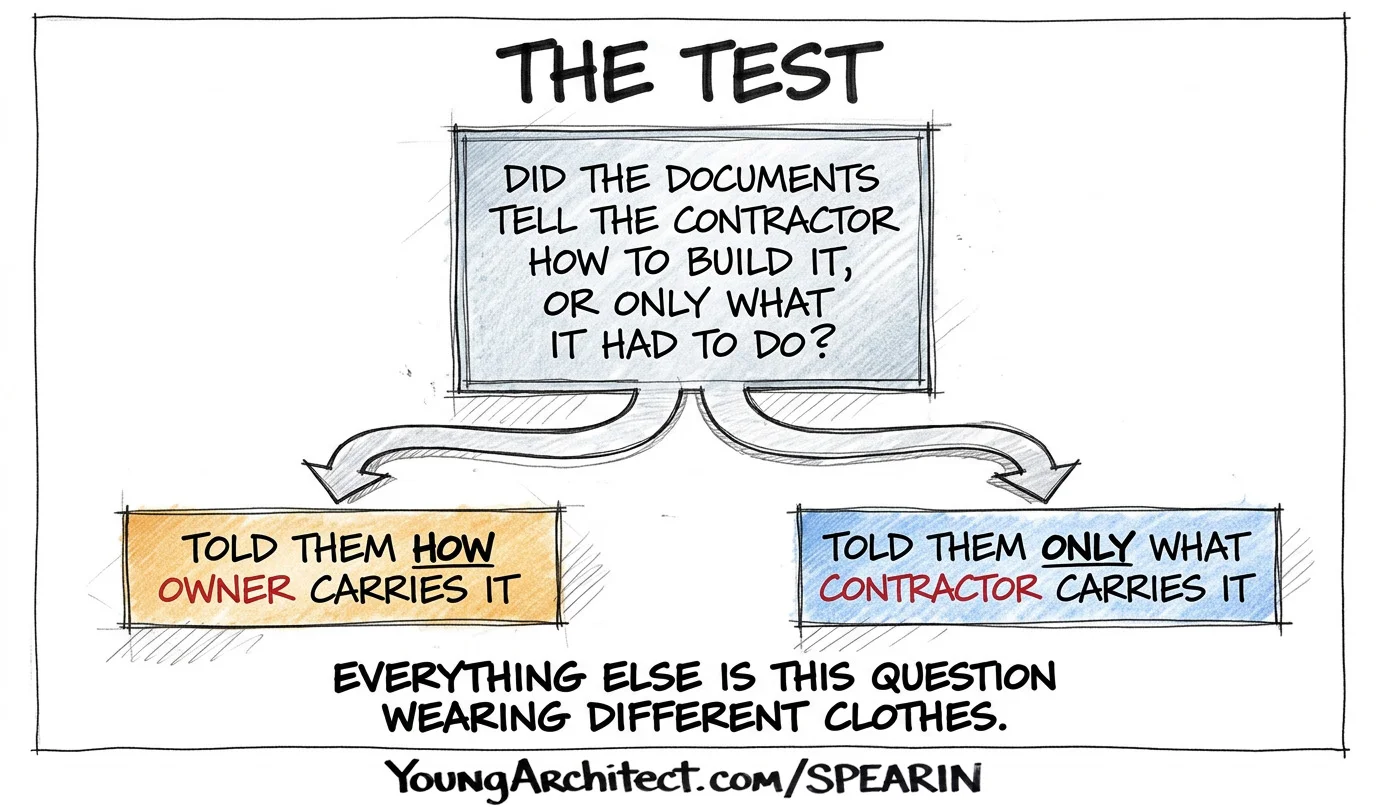
Before the vocabulary, the test. It is one question and it decides everything downstream.
Did the documents tell the contractor how to build it, or only what it had to do?
Told them how, the owner carries it. Told them only what, the contractor carries it.
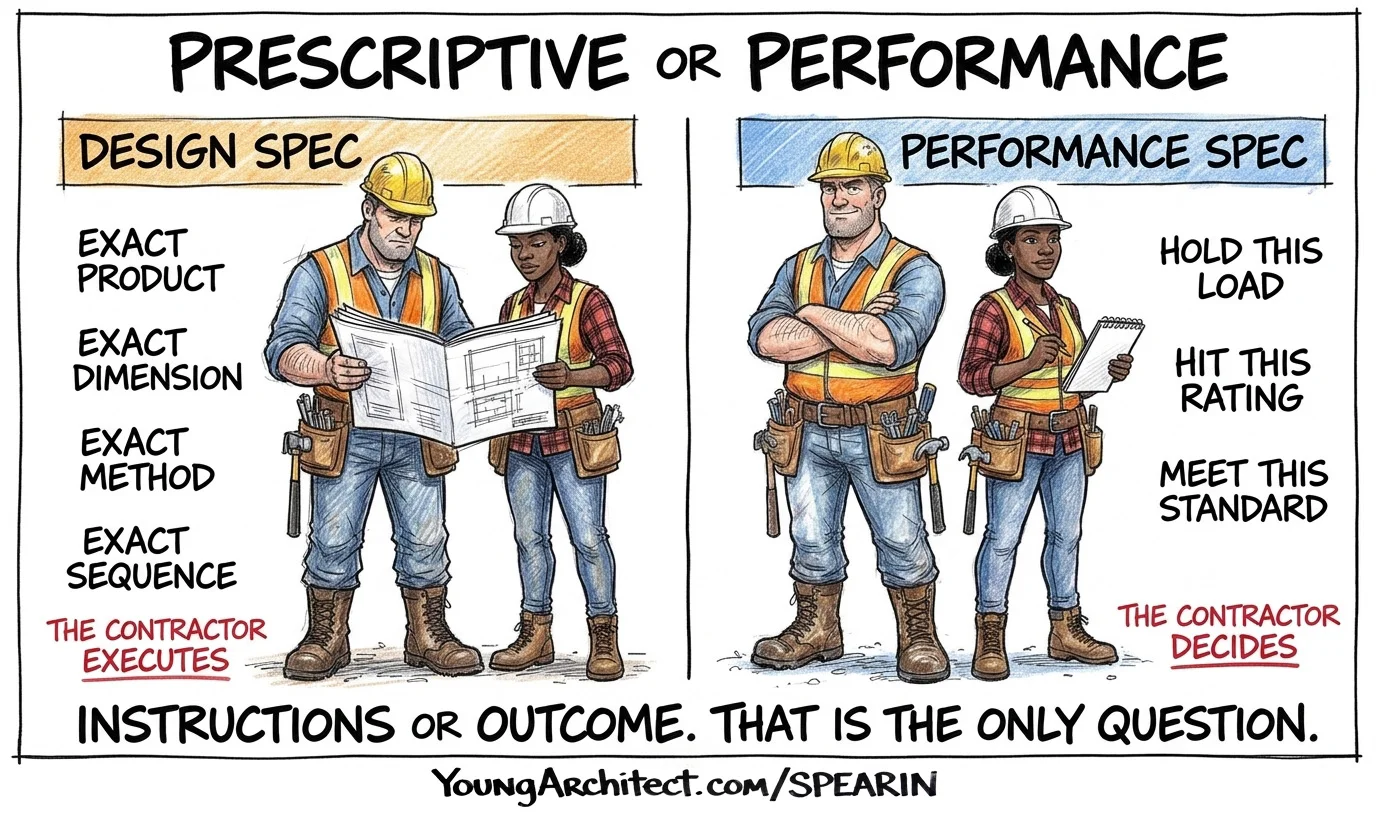
A design specification, also called a prescriptive specification, leaves no room. Exact product. Exact dimension. Exact method. Exact sequence. The contractor executes and makes no judgment calls.
A performance specification states the outcome and walks away from the means. Hold this load. Hit this rating. Do not sag. How you get there is your problem and your expertise.
Those are the two the Spearin doctrine actually turns on. They are not the only two that exist, and if you write specifications for a living, the full range of specification types is worth an hour on its own.
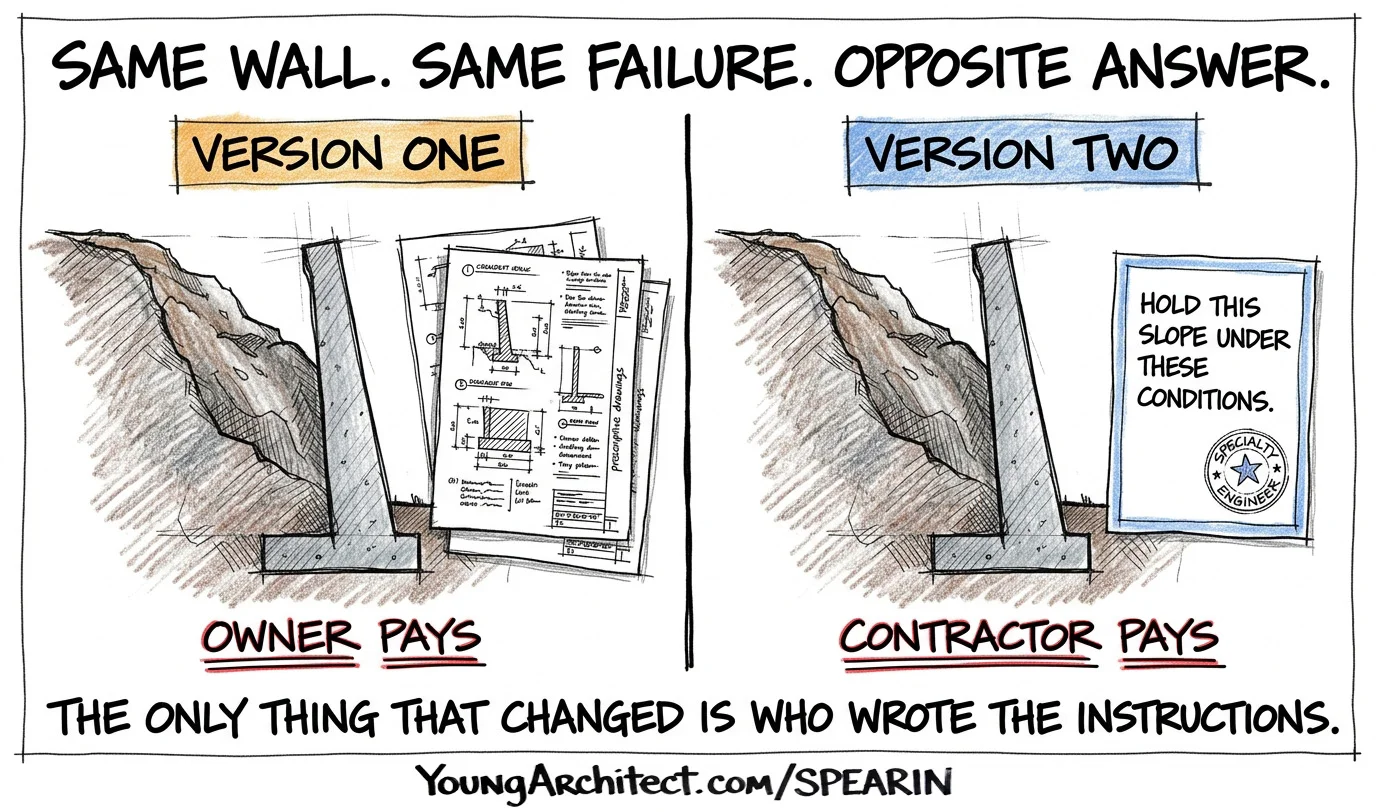
Run the leaning wall through the test both ways.
Version one. The drawings dictate the backfill material, the compaction, the drainage, the geometry. The contractor builds exactly that. It leans. The owner pays.
Version two. The documents say: give us a wall that holds this slope under these conditions. The contractor’s engineer sizes it, seals it, builds it. It leans. The contractor pays.
Same wall. Same failure. Opposite answer.
The documents in those two versions look nothing alike, which is its own reason to understand how drawings and specifications work together before they end up contradicting each other on a job.
Which means the person writing the specification is making a choice, whether or not they know it.
You can write the instructions and own whether they work. Or you can write the ask and hand the means to somebody who will stamp it.
Both are honest. Neither is the safe one.
The failure mode is doing both at once: dictating the method in detail and still demanding the contractor guarantee the result. That hybrid shows up often enough to have earned its own place among the specification writing errors that cost real money.
They couldn’t have fixed it if they’d wanted to. You wrote the part that was broken.
This is also the moment where the architect’s side of that decision stops being a concept. PcM 101 takes the standard of care apart phrase by phrase, including the contract language that quietly raises it, and it sits inside the ARE 101 Membership.
United States v. Spearin: The 1918 Dry Dock Case
George B. Spearin agreed to build a dry dock at the Brooklyn Navy Yard for a fixed price.
One complication. A brick sewer ran straight through the site and had to be relocated before anything else could happen.
The government did not ask him to solve that problem. Its own documents specified the solution: where the new sewer would go, what it would be made of, how big it would be.
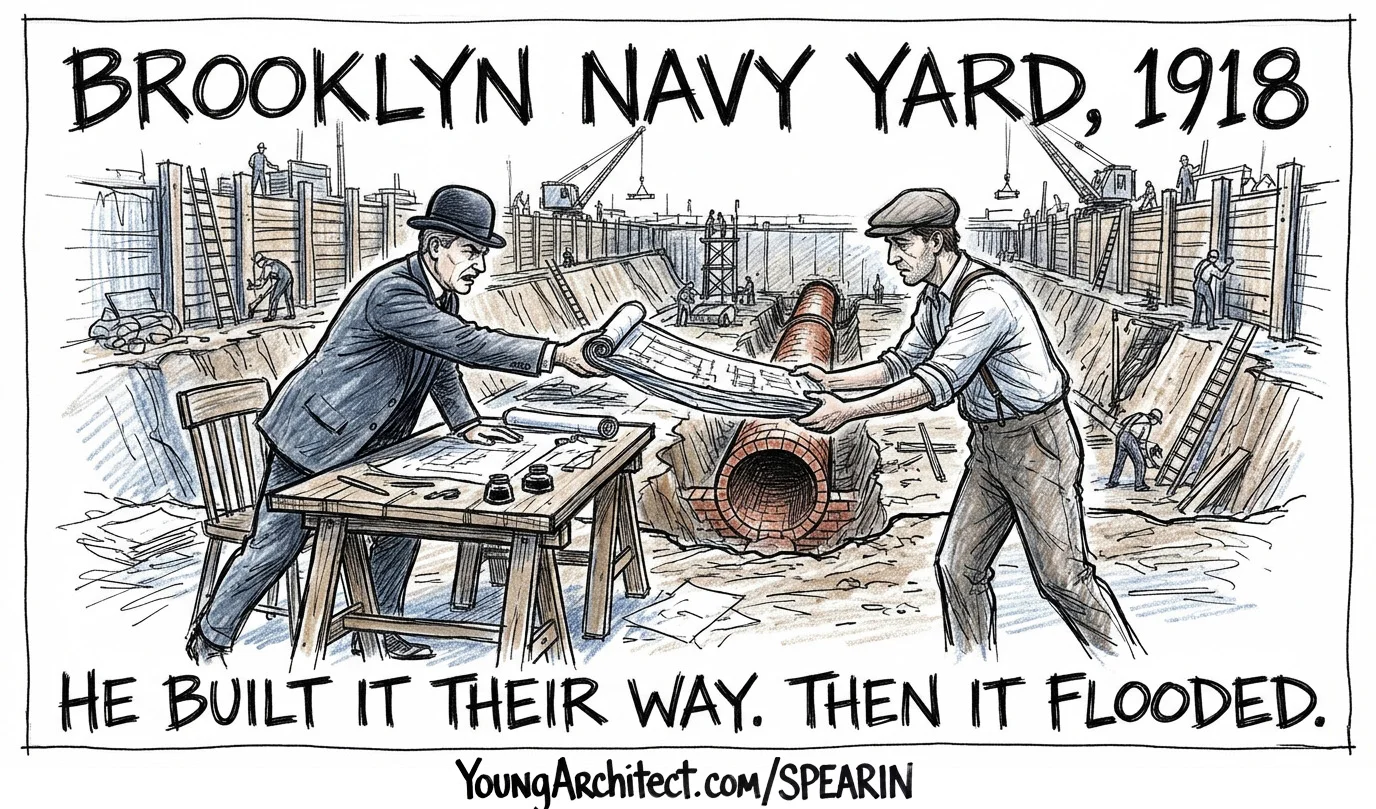
He built exactly that. It was inspected. It was accepted. It worked for about a year.
Then a storm hit, the sewer burst, and the excavation flooded.
The cause turned out to be a dam somebody had built inside a connecting line years earlier. It was not on the city’s drawings. It was not on the government’s drawings. Nobody involved knew it existed.
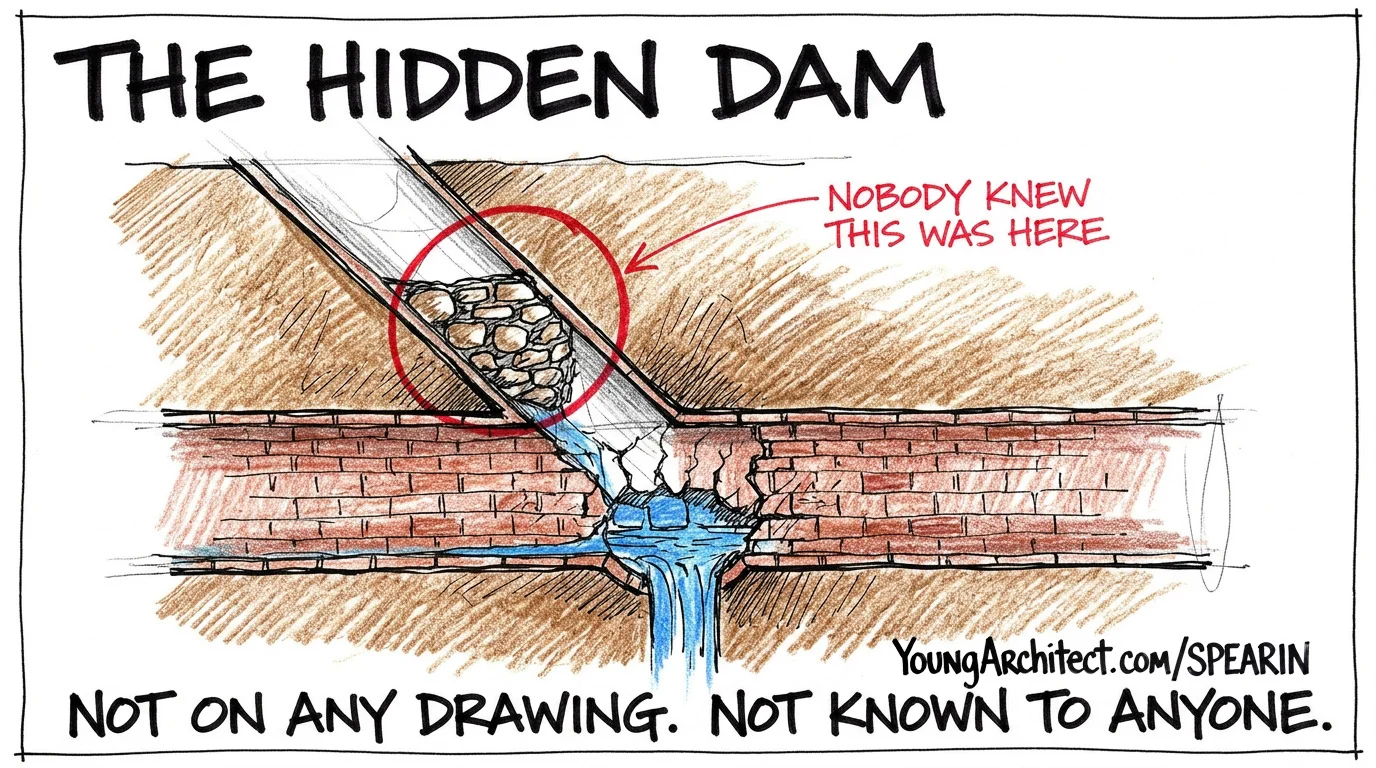
That alone would be a hard-luck story. The detail that turned it into law is what the government knew.
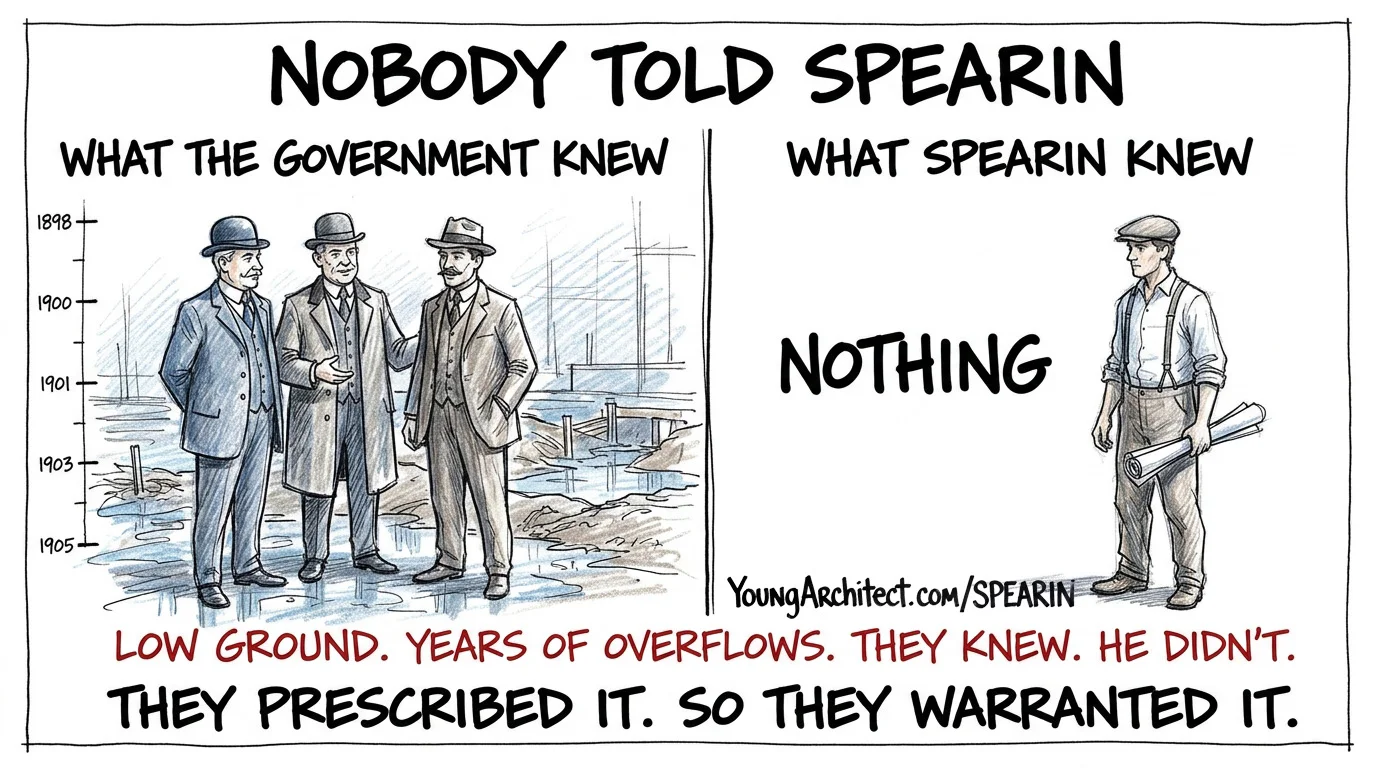
That ground was low. Those sewers had been overflowing for years. Officials knew it. Spearin was never told.
One side of that contract knew the ground had a history. The other side was handed a drawing.
He stopped work and asked them to either fix the condition or take responsibility for it. They refused. Fifteen months of letters went back and forth and nothing happened. The Navy canceled his contract and took over the work.
He sued. He won in the Court of Claims. He won his costs plus the profit he would have made. The Supreme Court affirmed it, and you can read the 1918 opinion for yourself.
The reasoning is one move long. By prescribing the character, the dimensions and the location of that sewer, the government imported a warranty that the thing it designed would work.
They prescribed it, so they warranted it.
Why Boilerplate Disclaimers Don’t Shift Design Risk
The government did not go down quietly. It pointed at the fine print.
Visit the site. Examine the plans. Inform yourself about conditions. The contractor carries responsibility for the work until acceptance.
He signed all of that, so he should have figured it out.
The Court said no, and the reasoning still holds up a century later.
Examining the site never meant researching the drainage history of a neighborhood. Checking the plans never meant sitting in judgment on whether the engineering was any good.
He was hired to build it. Not to check it. Not to audit the design.
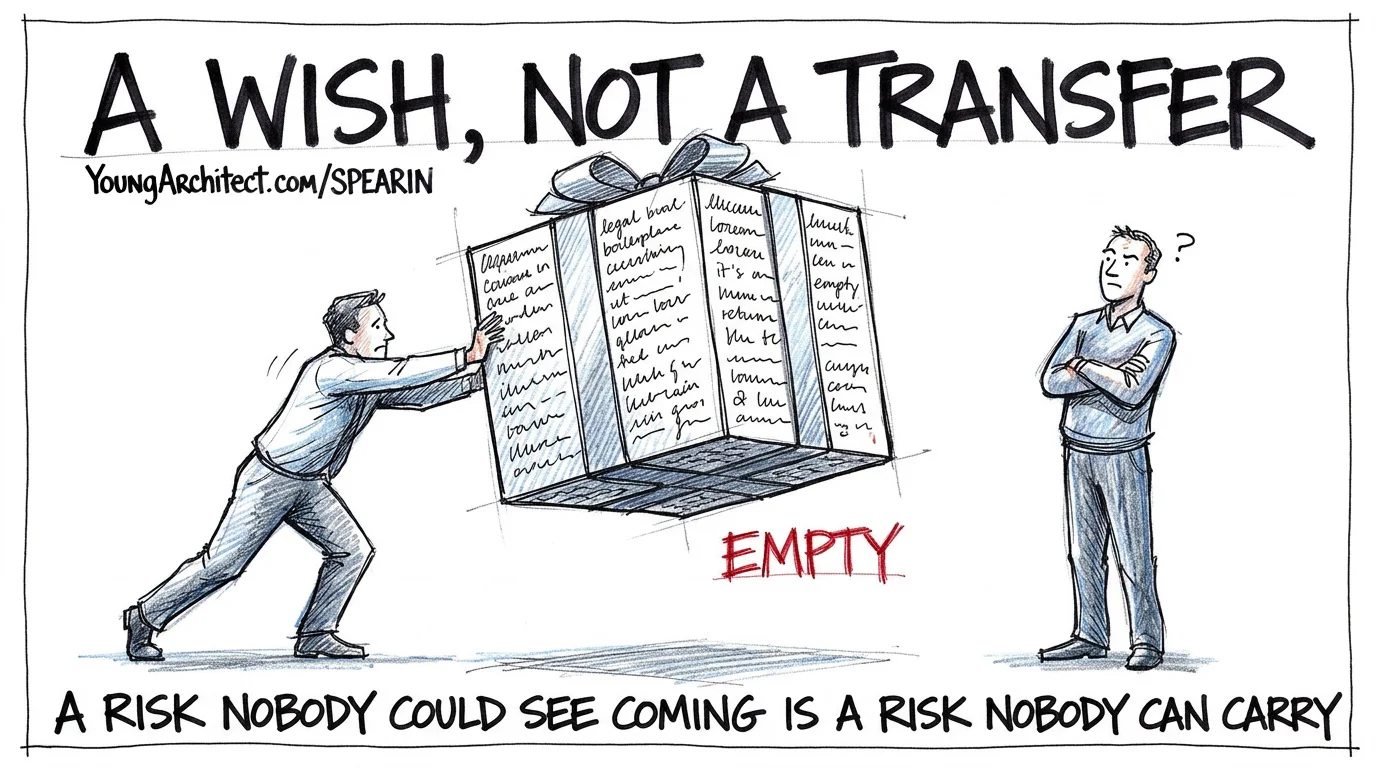
So the headline is blunt: general boilerplate does not transfer design risk.
The useful part is why. A general clause names no specific risk. It tells the contractor nothing about what they are actually taking on, and it gives them nothing to price at bid time.
It is a wish, not a transfer.
You cannot hand somebody a risk they could not have seen coming.
What broad language cannot do, specific language sometimes can. A clause that names an actual condition, says plainly who carries it, and is visible enough that a bidder can put a number on it is a different animal entirely.
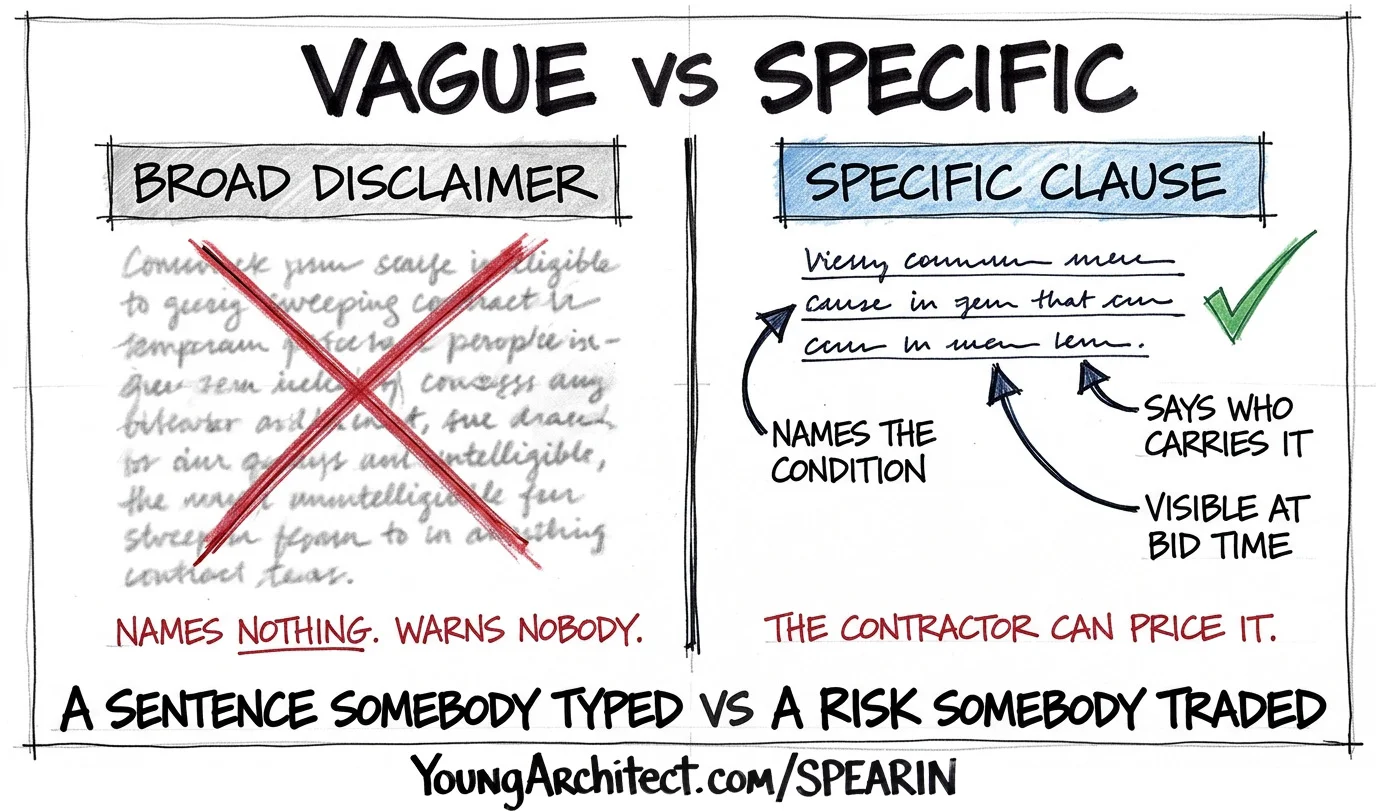
One is a sentence somebody typed. The other is a risk somebody actually traded.
If you want to see how that distinction plays out across a real project, our post on the general conditions walks it through.
The Spearin Doctrine as a Shield or a Sword
Almost everybody learns this rule as a defense. The owner says the work is defective, and the contractor answers: the design was defective, and I built what you gave me.
That is the shield, and it is the version that shows up in most explanations.
But look at what actually happened in 1918.
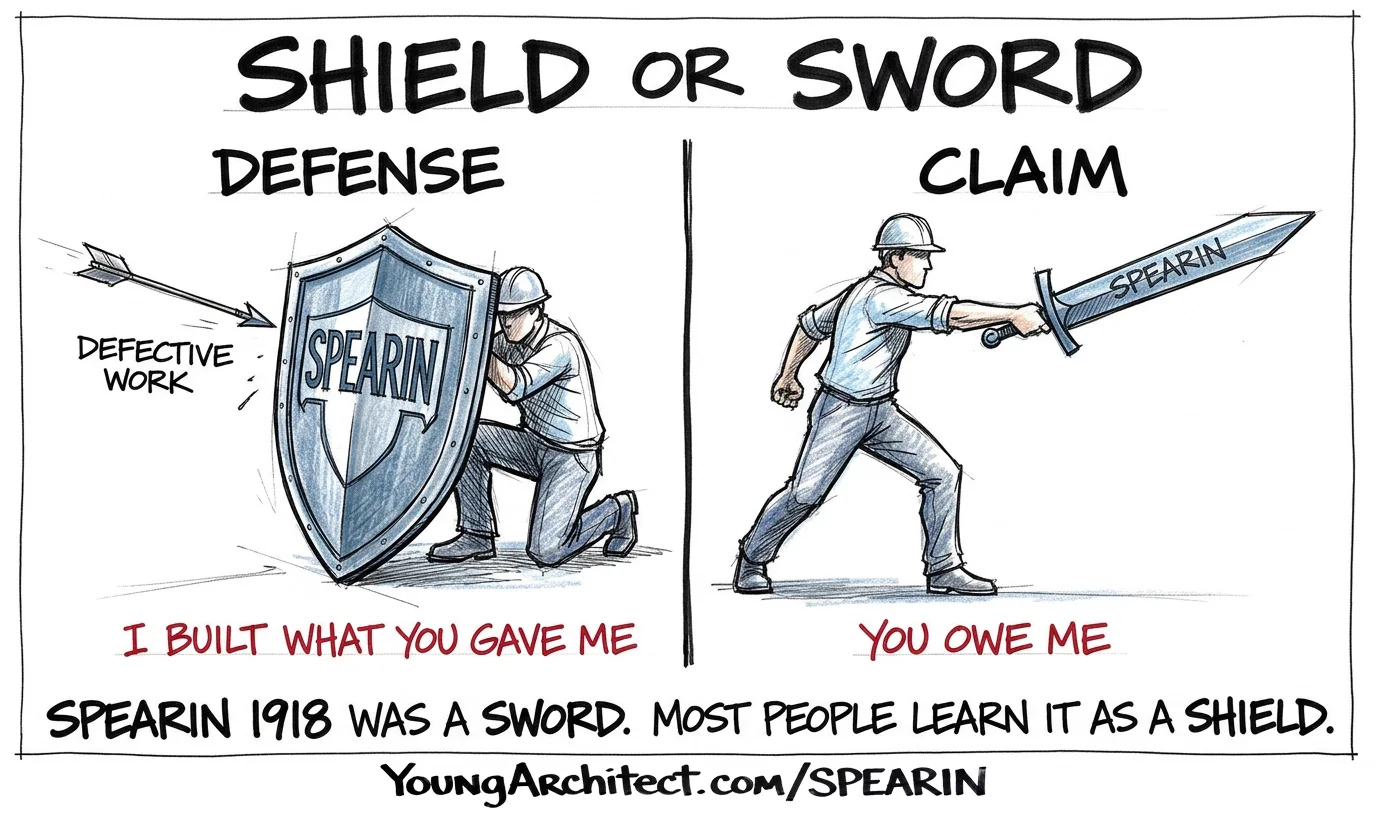
Spearin did not defend anything. He walked off the job. He let them cancel his contract. He let them seize his equipment. Then he went after them in court.
Not to get out of something. To get paid for work he had already done.
That is not a shield. That is a sword.
Which means one of those three people in the conference room is not sitting on an excuse. They may be sitting on a claim.
How Contractors Lose Spearin Doctrine Protection
The protection is strong, but it is not unconditional. There are three ways to lose it.
All three are things the contractor did.
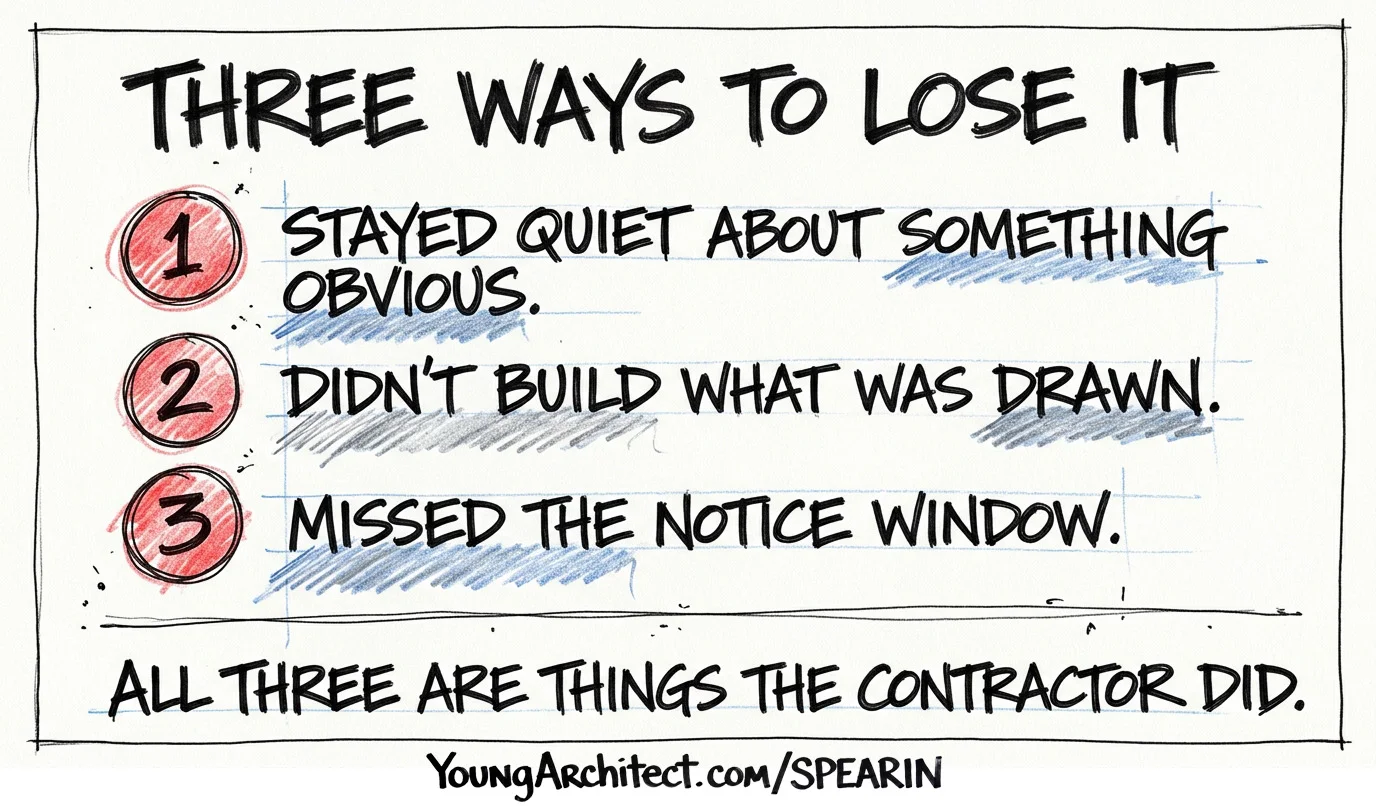
One. Stayed quiet about something obvious. More on that in a moment, because the line between obvious and hidden is doing a lot of work.
Two. Did not build what was drawn. The protection exists for the person who did what they were told. Deviate, and you are now defending your own choices instead of somebody else’s documents.
Three. Missed the notice window. This one stings the most, because it has nothing to do with being right. A completely legitimate claim can die on procedure, and nobody ever reaches the question of whether the drawings were any good.
Spearin liability has a shape to it, and that is the shape. It lands on the contractor who saw something, said nothing, and hoped.
Which brings up the single most useful sentence in this whole topic.
The RFI is the defense.
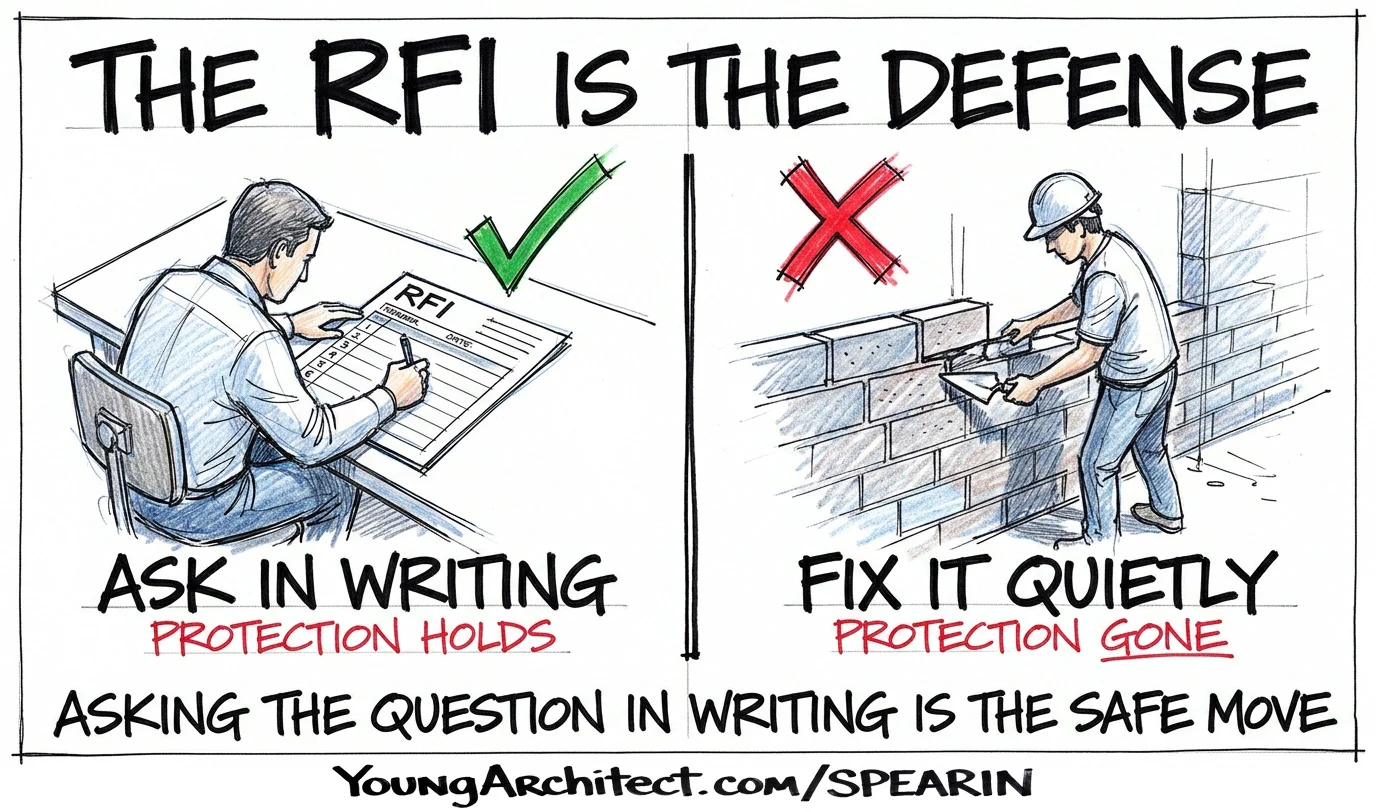
Submitting an RFI in writing satisfies the duty. Quietly fixing it in the field forfeits it.
It is very hard to get in trouble for asking a question in writing.
Patent Defect vs Latent Defect
A patent defect is obvious on its face. A drawing where the stair runs up and simply stops, no landing, no connection. Anybody looking at that sheet catches it.
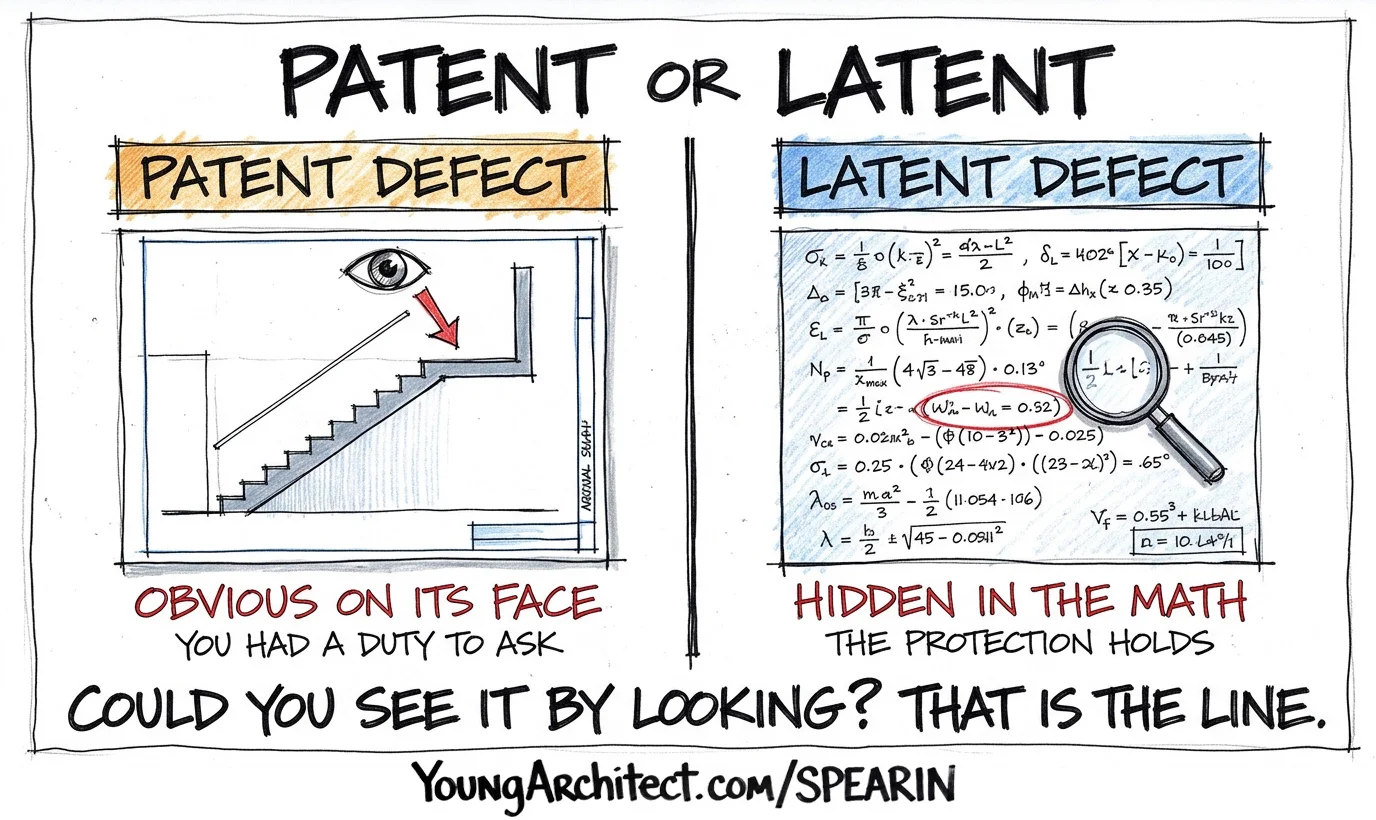
A latent defect is buried. An undersized rebar lap splice sitting inside a structural calculation. You would have to do the math to find it, and you would have to know to go looking.
The consequences split hard.
Patent. You saw it, said nothing, built it anyway. You cannot come back for the cost of the fix. You had a duty to ask, and staying quiet was a choice.
Latent. Hidden, technical, invisible to a competent builder reading documents carefully. The protection holds, because you were never expected to find it.
Could you see it by looking? That is the line.
The Spearin Doctrine in Design-Build
Everything so far assumes the owner handed over the drawings. What happens when they did not?
On design-build, the owner hires one entity to do both. The person writing the instructions and the person following them are the same person.
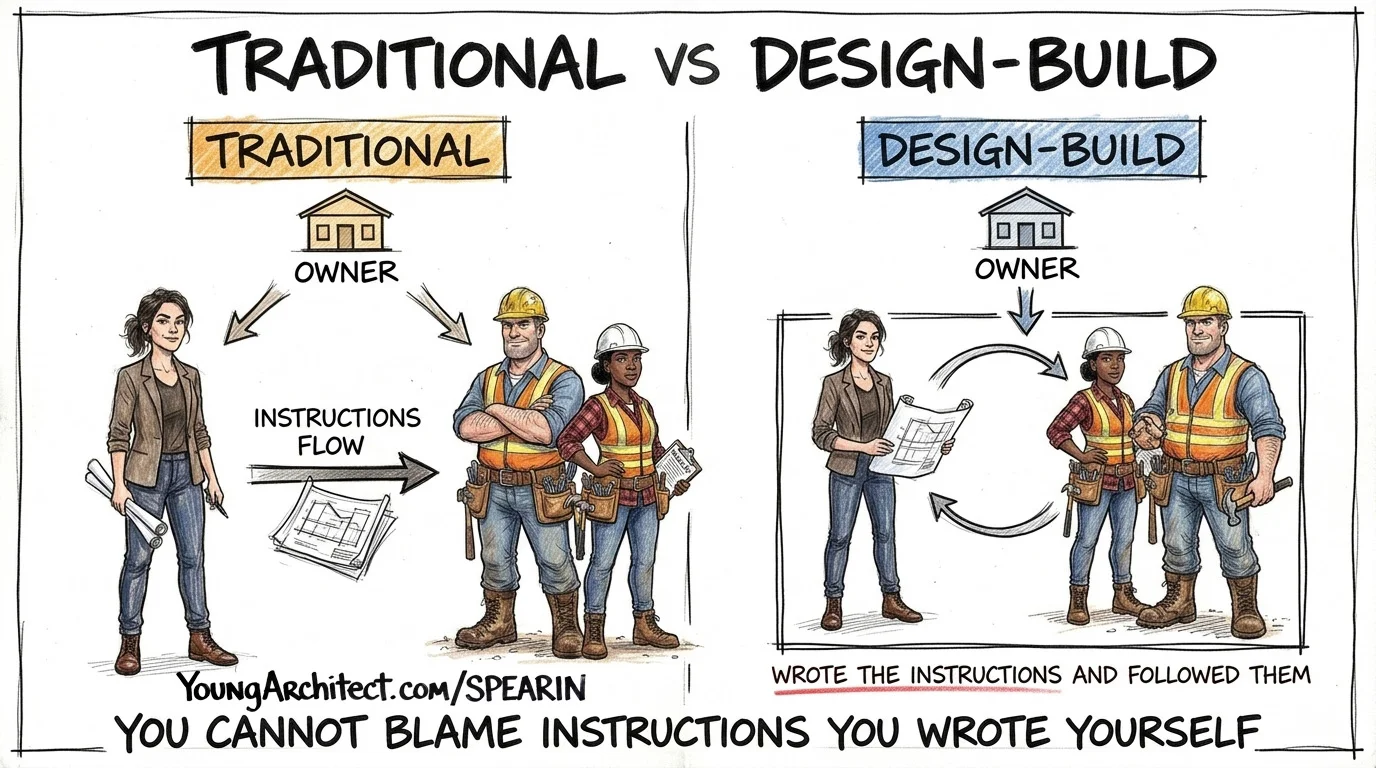
Run the mechanism and the answer falls out on its own. The design-builder wrote them.
You can’t blame the instructions when you wrote the instructions yourself.
A design-builder cannot turn around and sue the owner over errors in documents it produced itself. That is a real shift in where risk sits, and it is part of why design-build prices the way it does.
But owners almost never hand over a blank page.
Early concept documents. Program requirements. A site layout. Factual data about what is in the ground.
If any of that material turns prescriptive, dictating a system or locking a dimension or making affirmative claims about site conditions, then the owner wrote part of the instructions after all.
The promise attaches to those pieces. Not to the whole project.
Flow-Down and Subcontractor Protection
A trade subcontractor working under the design-builder is in the exact position the contractor was in. Somebody handed them instructions and told them to build it that way.
Defective instructions, same protection. It just points at the design-builder instead of the owner, provided the subcontract actually incorporates the prime contract terms. That is not automatic and it is worth reading before you count on it.
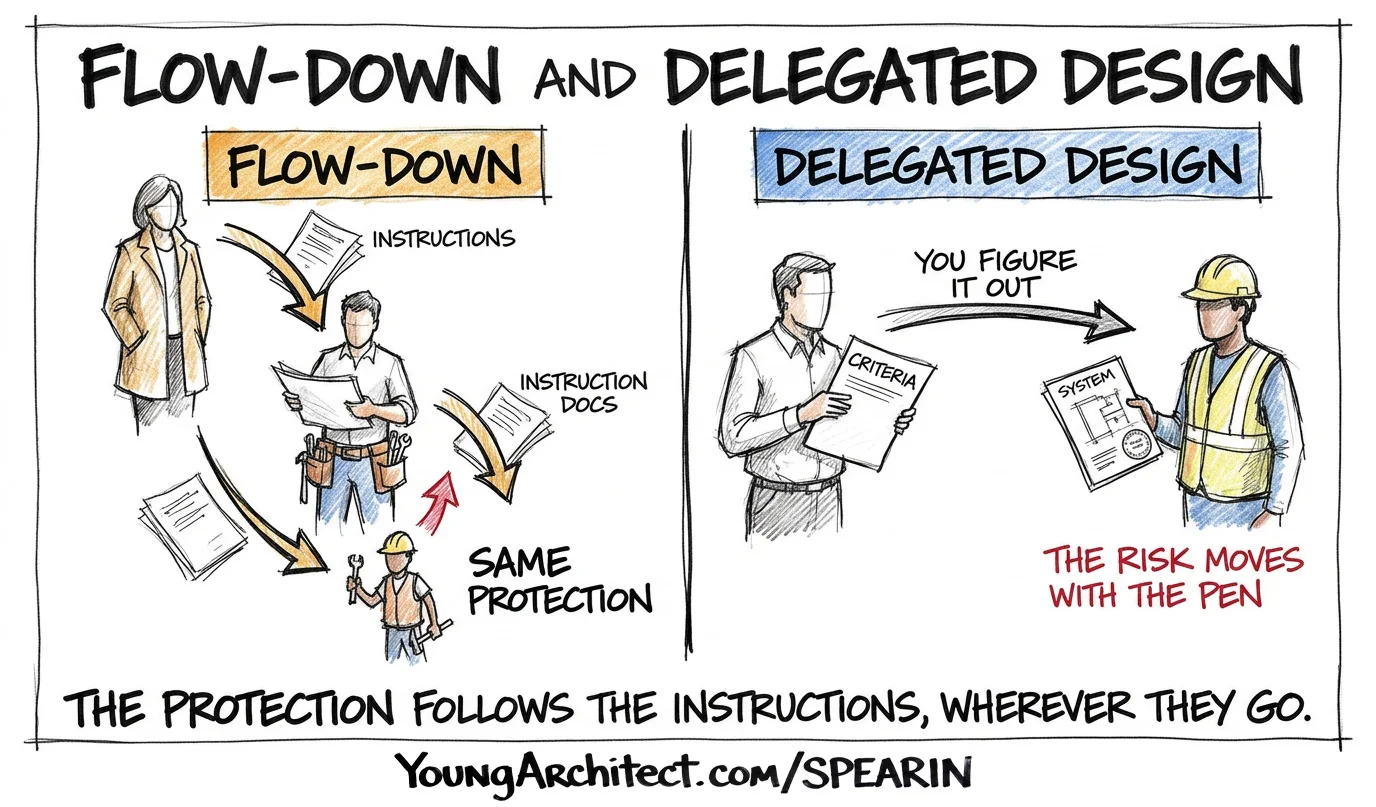
Delegated design works differently. The documents say: for this one system, you figure it out. Structural steel connections. A curtain wall. A sprinkler layout.
The architect or engineer sets the criteria. The contractor hires a specialty engineer. That engineer stamps it. Real design responsibility moves, though the designer of record still owns the criteria and still has a role in reviewing what comes back.
The protection follows the instructions, wherever they go.
When Owner-Furnished Information Is Wrong
Instructions are not the only thing an owner hands over.
Surveys. Geotechnical reports. Hazardous materials surveys. Drawings of what is already standing.
Different kind of document. Same question underneath it: where did this come from?
Picture six weeks of construction in the ground. Somebody pulls the survey for an unrelated reason and notices the property line is not where the survey said it was.
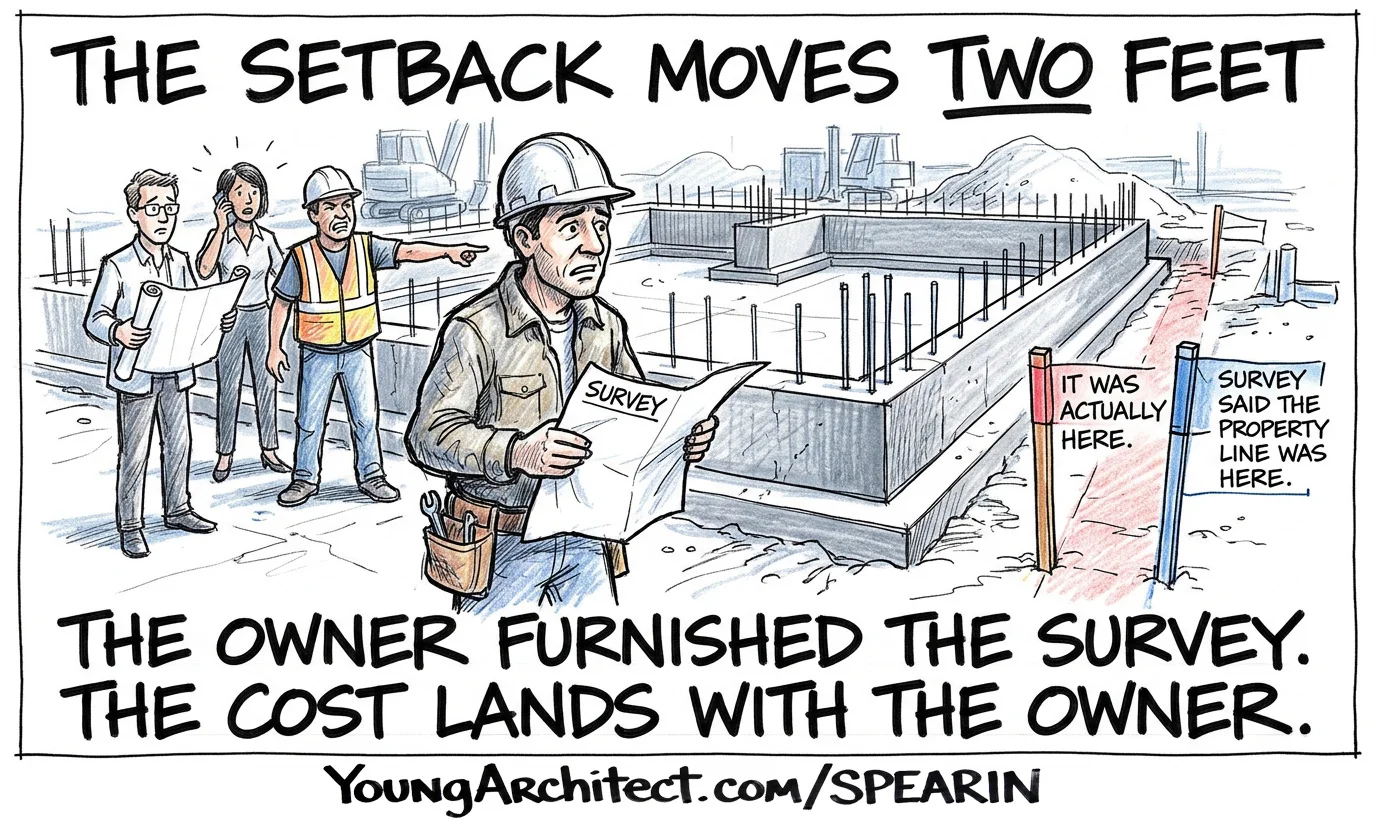
The setback is two feet tighter. The building is going up in the wrong place.
Three problems arrive at once. The design has to change. A permitting conversation is coming. And the contractor has real work already in place.
The cost generally lands with the owner. That is a different line of cases from the Spearin doctrine itself, with its own rules, but the underlying logic is the same one: the owner put that information into the project.
Now the good news for whoever is holding the pen.
You are entitled to rely on it.
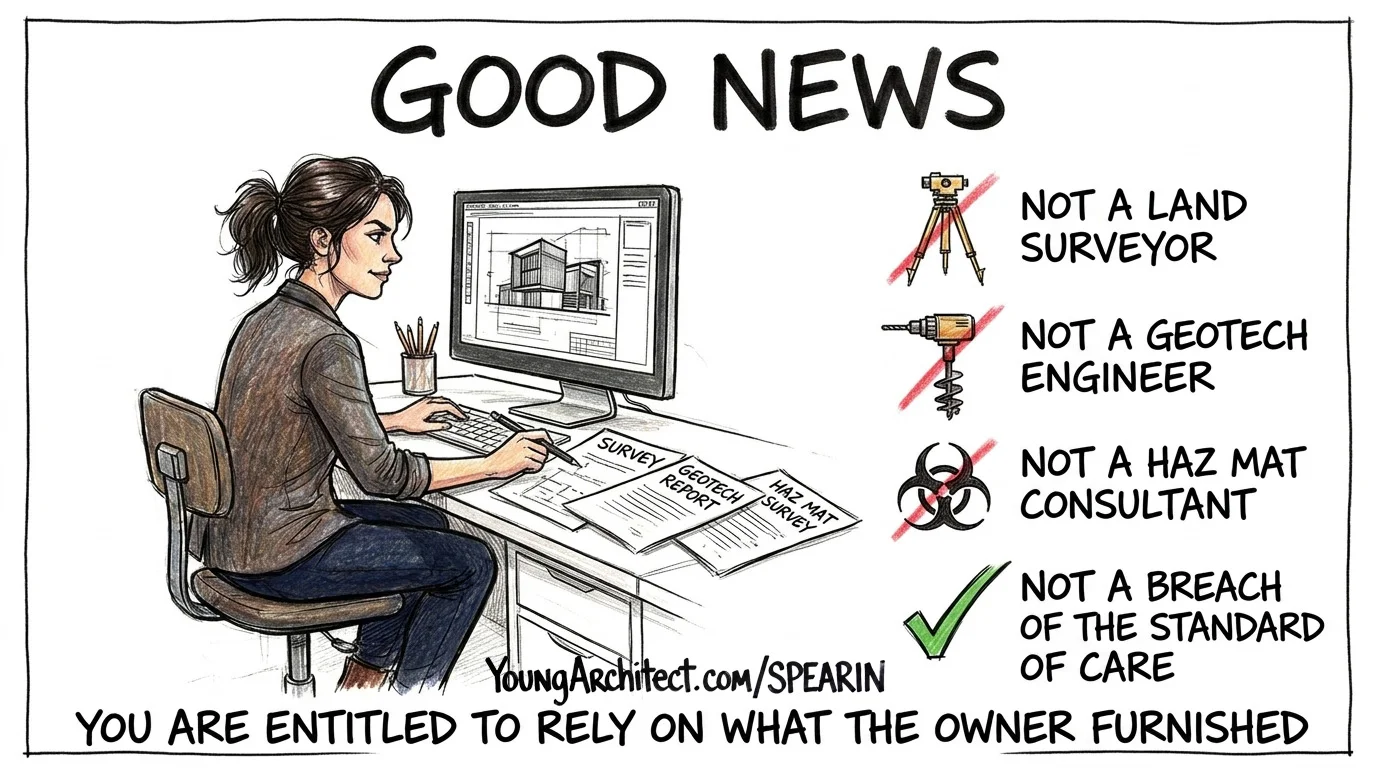
You are not a land surveyor. You are not a geotechnical engineer. You are not a hazardous materials consultant. Designing off the owner’s survey in good faith is not a breach of the standard of care, even when that survey turns out to be wrong.
The limit is that the reliance has to be reasonable.
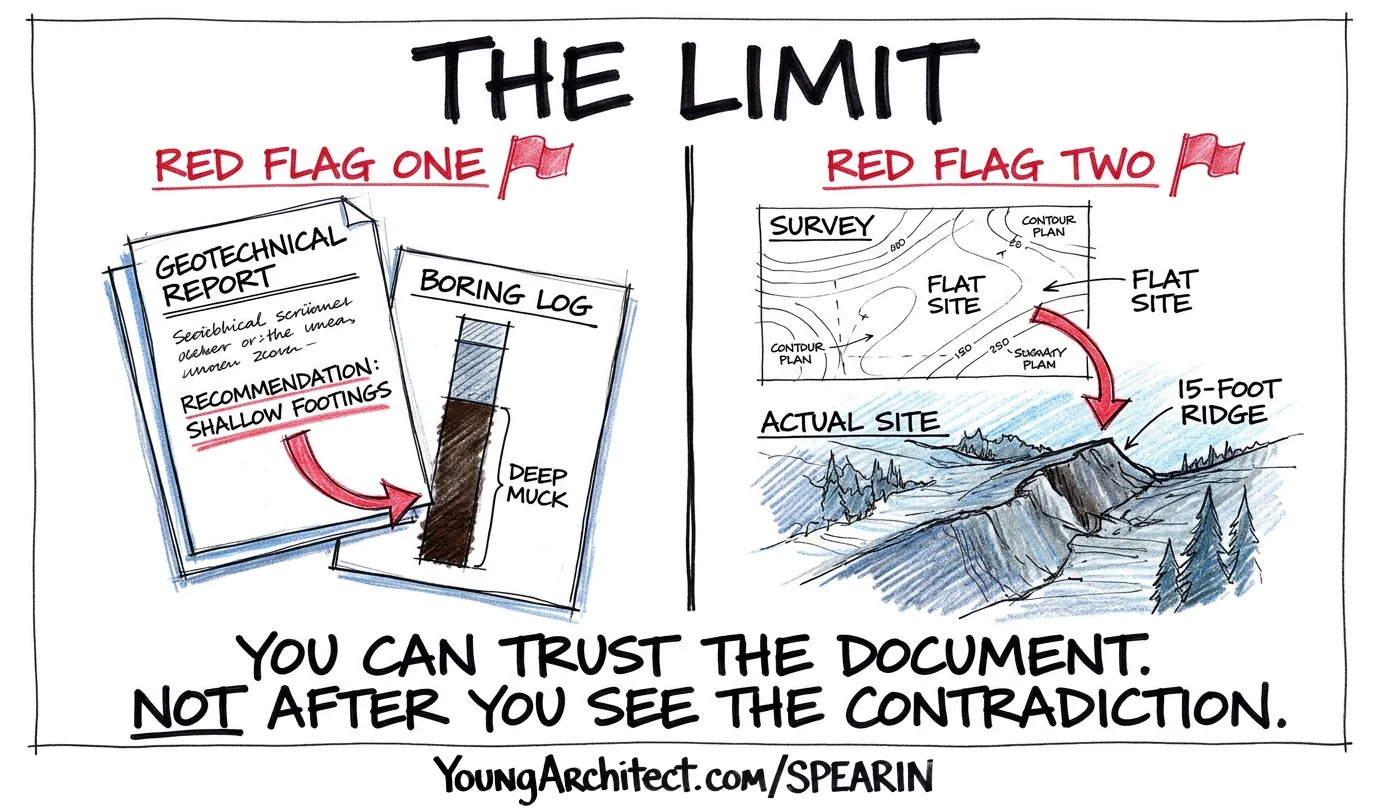
A geotechnical report recommending shallow footings when its own boring log shows deep muck. A survey showing a flat site when you walked that site and there is a fifteen-foot ridge across it.
The right to rely is not the right to not look.
The limits of that reliance, and what flagging it properly looks like, are covered in more depth in our post on owner-provided information.
The Spearin Gap: Guarantee vs Standard of Care
Back to the conference room, and to the question nobody in it has asked yet.
The owner is going to pay the contractor. Can the owner get it back?
To answer that you need to see that there are two promises running through every project like this one, and they are not the same promise.
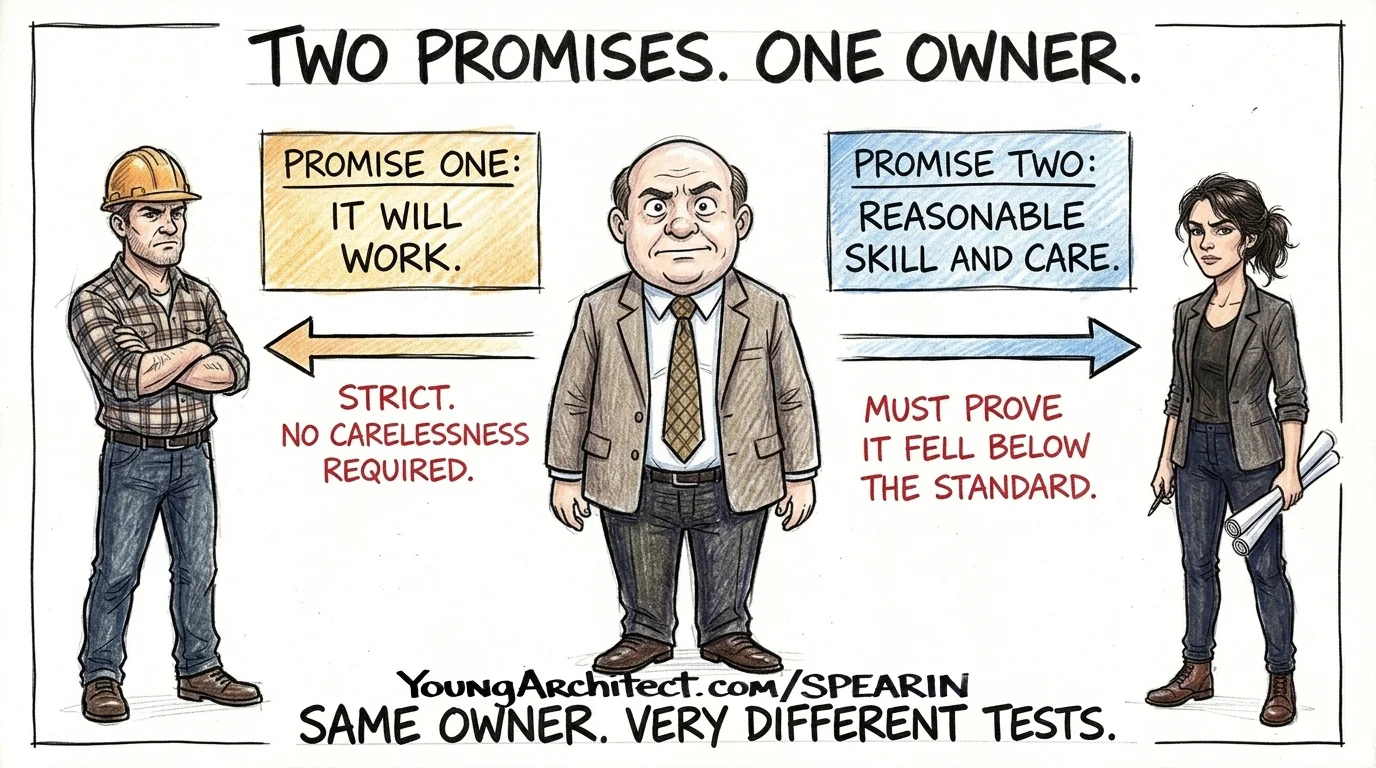
Promise one runs from the owner to the contractor. It is strict. The documents will work. Nobody has to prove anybody was careless. They performed or they did not.
The documents either performed or they didn’t. That’s the end of the inquiry.
Promise two runs from the design professional to the owner. It is a standard of care. Not a promise the drawings are perfect. A promise to exercise the skill and care a reasonably competent professional would exercise on a similar project under similar circumstances.
Nobody promises a perfect set. Nobody can deliver one.
And this applies to whoever sealed the drawings. Architect, structural engineer, civil engineer. Same standard, no matter whose name is in the title block.
Now watch the test change as the money moves.
A design error surfaces. The contractor built what was drawn. It failed. The owner pays, with no argument available.
Then the owner turns to the design professional, and the question is suddenly completely different: did that error fall below what a reasonably competent professional would have done?
Those are not the same question. That is the whole problem, and it is the part of the Spearin doctrine that almost nobody explains.
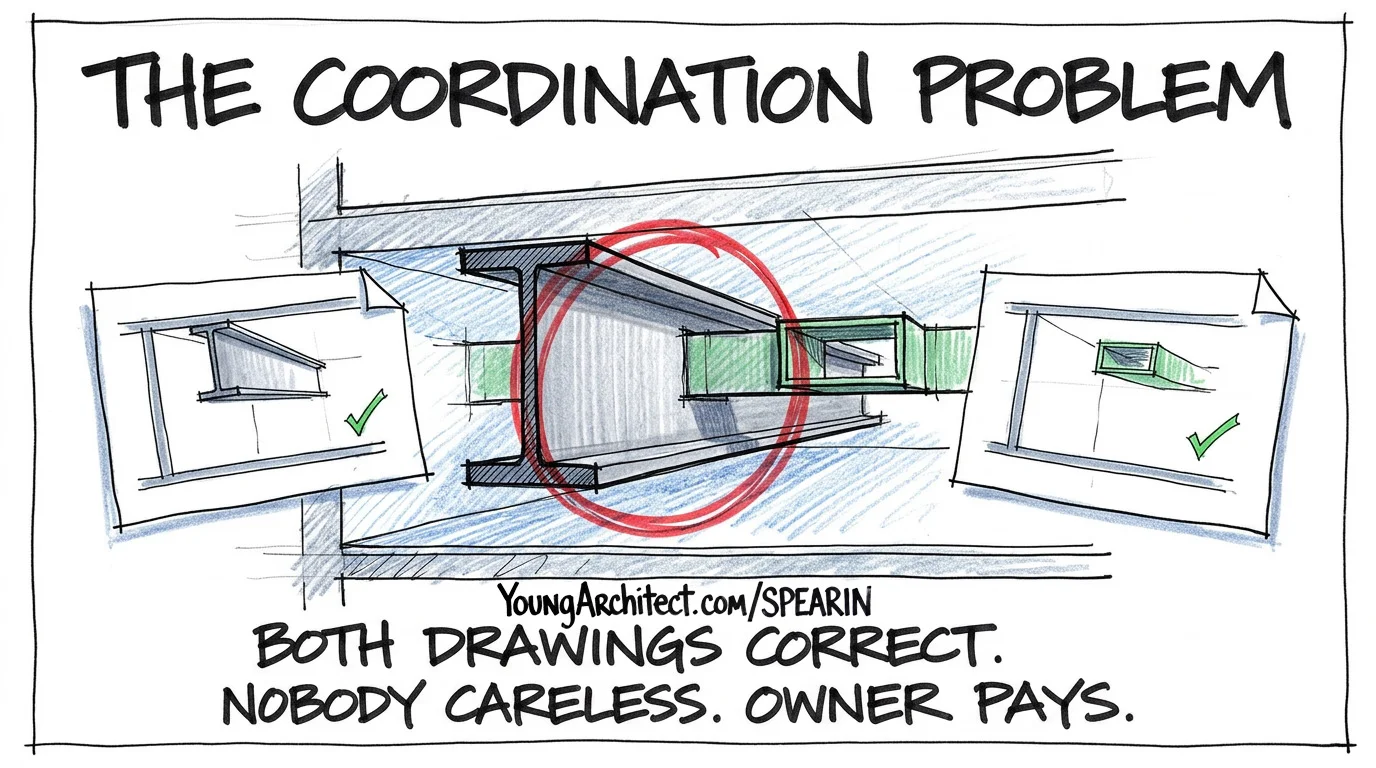
Take the duct running through the beam. The mechanical drawings are correct. The structural drawings are correct. Two consultants did their jobs on a complicated building and the two sets did not catch each other.
Was anybody careless? Competent people produce coordination errors on every project that has ever been built.
So that cost has nowhere to go. It stays with the owner.
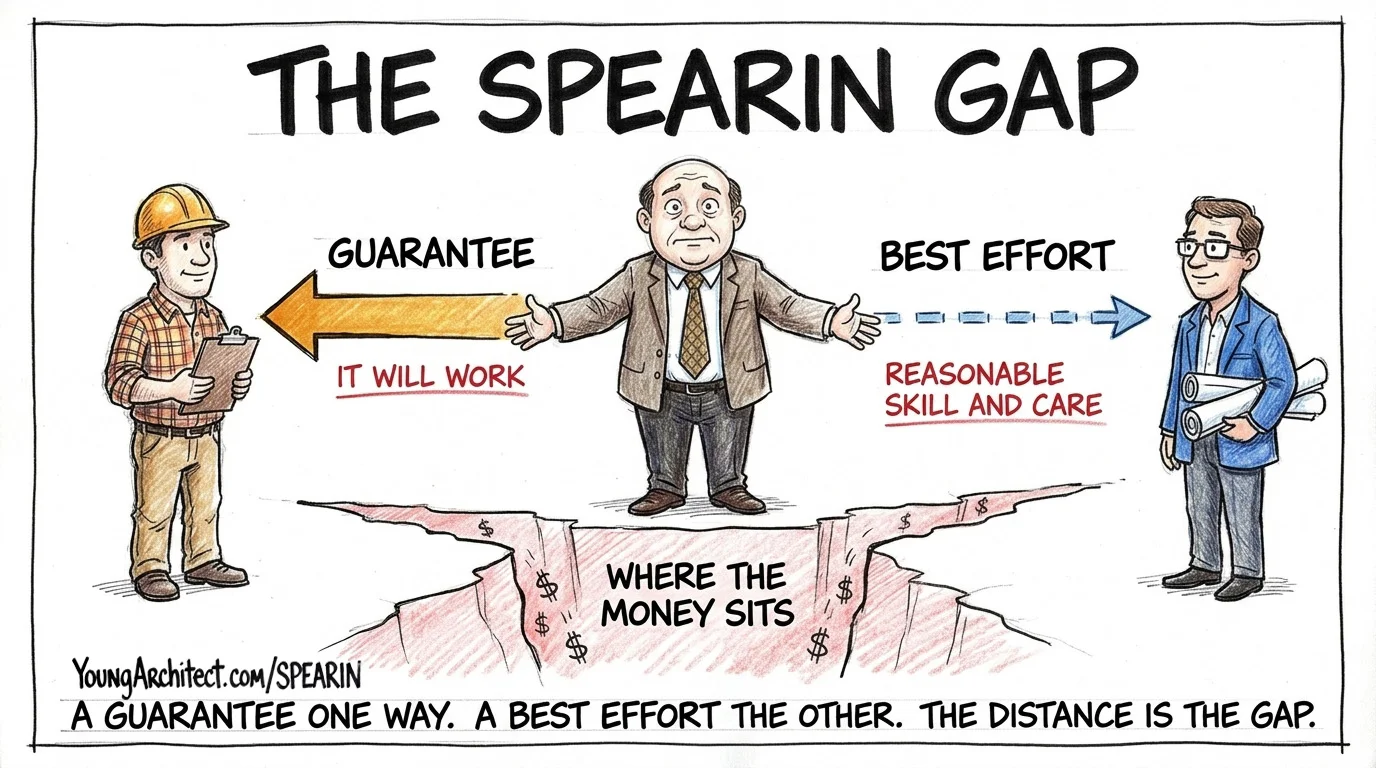
That is the Spearin Gap.
A guarantee going one direction. A professional’s best effort going the other. The distance between them is where the money sits.
Which leads somewhere uncomfortable, and practical.
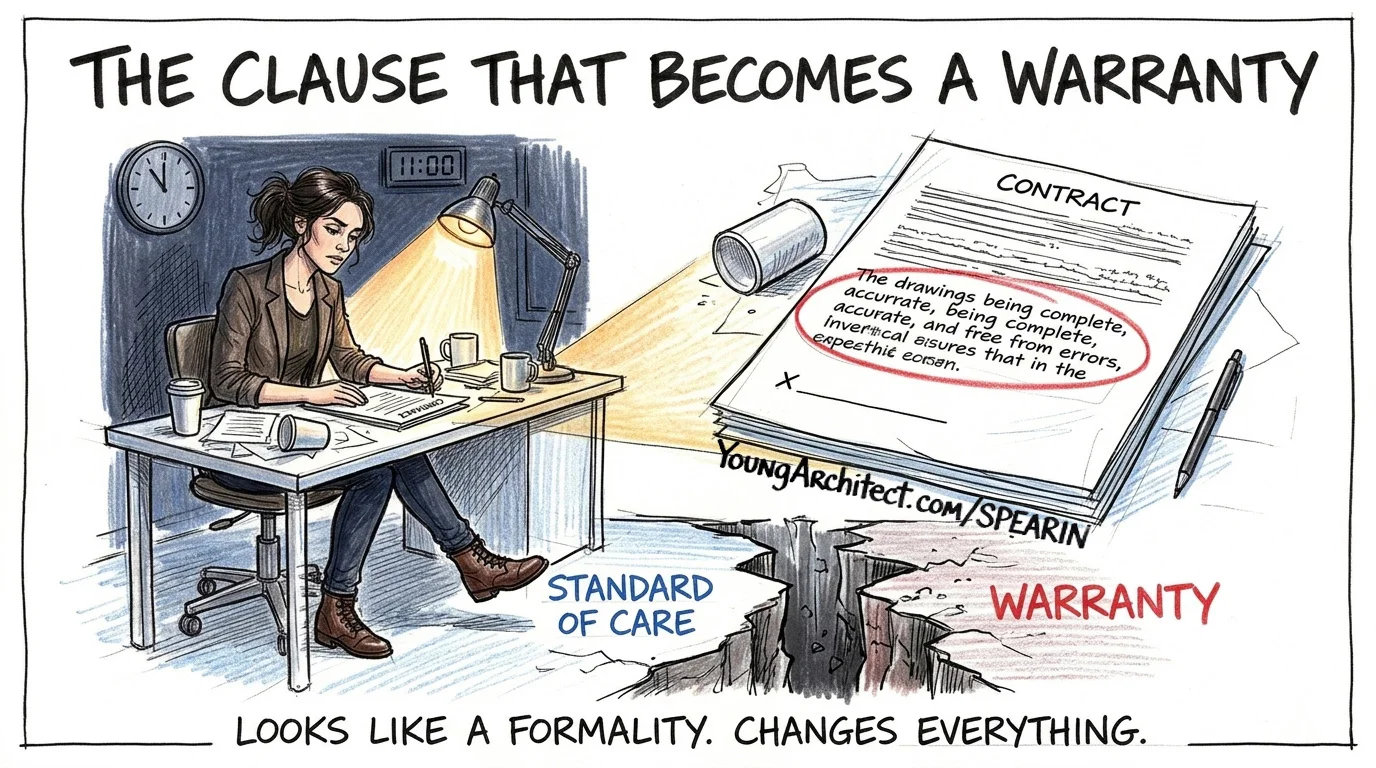
Somewhere in a professional services agreement there is sometimes a line promising the drawings will be complete, accurate and free from errors.
It looks like a formality. The kind of thing you initial at eleven at night to get the project moving.
It looks like a formality. It isn’t.
That sentence quietly converts a standard of care into a warranty. You have stopped promising competence and started promising perfection, and coverage generally does not follow you there.
Three places to read further on this: the architect’s standard of care on its own terms, the owner-architect agreement and what it actually obligates, and professional liability insurance and what it will and will not follow you into.
How the Spearin Doctrine Varies by State
The doctrine is federal in origin, and nearly every state follows some version of it. The shape varies.
Texas is the cleanest example of a state writing it down.
SB 219 added Chapter 59 to the Texas Business and Commerce Code, effective September 1, 2021. It is non-waivable, and it carries its own written disclosure duty covering defects the contractor discovers, or should have discovered, through ordinary care. The Texas statute is worth a look if you work there.
The practical takeaway travels further than Texas.
A rule you cannot contract around in one state can be modified by agreement in another. The contract and the jurisdiction both matter.
Studying the Spearin Doctrine for the ARE, NCIDQ, and CSI
This topic does not sit in one place. It runs through the contract and risk material across several credentials, which is part of why it is worth learning once properly.
On the ARE, two published objectives carry it most directly.
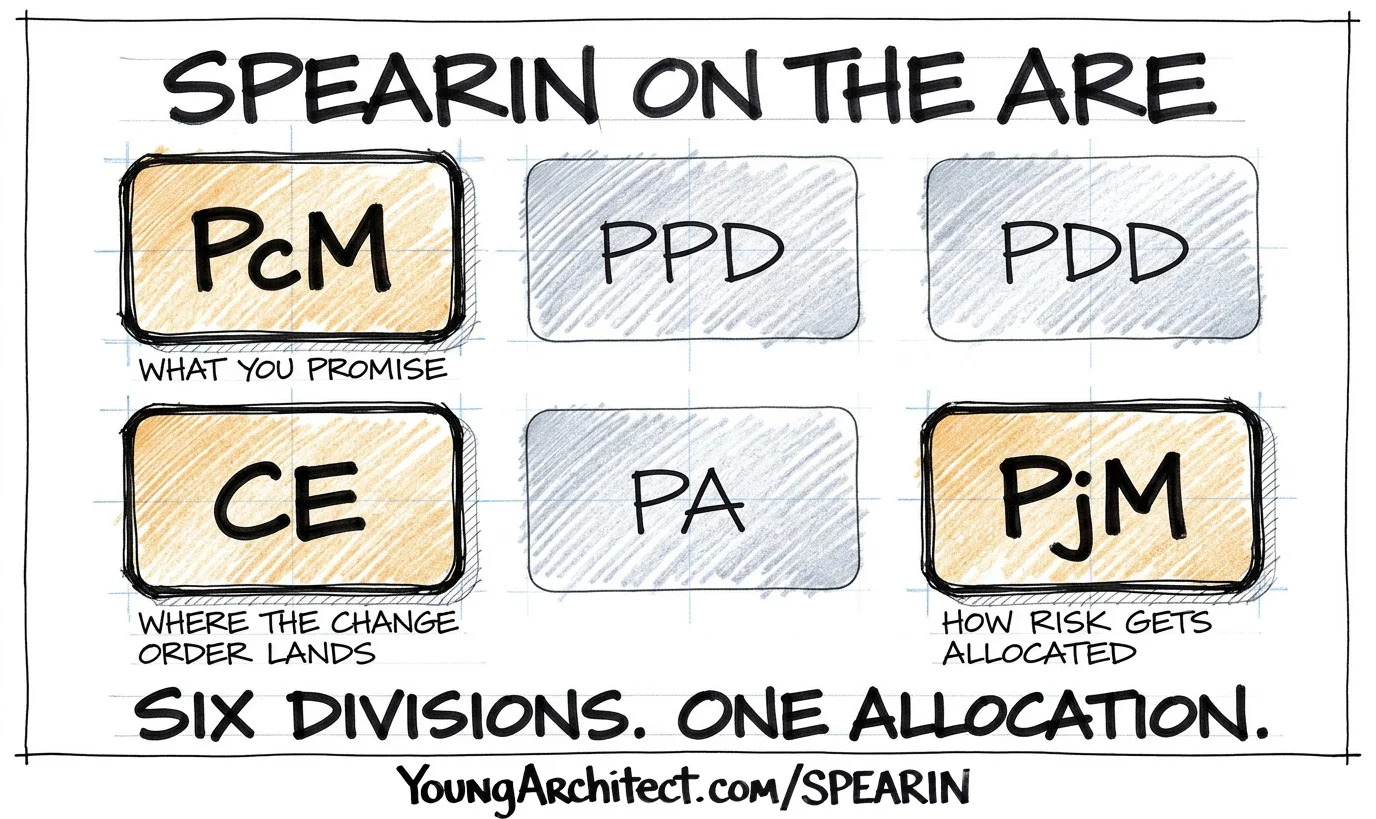
PcM Objective 1.4, Apply Appropriate Standard of Care Within a Given Situation. The liability side. It covers the standard of care, the impact of errors and omissions, and how to respond to unknown conditions.
CE Objective 3.1, Determine Appropriate Additional Information to Supplement Contract Documents. The operational side. Evaluating contractor requests for additional information, determining whether a request or an unexpected disruption requires a change in the construction contract, and determining the right documents for communicating revisions.
The RFI and the change order both live in that second one.
Four more objectives touch it:
- PjM 5.3, on coordination and constructability
- PcM 2.2, on risk, legal exposure and insurance
- PjM 3.3, on the owner/contractor agreement
- CE 2.2, on construction conformance and non-conforming work
On the NCIDQ, all three exams touch it through published content areas: Existing Conditions on the IDFX, Consultant Drawing Coordination on the IDIX, and the Construction Process on the IDPX.
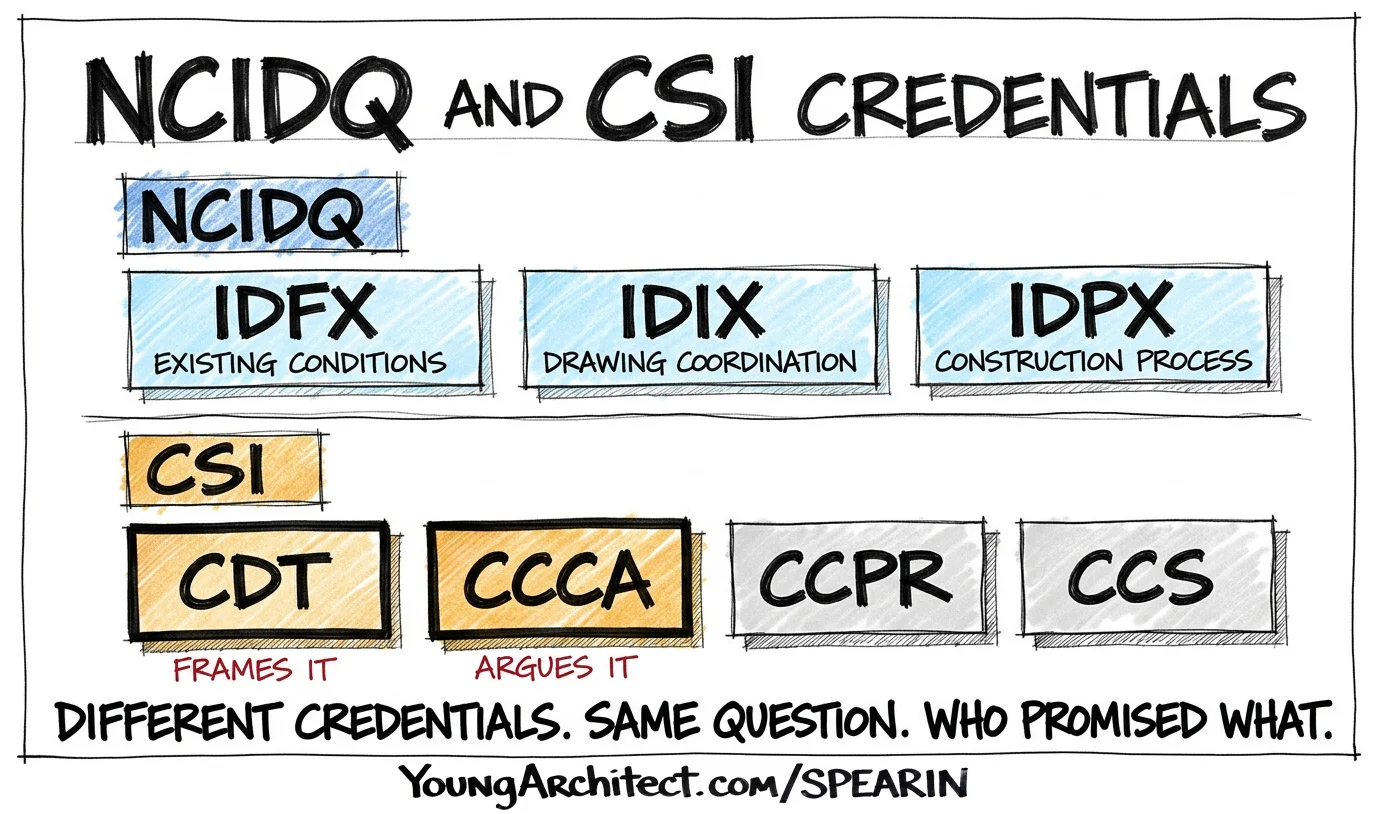
On the CSI side, the knowledge domains split it cleanly. The CDT certification frames the vocabulary and the document relationships. The CCCA, which sits on top of the CDT, is where this material stops being vocabulary and becomes something you argue about on a job.
CDT teaches you that these things exist. CCCA teaches you how to actually do them.
If that is your track, CCCA 101 goes deeper on it than anything else we teach.
What to Remember About the Spearin Doctrine
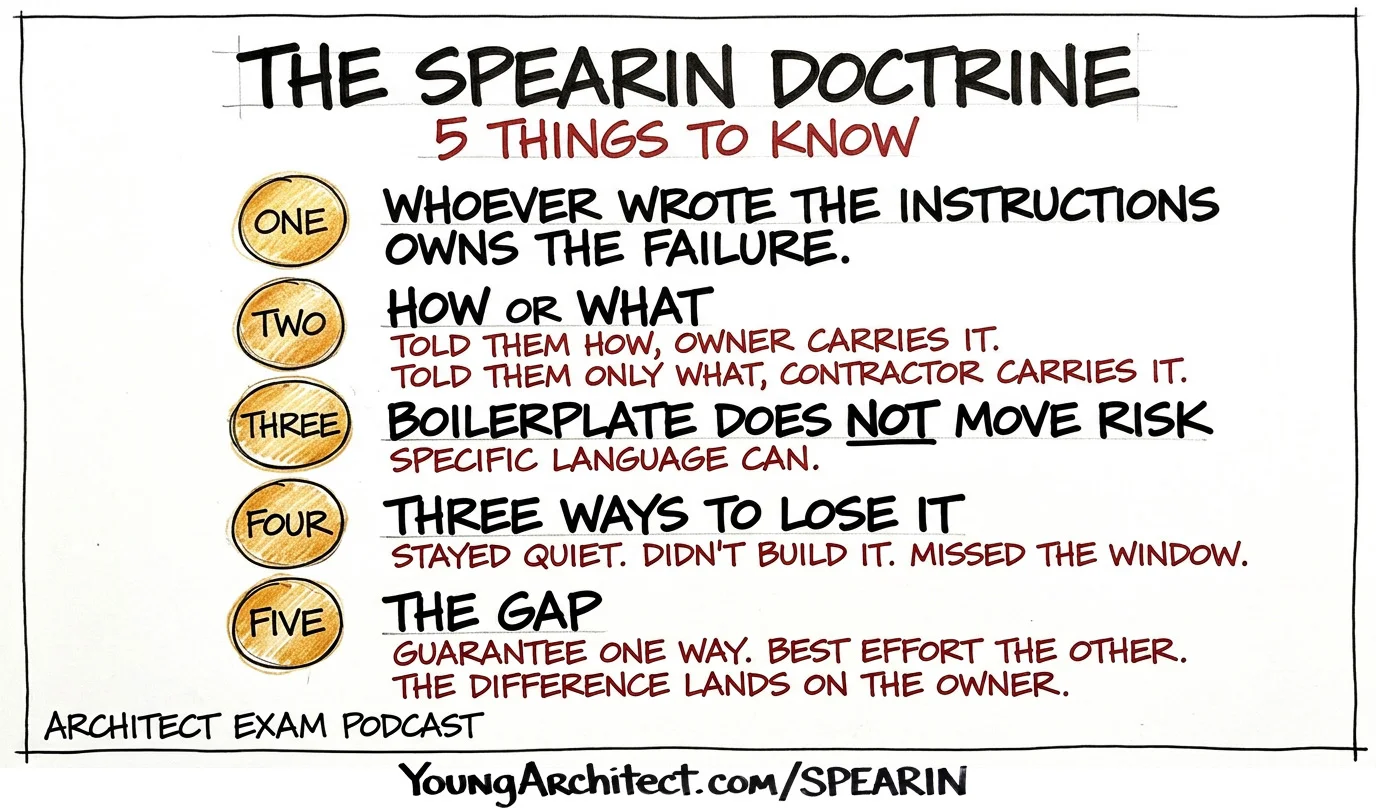
Five things, and then back to the room.
One. Whoever wrote the instructions owns the failure.
Two. The test is how versus what. Told them how, the owner carries it. Told them only what, the contractor carries it.
Three. Boilerplate does not move design risk. Specific language sometimes can.
Four. Three ways to lose the protection, and all three are things the contractor did.
Five. The Gap. A guarantee one direction, a best effort the other.
So: the conference room.
The contractor was right. That cost belongs to the owner.
And the engineer who has not spoken in twenty minutes is quiet because they already know what comes next. The owner pays, then turns around and asks for it back.
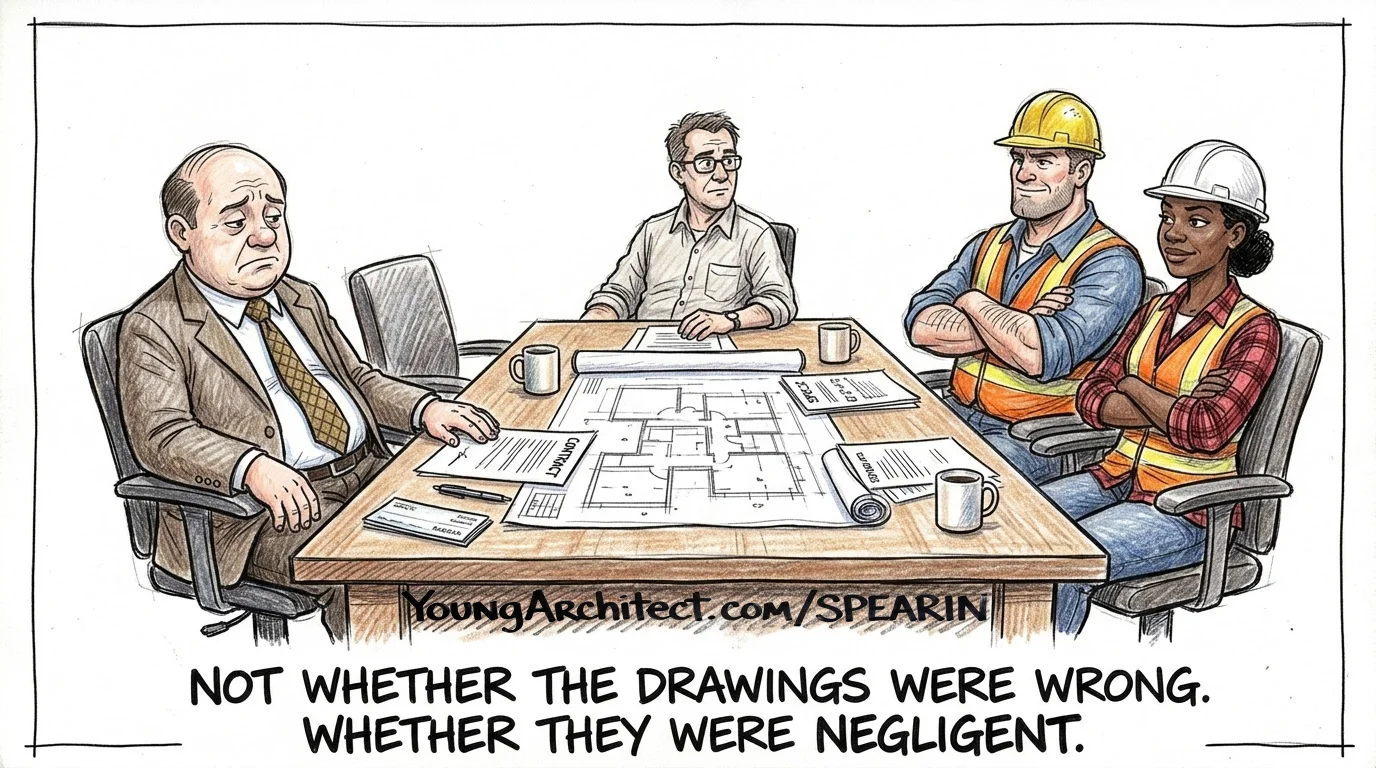
Whether any of it comes back depends on a question nobody in that room had thought about yet.
Not whether the drawings were wrong. Whether they were negligent.
Where to Study Contracts and Risk Next
Knowing the rule and knowing what to do about it on Monday are two different things, and the difference lives in contract language.
The ARE 101 Membership carries both of the courses that go after it.
PcM 101 takes the standard of care apart phrase by phrase, including the contract wording that quietly raises it past what an insurer will follow you into. It opens on a firm getting sued over a duct chase running through a beam, which is this episode’s own problem with a lawsuit attached.
AIA Contracts 101 goes at the general conditions provision by provision, including the contractor’s duty to study the documents and the limit on that duty.
Its line about submittal review is the one worth stealing: the stamp is not a safety net.
Frequently Asked Questions
What is the Spearin doctrine?
The Spearin doctrine holds that when an owner provides detailed plans and specifications telling a contractor how to build something, the owner implicitly warrants those documents are adequate. If the contractor follows them and the work fails, the owner carries the cost. It comes from a 1918 US Supreme Court decision and no proof of carelessness is required.
What is the difference between a design specification and a performance specification?
A design specification dictates the means: exact products, dimensions, methods and sequence, with no discretion left to the contractor. A performance specification states the required outcome and leaves the method to the contractor. The difference decides who carries the risk when the result fails, which is why it is the first thing to establish in any dispute.
How can a contractor use the Spearin doctrine as a shield or a sword?
As a shield, a contractor raises it defensively against an owner’s claim of defective work: I built what you gave me. As a sword, the contractor brings an affirmative claim to recover costs, delays or lost profit caused by defective documents. Spearin himself used it as a sword in 1918, suing after his contract was canceled.
Does the Spearin doctrine apply to design-build contracts?
Generally not in the same way, because the design-builder produced the documents it would otherwise be relying on. You cannot claim against an owner for errors in your own design. The exception matters: where the owner furnished prescriptive criteria, program requirements or factual site data, the warranty can still attach to those specific pieces.
When does the Spearin doctrine not apply?
Three situations, all of them contractor conduct. When the defect was patent, meaning obvious on the face of the documents, and the contractor built it anyway without asking. When the contractor deviated from what was drawn. And when the contractor missed the contractual notice window, which kills otherwise valid claims on procedure alone.
What is the Spearin Gap?
The gap between two different promises. The owner guarantees the documents to the contractor, strictly. The design professional owes the owner only a standard of care, meaning reasonable competence rather than perfection. When a coordination error is nobody’s negligence, the owner pays the contractor and recovers nothing. That space is where project money disappears.
Spearin Doctrine Quiz Time:
No sign-up required.