
NCIDQ IDIX Podcast Exam Prep

Black and white logo for the Architect Exam Podcast with bold text and a circular emblem in the word “Podcast.”

Free NCIDQ IDIX podcast episodes designed to help you pass the Interior Design Implementation Exam. Each episode breaks down CIDQ’s exam objectives so you know exactly what to study.

The IDIX focuses on design development and construction documentation, with an emphasis on health, safety, and welfare. The exam covers five content areas:

  • Codes and life safety (16%)
  • Integration and FF&E (19%)
  • Construction documents including plans, elevations, details, and RCPs (32%)
  • Consultant drawing coordination (18%)
  • Construction specifications and schedules (15%)

The IDIX is 130 questions over 4 hours, making it the longest section of the NCIDQ. It replaced the old PRAC exam starting in 2026 with updated blueprints.

Construction Documents is the biggest section at 32%, so knowing how to develop floor plans, elevations, sections, details, demolition plans, and reflected ceiling plans is critical.

This is the Architect Exam Podcast, but don’t let the name fool you.

The topics covered in these episodes, from construction documents and specifications to codes and consultant coordination, apply directly to the NCIDQ IDIX.
Architects and interior designers share the same foundational knowledge when it comes to health, safety, and welfare.

No need to take notes while you listen. For many episodes, we’ve already made a free two-page set of study notes for you – just go to the episode page and grab them.

What does the NCIDQ IDIX exam cover?

The IDIX tests your ability to produce construction documents for interior design projects. The biggest section is Construction Documents at 32%, covering floor plans, elevations, sections, details, demolition plans, and reflected ceiling plans. You also need to understand codes and life safety, FF&E integration with building systems, consultant coordination, and construction specifications.

What is the difference between the IDIX and the old PRAC exam?

The IDIX replaced the PRAC starting in 2026 with updated exam blueprints from CIDQ’s latest Practice Analysis. The IDIX focuses specifically on design development and construction documentation phases, with streamlined content that reduces overlap with the IDFX and IDPX. The format uses the same question types as the other two exams.

Is the IDIX the hardest NCIDQ exam?

Many candidates find the IDIX the most challenging because it’s the longest exam (130 questions over 4 hours) and Construction Documents alone accounts for 32% of the score. Strong knowledge of how to read, create, and coordinate construction drawings is essential. Give yourself extra study time for this section.

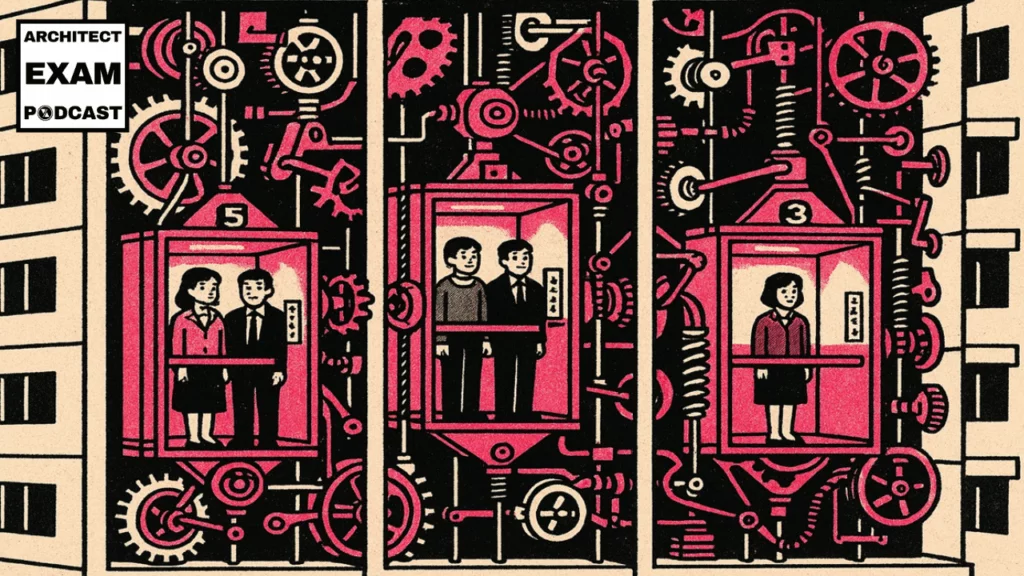
Three elevator cabs with exposed gears and shafts highlight different types of elevators, elevator design, and elevator systems.

Types of Elevators: Breaking Down the Basics

 Understanding the different types of elevators is crucial for architects planning vertical transportation systems. This comprehensive guide covers hydraulic, traction, and machine room-less elevators with selection criteria, components, and code requirements essential for ARE...
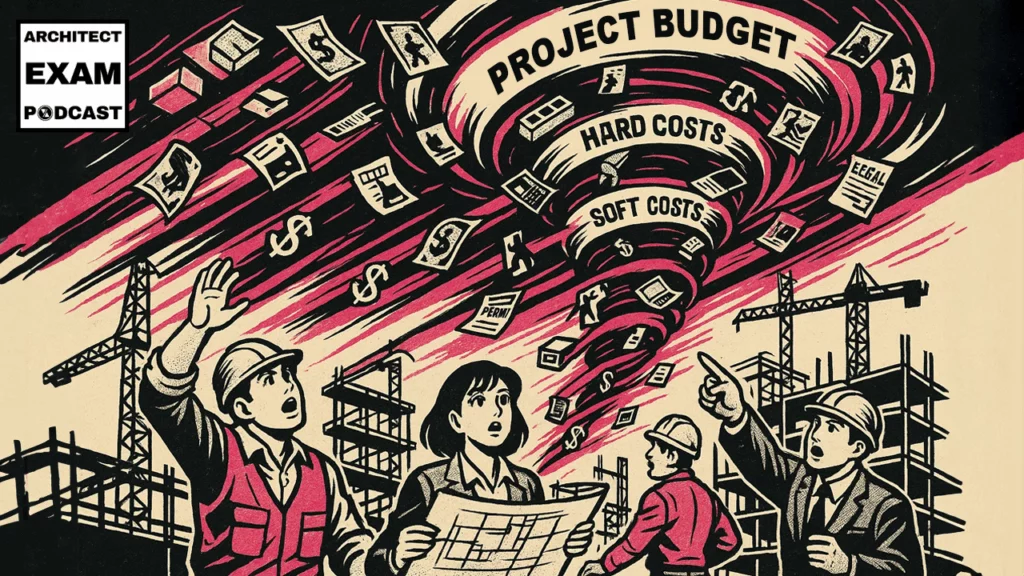
Architects and builders watch in shock as a tornado labeled “Project Budget” pulls in money and documents, highlighting the chaos of hard costs vs soft costs.

Hard Costs vs Soft Costs: Making Cents of Construction

Understanding the financial structure of construction projects is essential for architects. Whether you’re managing a client’s budget expectations,, leading your first project, or preparing for the ARE, knowing the difference between hard costs vs soft...

Architect panics while signing a flashy contract for a “perfect building,” illustrating unrealistic expectations about the architect’s standard of care.

Standard of Care: The Fine Art of Not Screwing Up

 The concept of an Architect’s Standard of care is the cornerstone of architectural practice that defines reasonable professional competence. It protects the architect against unrealistic client expectations, and it serves as the legal basis...
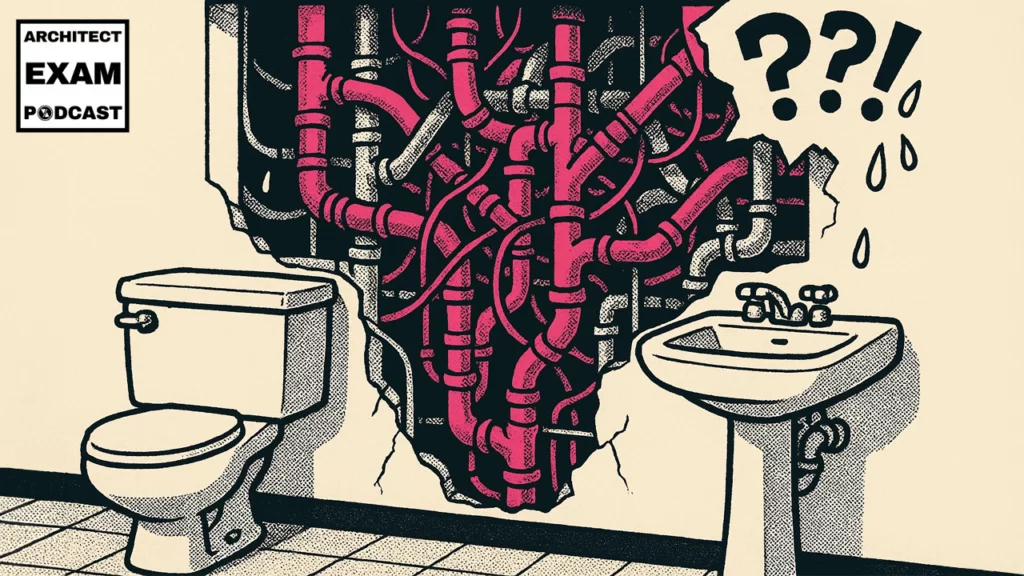
Cartoon bathroom wall reveals a chaotic maze of pipes behind a toilet and sink, illustrating confusion between a stack vent vs vent stack in plumbing systems.

Vent Stack vs Stack Vent: Clearing the Air for Good

 Understanding the difference between vent stacks and stack vents is crucial for ARE success. This guide breaks down these confusing plumbing concepts with clear analogies and practical examples to help you master plumbing system...
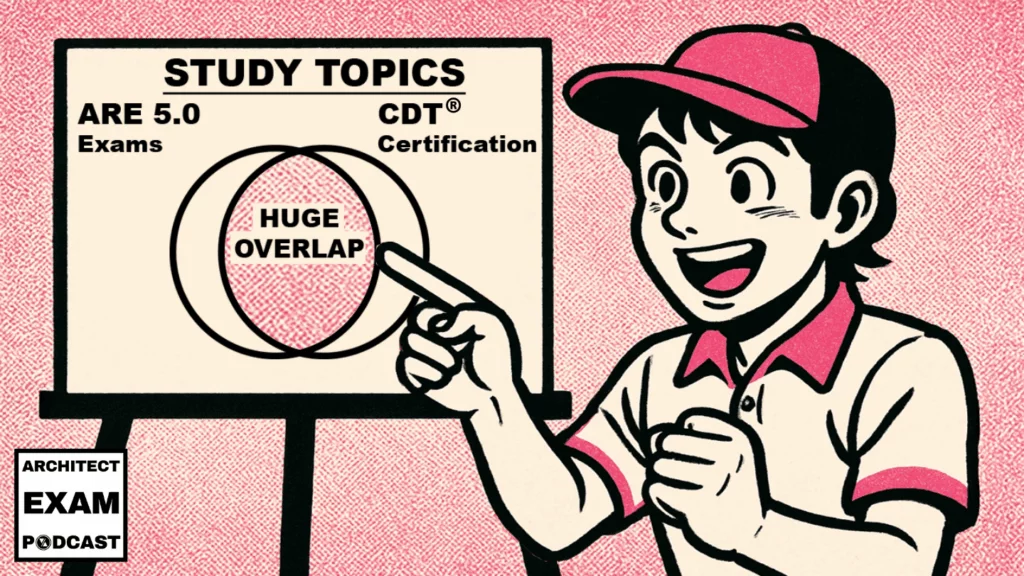
Architect Michael Riscica points to a Venn diagram showing a huge overlap between ARE Exam study topics and CDT Certification content to an audience of ARE Candidates.

ARE Candidates: Why CDT®Certification Is Your Next Win

Discover why CDT® certification is becoming the strategic advantage for ARE candidates seeking to accelerate their licensing journey. This industry-recognized credential fills critical knowledge gaps, builds professional confidence, and provides the comprehensive project delivery understanding...
Overwhelmed architect buried in paperwork, panicking over unclear documents, symbolizing the chaos of poor construction specification writing.

Top 10 Construction Specification Writing Errors & Solutions

Construction specification writing might not be the sexiest part of architecture, but it’s absolutely critical to bringing your designs to life correctly. Despite its importance, most architects repeatedly make common mistakes when writing specifications—often because...
Exhausted visual learner falls asleep studying for the ARE exam, surrounded by prep books and a hypnotic TV screen labeled “ARE PREP.”

Visual Learner Myth: Why You Need Multiple Study Methods

Have you ever spent hours watching ARE prep videos, feeling productive and confident, only to completely freeze when facing actual exam questions? You’re not alone—and contrary to popular belief, being a “visual learner” might be...
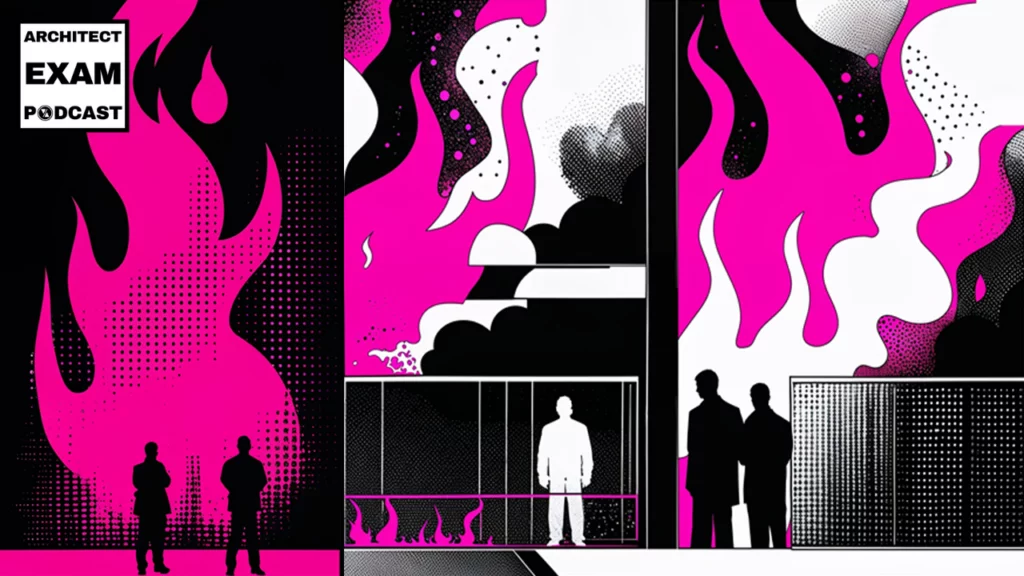
Diagram-style graphic showing people separated from rising flames by distinct fire wall, fire barrier, and fire partition assemblies in a building.

Fire Wall, Fire Barrier, Fire Partition: Key Differences

This comprehensive guide breaks down the critical differences between fire walls, fire barriers, fire partitions, smoke barriers, and smoke partitions in building construction. Understand the specific fire-resistance ratings, continuity requirements, and applications for each system...

Illustration comparing construction types I through V, showing concrete, steel, masonry, heavy timber, and wood frame structures.

Construction Types 1-5: IBC Building Classifications

Construction types are fundamental building classifications that determine everything from fire resistance to allowable heights and materials. This guide breaks down all five types of building construction as defined in the International Building Code (IBC),...
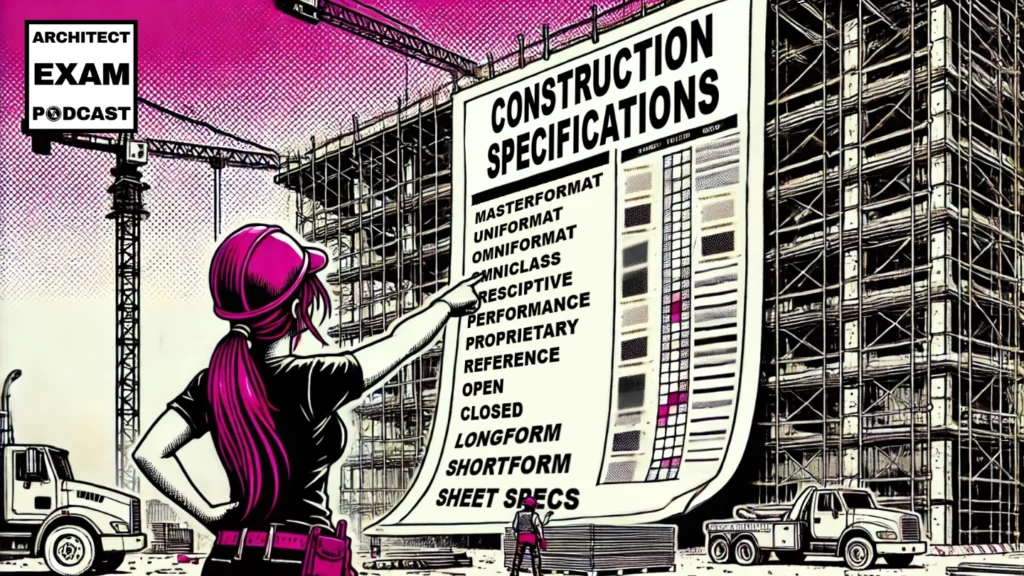
Female architect pointing to a massive on-site chart listing construction specification types like MasterFormat, performance, and proprietary.

Construction Specification Types Made Simple: A Complete Guide

This guide demystifies all major construction specification types and helps you understand when and how to use each one. These distinctions will make you more effective at writing, interpreting, enforcing, and managing construction documents....
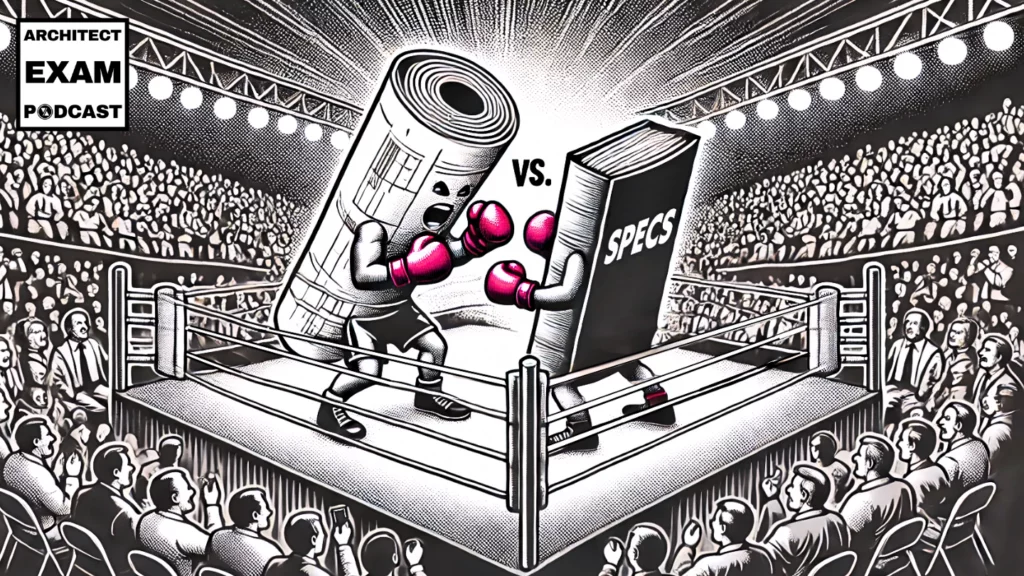
Rolled construction drawings and a specs book face off in a boxing ring, dramatizing the classic Drawings vs. Specifications debate in architecture.

Drawings vs. Specifications: Why “Specs Always Win” Is Dead Wrong

This guide debunks the common misconception about document precedence and explains how drawings vs specifications work together as complementary contract documents. Understanding this drawings vs specifications relationship is crucial for both ARE success and professional...
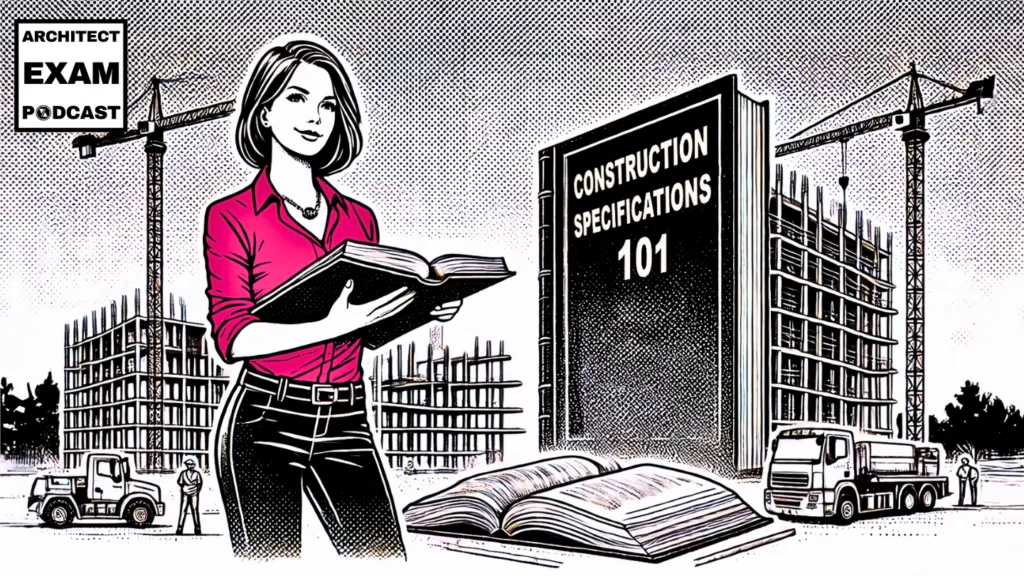
Female architect holding an open book on a construction site with a giant manual titled “Construction Specifications 101” in the background.

Construction Specifications 101: The Project Manual Explained

Have you ever wondered why architectural specifications matter so much? Or maybe you've been avoiding them altogether because they seem intimidating or boring? I get it. Specs aren't exactly the most exciting part of architecture...