


The construction punch list is the final quality control checkpoint before a project wraps up, but there’s a lot of confusion about how it actually works. This guide breaks down who creates the punch list (it’s not who you think), common punch list items, the step-by-step process from substantial completion to final payment, and everything you need to know for professional practice and the ARE and CDT exams.
This podcast is also available on YouTube, Spotify, and Apple Podcasts
What Is a Construction Punch List?
A construction punch list is a document that identifies all incomplete or defective work items that need to be finished or corrected before a project reaches final completion. Think of it as the “almost done” checklist.
You’ll see it written both ways. “Punchlist” or “punch list” are used interchangeably across the industry, but “punch list” as two words is the more widely accepted standard.
The name actually comes from the old-school practice of literally punching holes in a paper list next to completed items. We’ve upgraded to digital tools and spreadsheets now, but the name stuck.
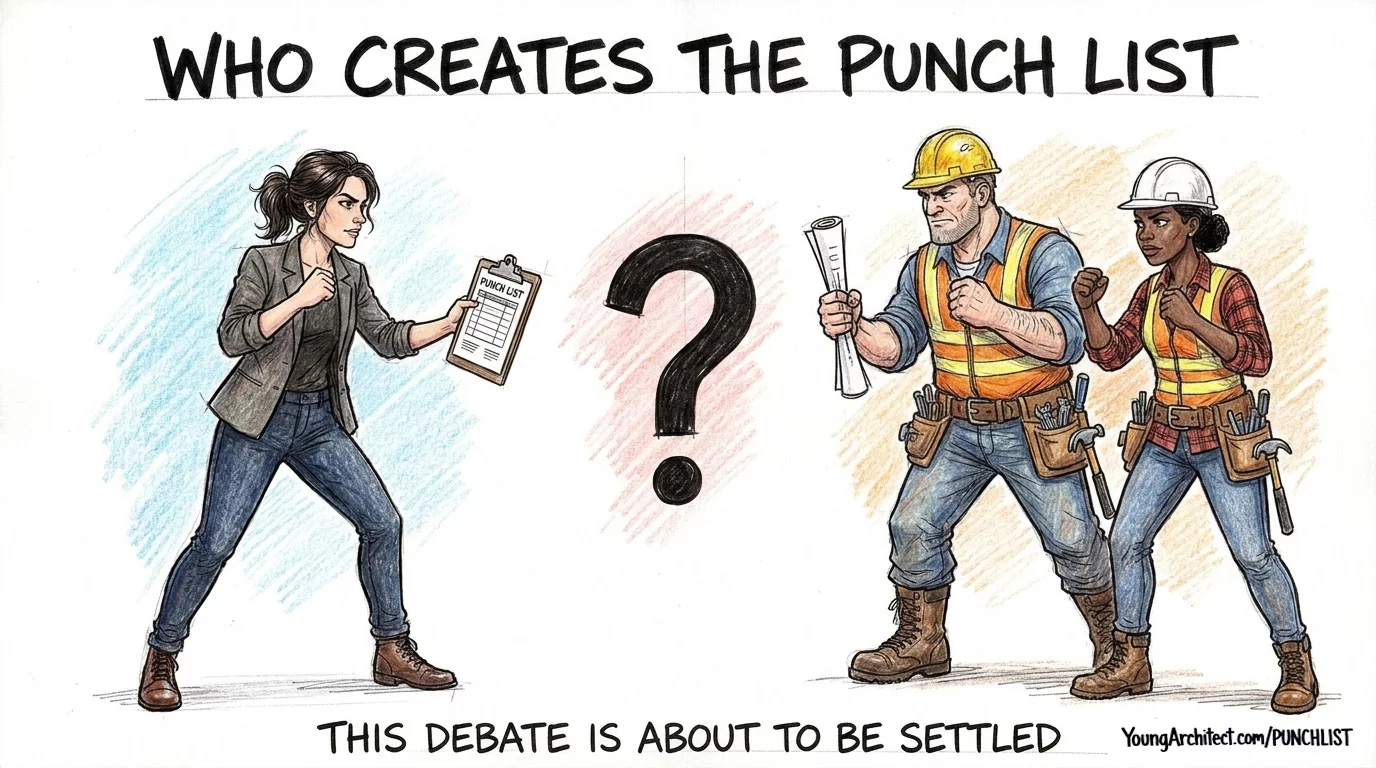
You might also hear this process called a “punch out” in construction. It’s the same thing. “Punch out” refers to the act of working through and completing all remaining punch list items. Some contractors and project managers use “punch out” and “punch list” interchangeably, so don’t let the terminology trip you up on exam day.
In the UK and many international markets, the same document is called a snag list. Same concept, different name.
So what does a punch list mean in construction from a practical standpoint? It’s the final round of quality control before the owner takes full possession of the building and the contractor receives final payment. Every item on that list represents work that doesn’t yet meet the standards set in the contract documents.
And here’s the thing. The punch list isn’t just a formality. It’s a contractual mechanism that protects all parties. The owner gets the building they paid for. The contractor gets their final payment. And the architect fulfills their professional obligation to verify the work matches the design intent.
If you’re studying for the Architect Registration Exam or CDT exam, pay close attention here. Punch list responsibilities are a core concept in NCARB’s published objectives, and understanding who does what is essential.
Understanding Substantial Completion
Before we can really talk about punch lists, we need to talk about substantial completion. These two concepts are joined at the hip.
Substantial completion is the point when a building is complete enough that the owner can use it for its intended purpose, even if minor items remain unfinished. The simplest substantial completion definition comes straight from the AIA. Document A201-2017 (Section 9.8.1) defines it as the stage when the work is “sufficiently complete in accordance with the Contract Documents so that the Owner can occupy or utilize the Work for its intended use.”
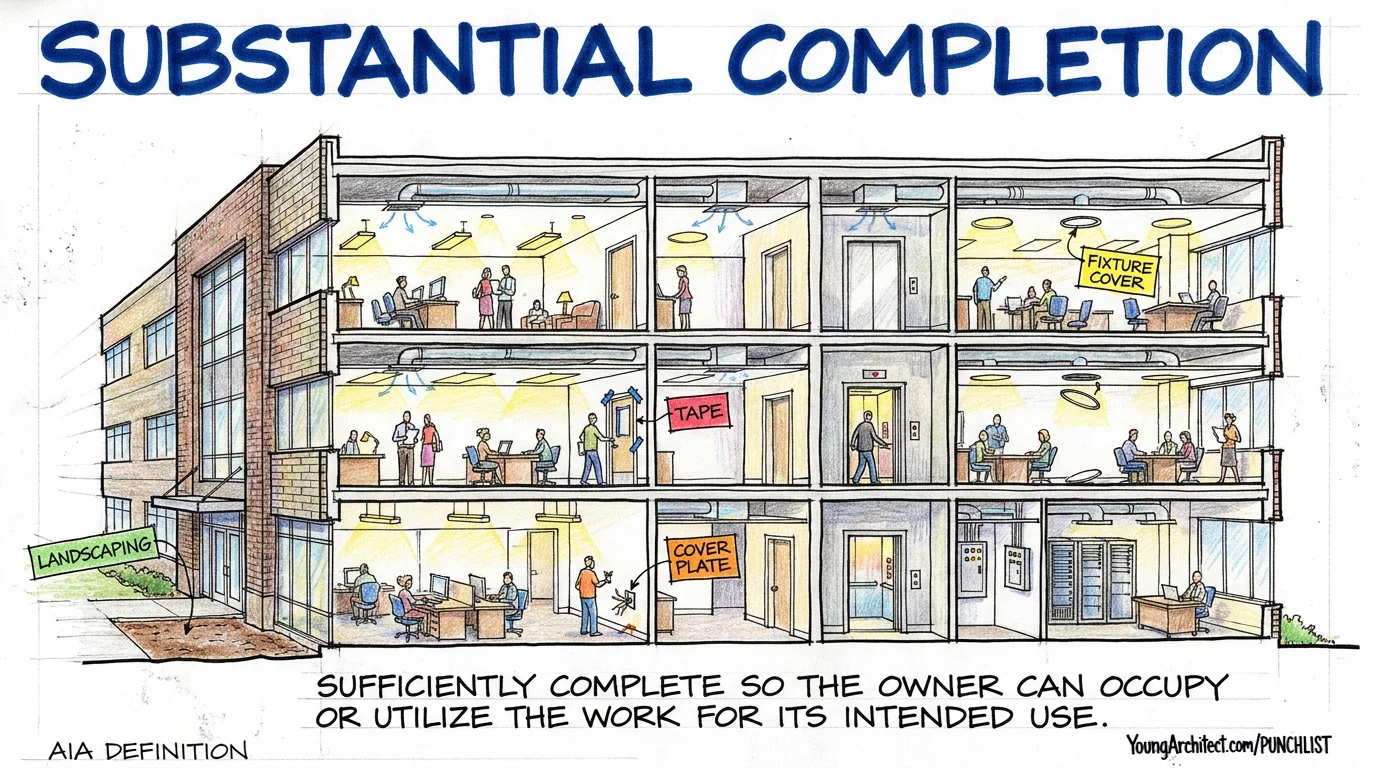
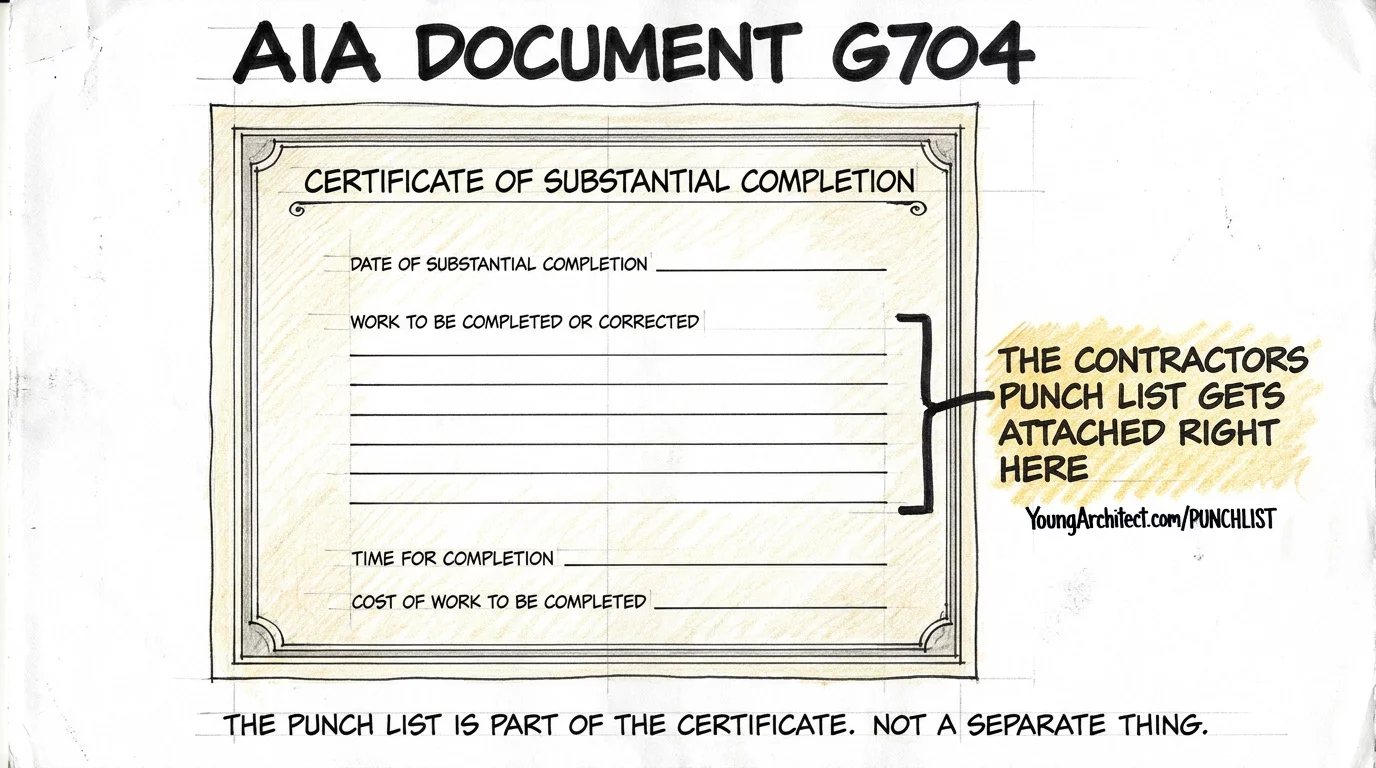
This milestone is formally documented through the certificate of substantial completion, AIA Document G704. We’ll walk through how this certificate fits into the punch list process in the step-by-step section below.
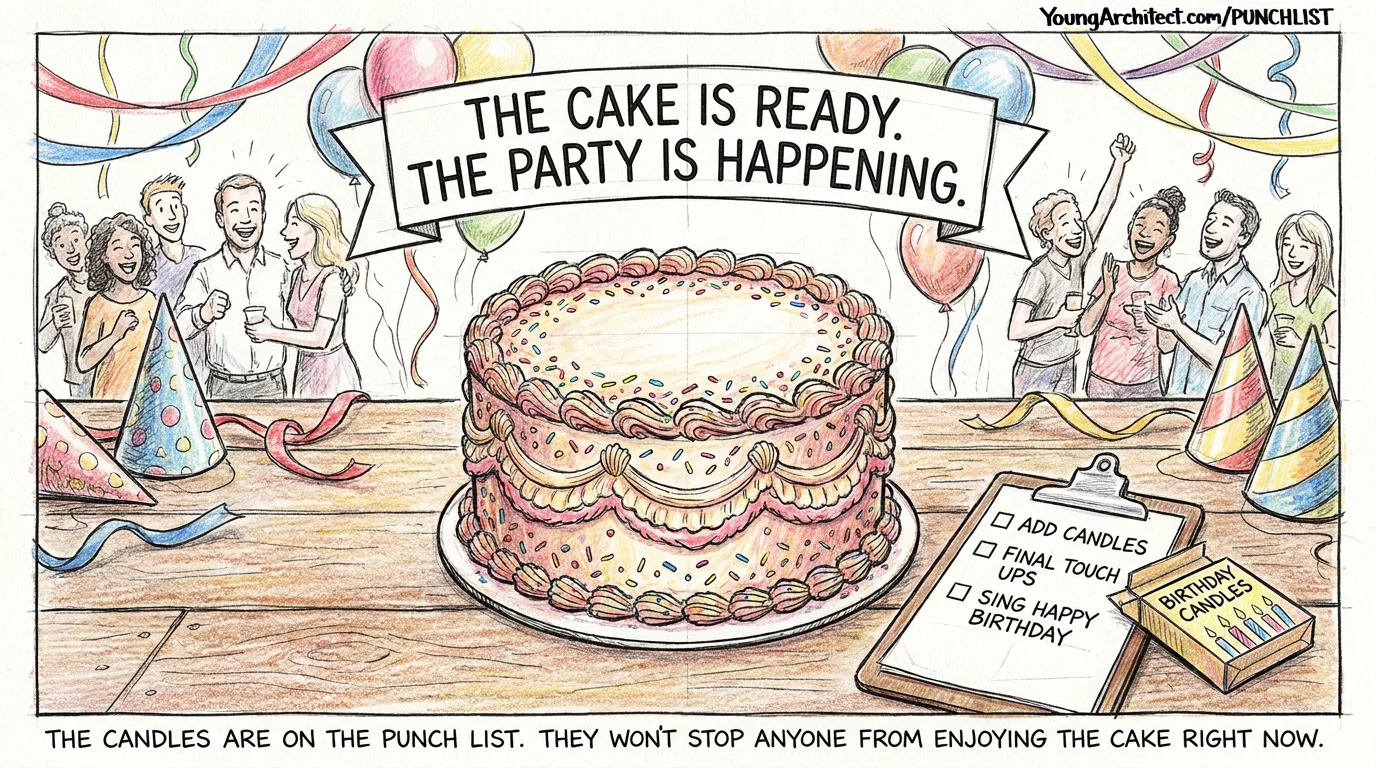
Imagine you’re baking a cake for a birthday party. You’ve baked it, frosted it, and it’s sitting on the table looking great. But you haven’t put the candles on yet. Is the cake ready for the party? Absolutely. Those candles are your punch list items. Small details that can be handled without preventing everyone from enjoying the cake right now.
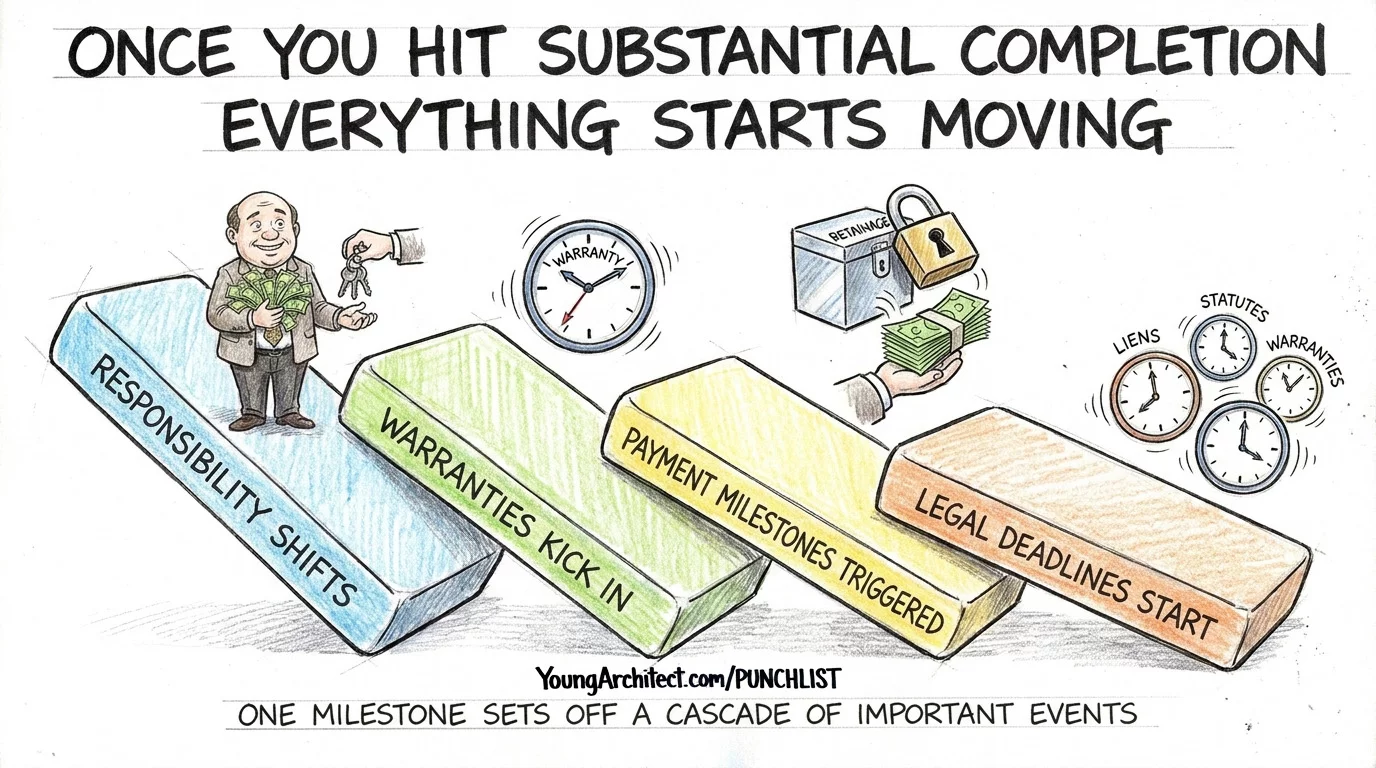
When substantial completion occurs, several important things kick in at once.
- Responsibility shifts. The owner takes over utilities, insurance, and maintenance of the building.
- Warranties begin. This is when the clock starts ticking on warranty periods, not when the project is 100% done. Long-term warranties (like roofing or equipment manufacturer warranties) run concurrently with the contractor’s one-year correction period, all starting on this same date.
- Payment milestones trigger. Retainage starts getting released to the contractor.
- Legal deadlines activate. Liens, statutes of limitations, and other time-sensitive matters begin counting down.
NCARB’s Construction & Evaluation (CE) objectives directly address this concept, and it’s a critical part of understanding the project closeout process. If you don’t understand substantial completion, you can’t fully understand the punch list.
Who Actually Creates the Construction Punch List?
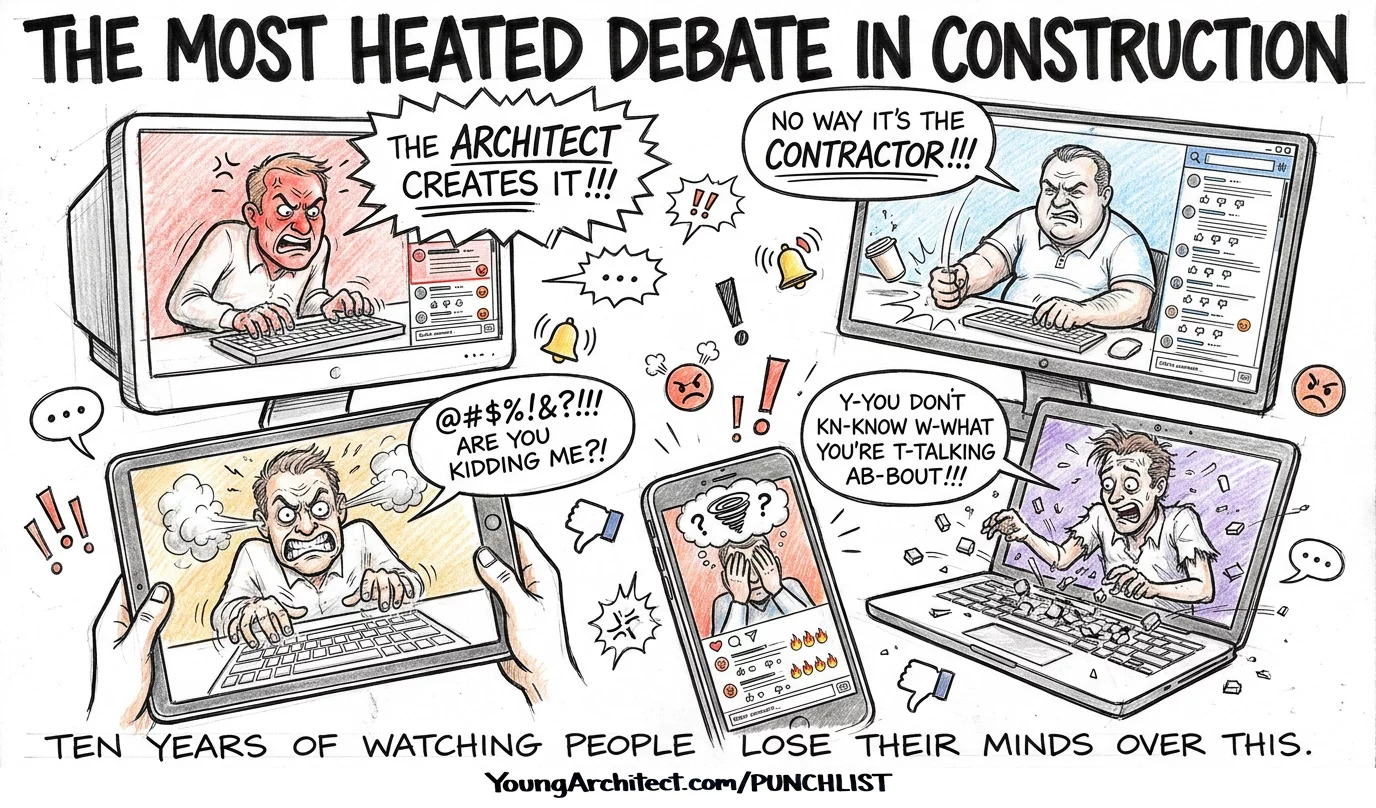
Here’s where most people get it wrong. This is easily one of the most heated debates in construction. Ask this question online and you’ll watch architects and contractors argue about it for days.
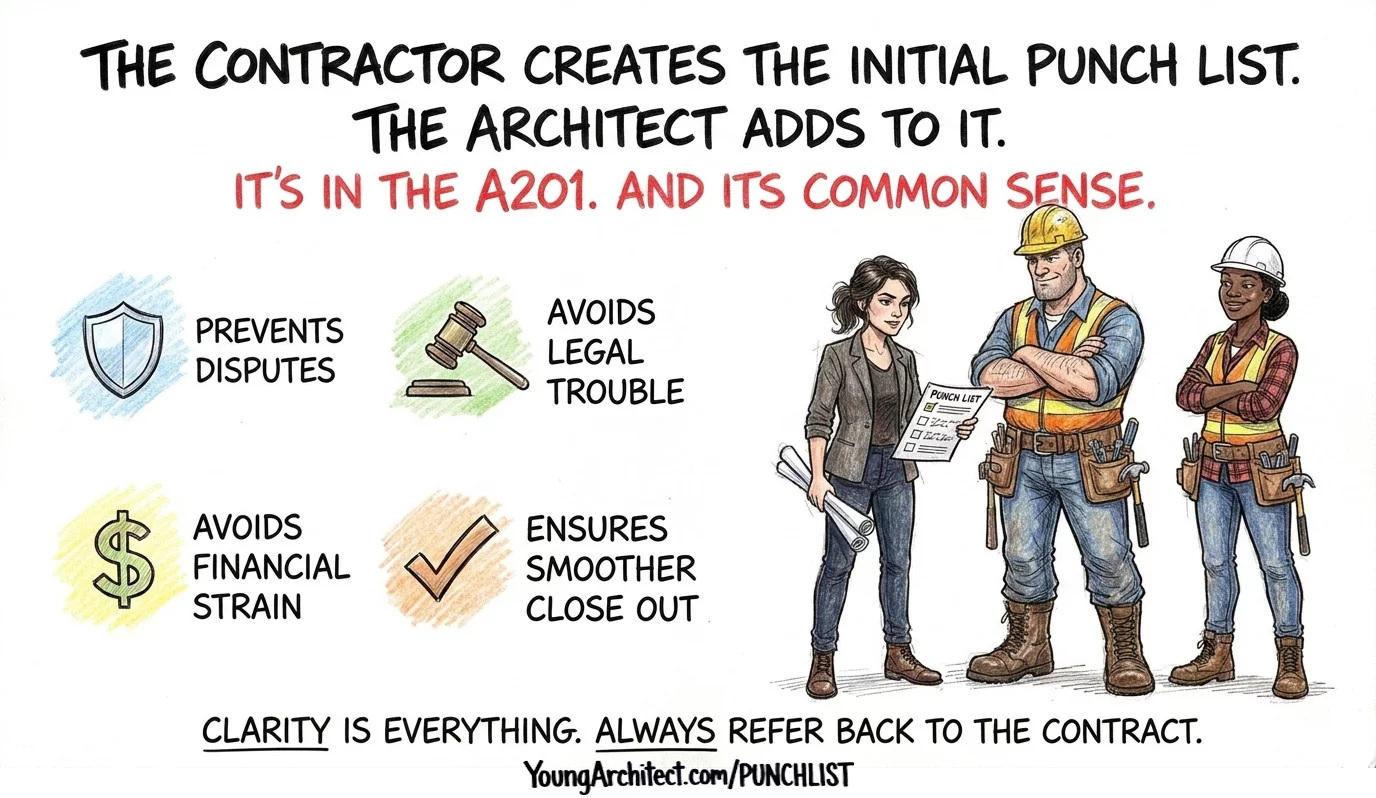
The contractor creates the initial construction punch list. Not the architect. Not the owner. The contractor.
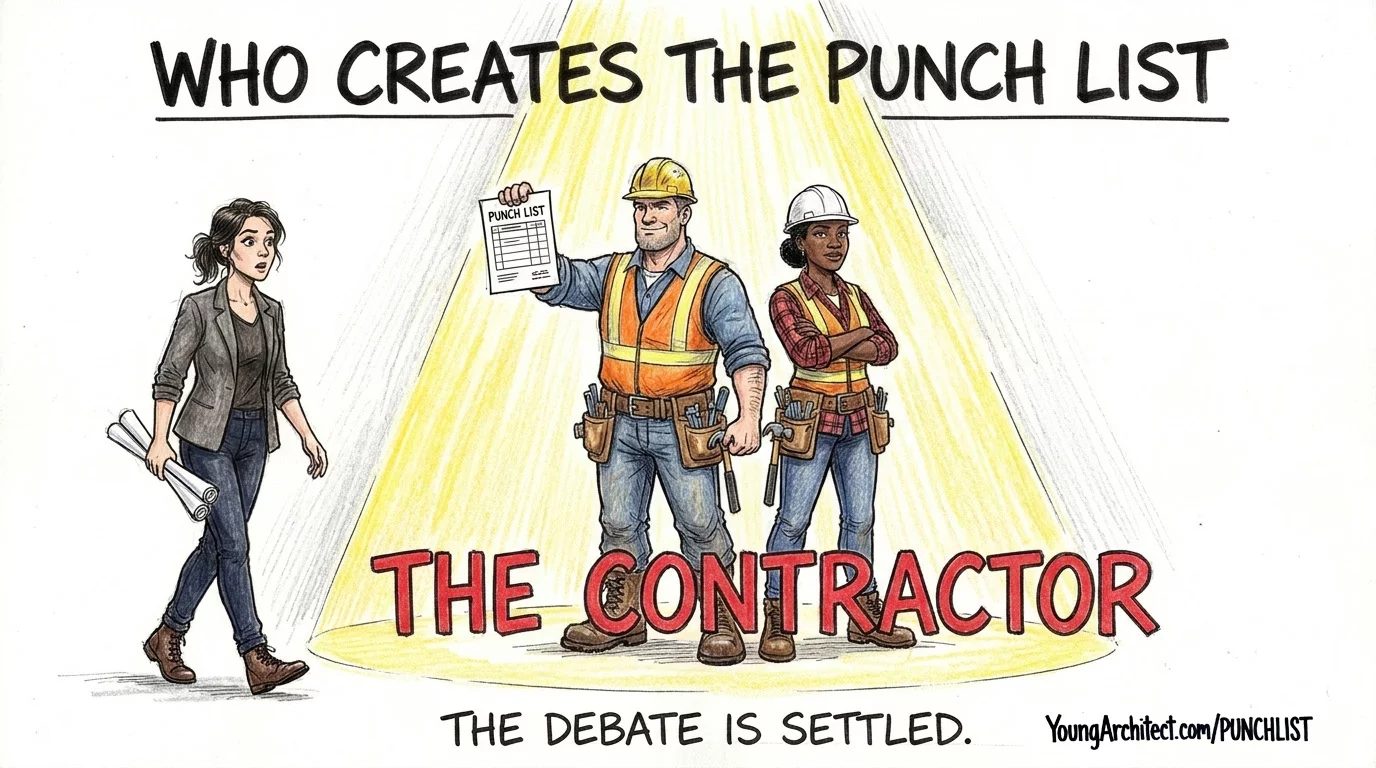
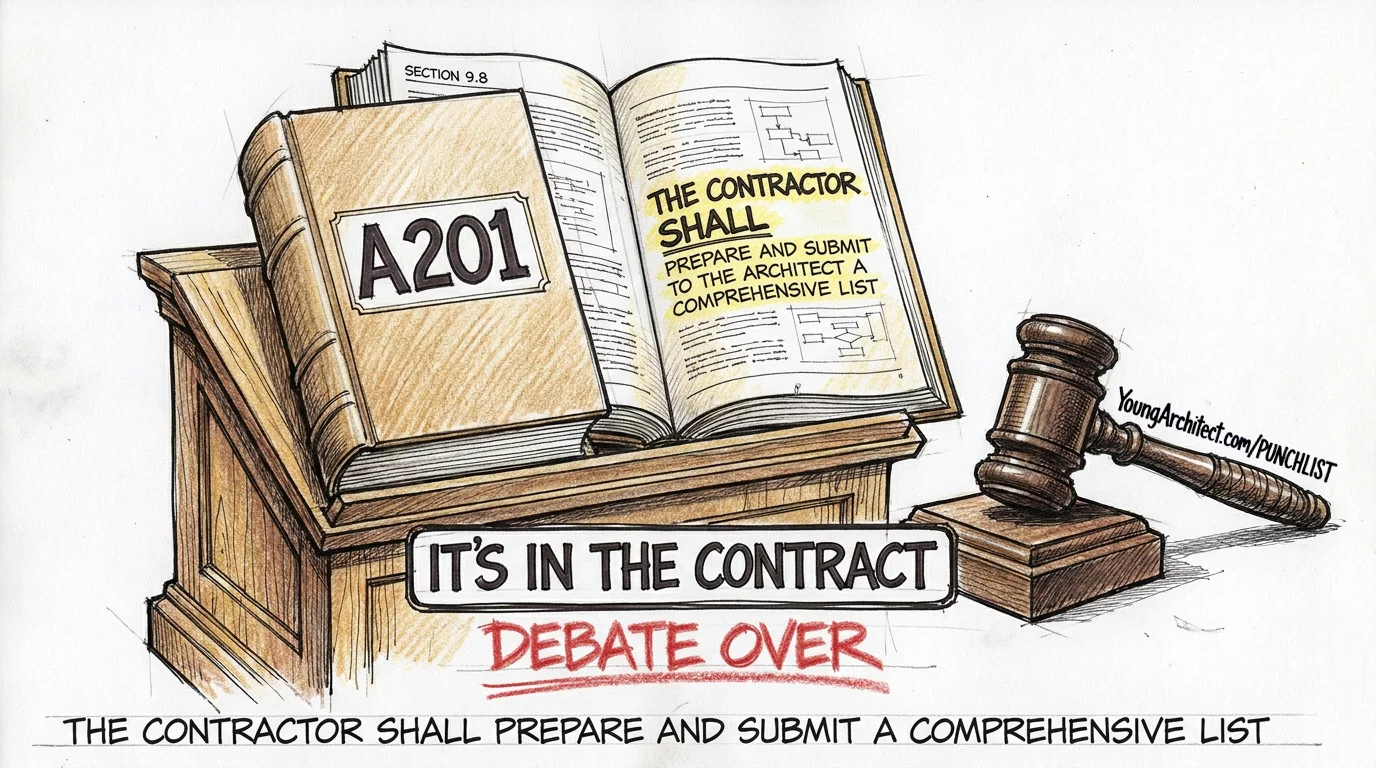
This is explicitly stated in AIA Document A201-2017, Section 9.8.2. When the contractor believes the work is substantially complete, they are responsible for preparing and submitting a comprehensive list of items to be completed or corrected to the architect.
This isn’t just some obscure contractual detail. It’s one of the most tested topics on architecture licensing exams and the CDT certification. Understanding the specific roles outlined in AIA contract documents is critical for both exam success and professional practice.
And when you think about it, this makes perfect sense. Contractors are on the job site every single day. They’re managing the trades, watching the work happen in real time. They have the best vantage point to identify what’s incomplete or defective before anyone else walks through.
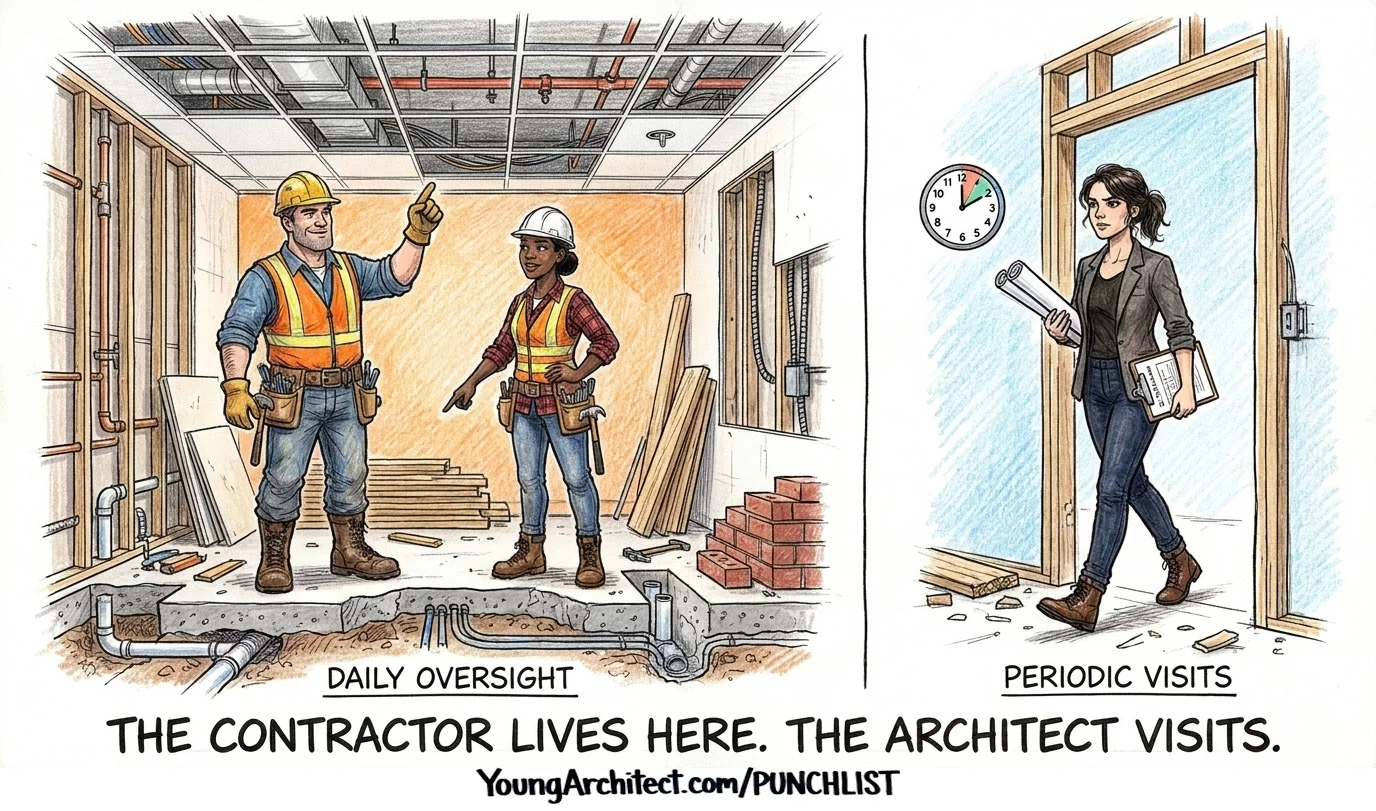
Yet the confusion persists. Architecture students, young professionals, and even some contractors assume the architect creates the punch list. It seems logical. Architects are detail-oriented. They designed the building. They should be the ones checking it, right?
Not exactly. The architect’s role during construction observation is to verify the work generally conforms to the contract documents. But the contractor is the one responsible for self-inspecting their own work and identifying deficiencies first. The contractor builds knowledge of the project from the construction bidding process forward, so they’re in the best position to know what’s been missed.
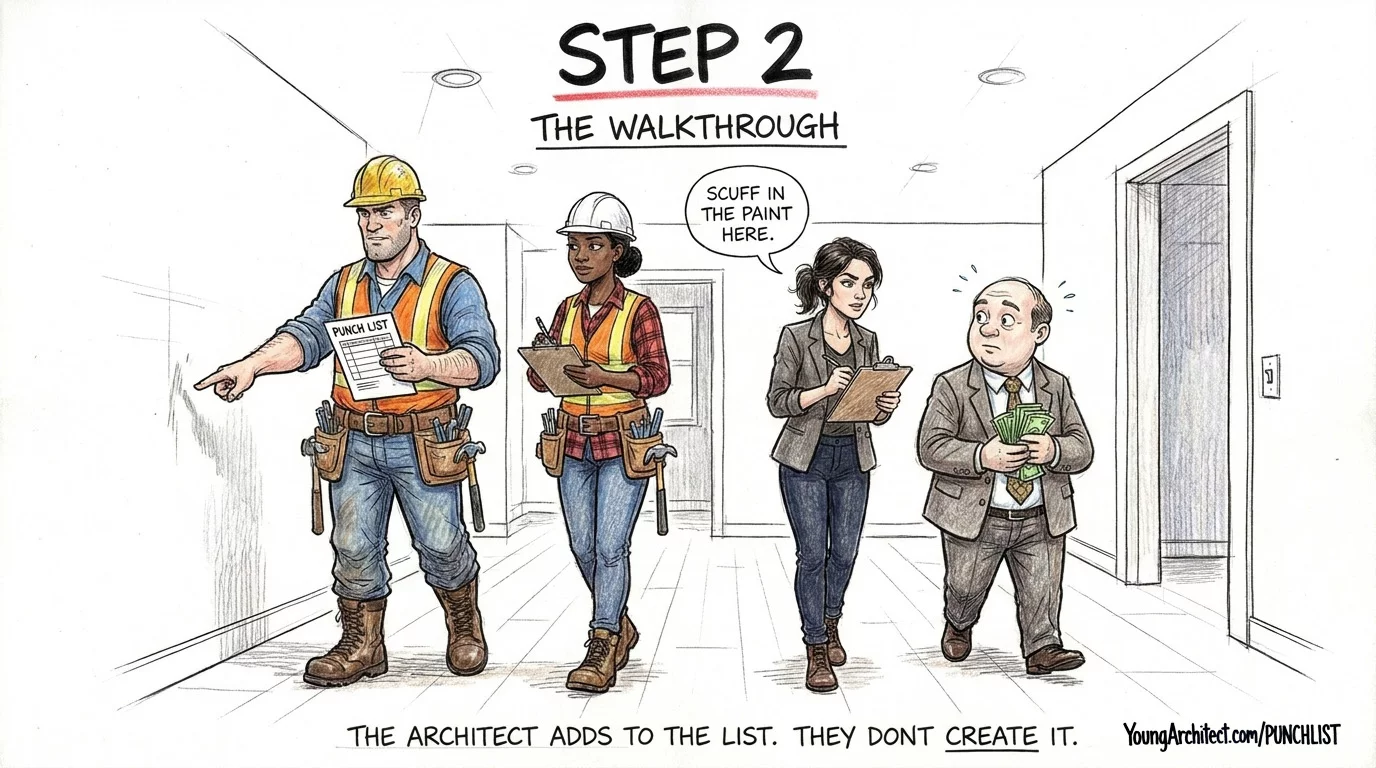
The architect reviews and adds to the contractor’s list. They don’t create it from scratch.
Common Construction Punch List Items
So what actually shows up on a punch list? The items vary by project, but they generally fall into a few categories.
Cosmetic Items
- Paint touch-ups, scuffs, and scratches on finished surfaces
- Damaged or stained ceiling tiles
- Gaps in trim or molding
- Flooring imperfections or transition strip issues
- Wall patching that needs finishing
Functional Items
- Doors that don’t close or latch properly
- Hardware that’s missing, loose, or incorrectly installed
- Windows that don’t operate smoothly
- Cabinet doors that are misaligned
- Plumbing fixtures that leak or don’t function correctly
Mechanical and Electrical Items
- HVAC systems that need balancing or aren’t heating/cooling properly
- Light fixtures that are flickering, missing, or incorrectly aimed
- Outlets or switches that don’t work
- Fire alarm or sprinkler system deficiencies
- Thermostats that aren’t programmed or responding correctly
Site Work Items
- Landscaping that’s incomplete or damaged
- Paving or grading issues
- Exterior signage or wayfinding that’s missing
- Parking lot striping or bollard installation
Many of these issues can be prevented with strong submittal review processes earlier in the project. When shop drawings, product data, and samples are reviewed carefully during construction, fewer surprises show up at the end.
A Quick Construction Punch List Example
To see this in practice, imagine wrapping up a 5,000 square foot dental office buildout. This punch list example shows the kinds of items a contractor might include on their initial list:
- Touch up paint on the reception area accent wall where it was scuffed during millwork installation
- Adjust the operatory room doors so they latch properly
- Replace one cracked ceiling tile in the hallway
- Reprogram the thermostat in the staff break room (not responding to setpoint changes)
- Install the missing door stop in the restroom
- Clean and polish all countertop surfaces for final turnover
Nothing on this list prevents the dentist from opening for business. That’s the key. These are all items that can be completed while the owner begins using the space. That’s the difference between substantial completion and final completion in action. A new construction punch list tends to have fewer surprises than a renovation project, but coordination issues between trades still show up regularly.
The Construction Punch List Process Step by Step
Let’s walk through the entire construction punch list process from start to finish.
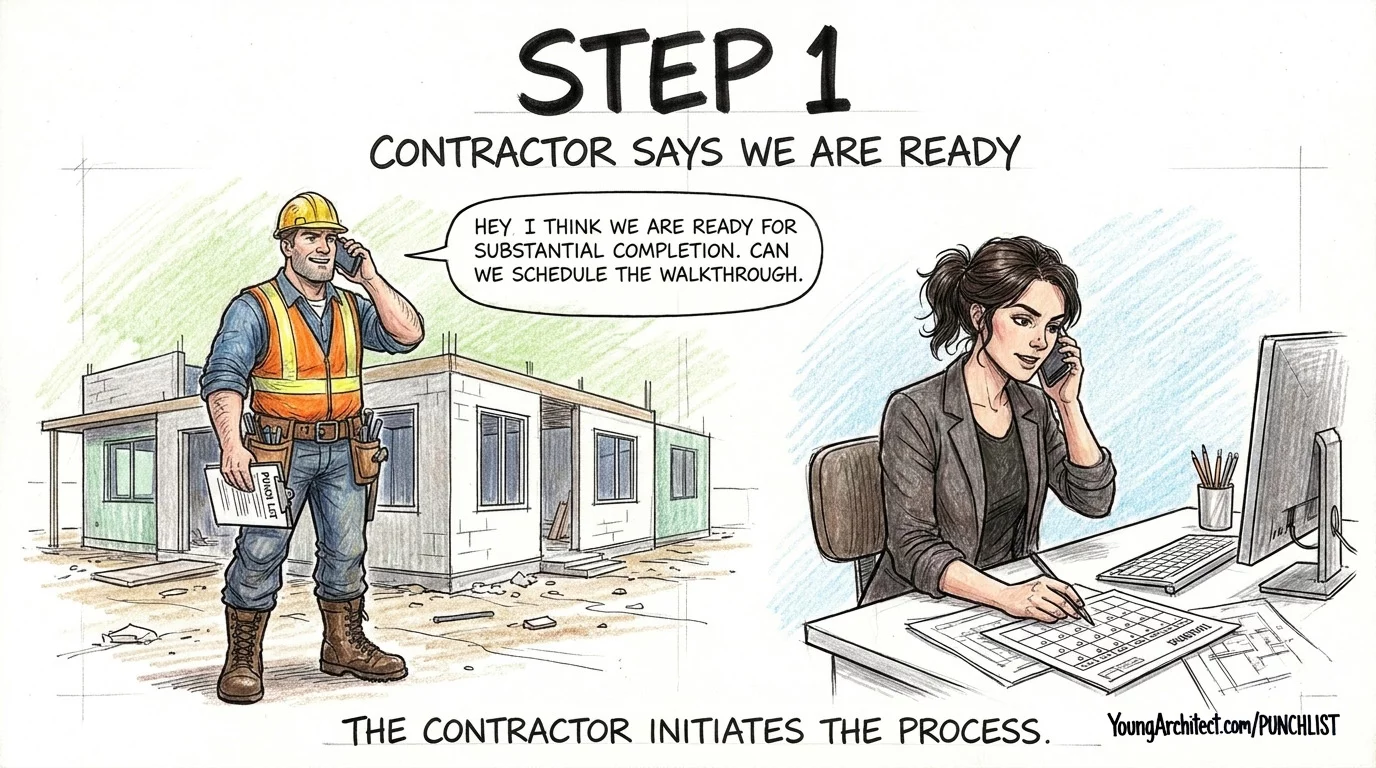
Step 1: The Contractor Says We’re Ready
As the project nears completion, the contractor sends notice to the architect that they believe the work is substantially complete. Along with that notice, the contractor submits their initial punch list identifying all incomplete or defective items they’ve already found.
This is the contractor’s responsibility, not the architect’s. The contractor initiates the process.
Step 2: The Punch List Walkthrough
The architect, owner, and contractor conduct a punch list walkthrough together. This is the formal walkthrough where they review the project against the contract documents.
During the punch list walkthrough, the team reviews the contractor’s list and adds any additional items that were missed. The architect and owner are looking at the work with fresh eyes, so they’ll often catch things the contractor overlooked.
Step 3: Is the Project Substantially Complete?
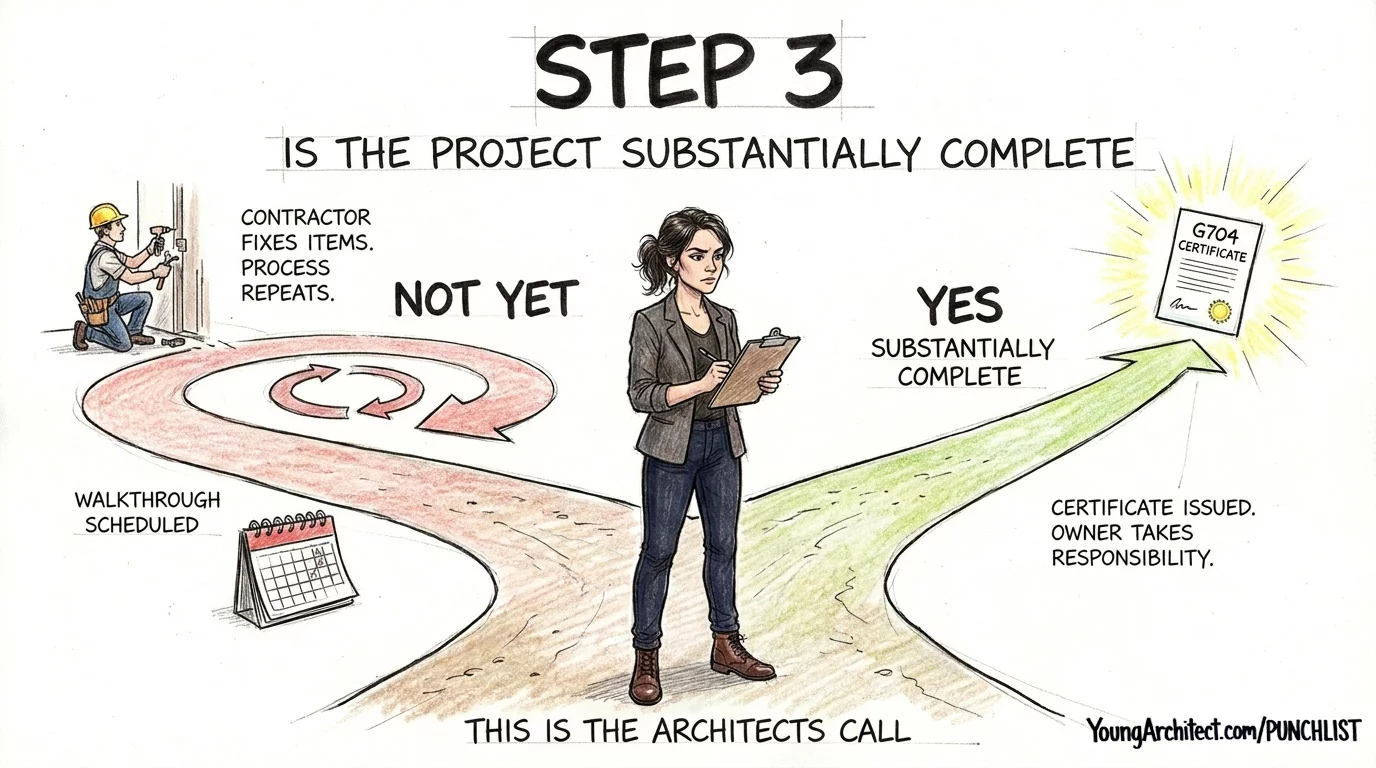
The architect makes a critical determination. Is the project substantially complete or not?
If no, the contractor continues working and the process repeats.
If yes, the architect issues a Certificate of Substantial Completion (AIA Document G704).
The G704 certificate formalizes everything that was agreed to during the punch list walkthrough. It documents the date of substantial completion, identifies which responsibilities transfer to the owner, and includes the contractor’s punch list as an attachment. This single document triggers the cascade of warranties, payment milestones, and legal deadlines we covered above.
Once the certificate is issued, the owner takes possession of the building, except for the areas where punch list work is still happening. The contractor completes all remaining punch list items within the agreed timeframe.
After the contractor finishes, the architect and owner verify that all items have been properly completed. This final punch list review confirms everything meets the contract requirements. Once verified, final payment, including retainage, is released to the contractor.
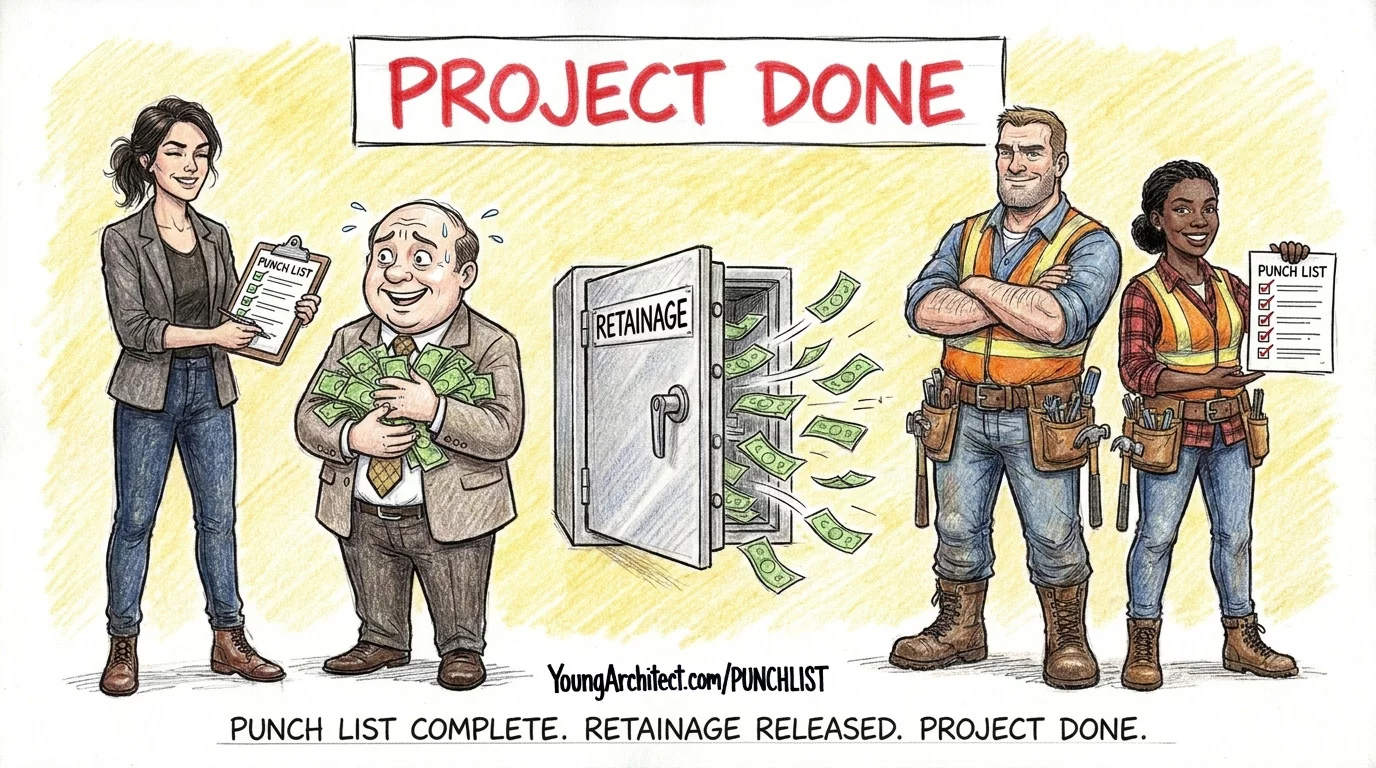
From a project management perspective, this process requires careful coordination between all parties. The punch list isn’t just a construction task. It’s a project management exercise that involves scheduling, communication, documentation, and financial tracking all at once. If you’re studying for the PjM exam, understanding how closeout ties into overall project delivery is important.
Understanding this workflow is essential for the CE exam, and it connects directly to construction administrative procedures like RFIs, submittals, and payment applications. Everything in construction administration is interconnected.
The One-Year Correction Period
Even with the most thorough punch list, things get missed. Some defects don’t show up until the building has been occupied and used for a while.
That’s why the AIA includes a one-year correction period in A201-2017 (Section 12.2.2.1). Starting from the date of substantial completion, the contractor is responsible for correcting any work that doesn’t conform to the contract documents, as long as the owner notifies them within that one-year window.
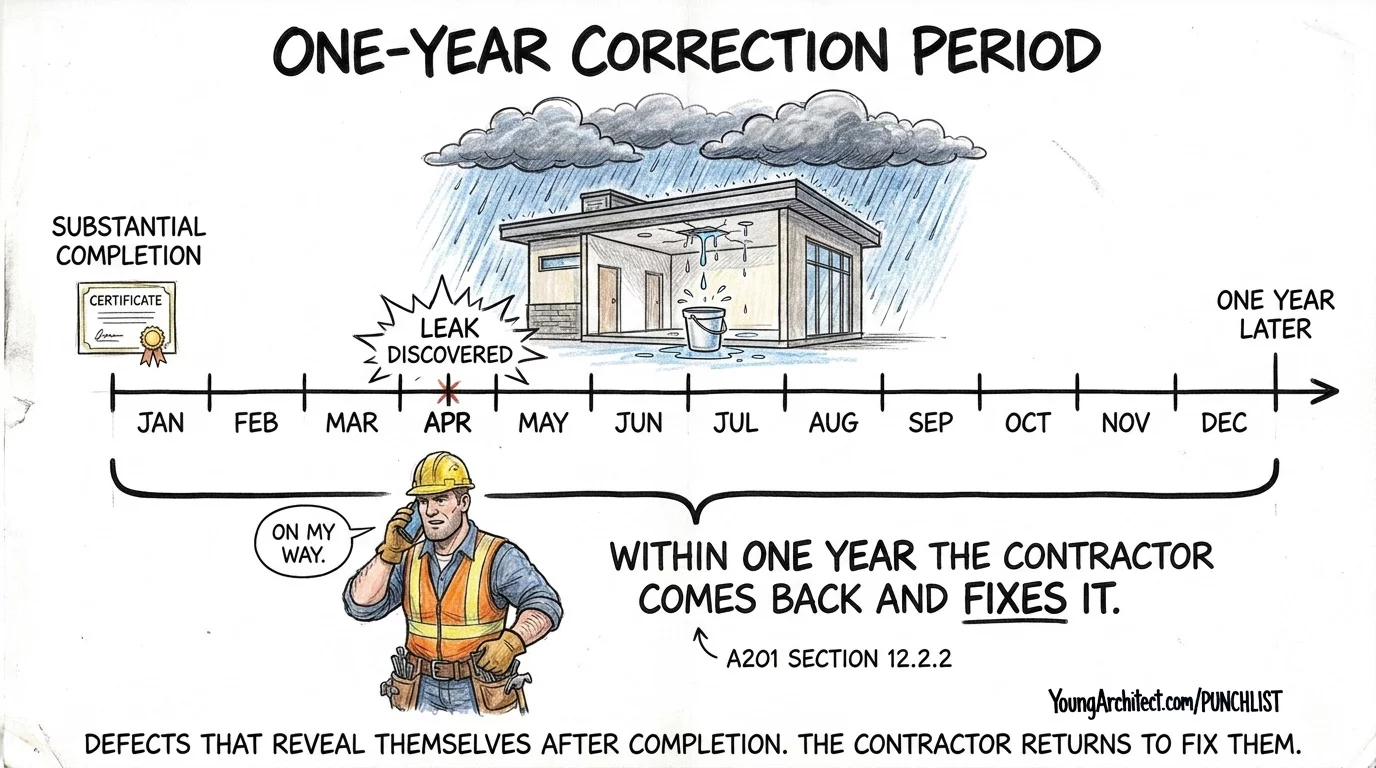
This is different from a standard warranty, which typically covers specific materials or equipment over longer periods. The correction period is broader. It covers any work found to be non-conforming, regardless of the specific trade or material involved.
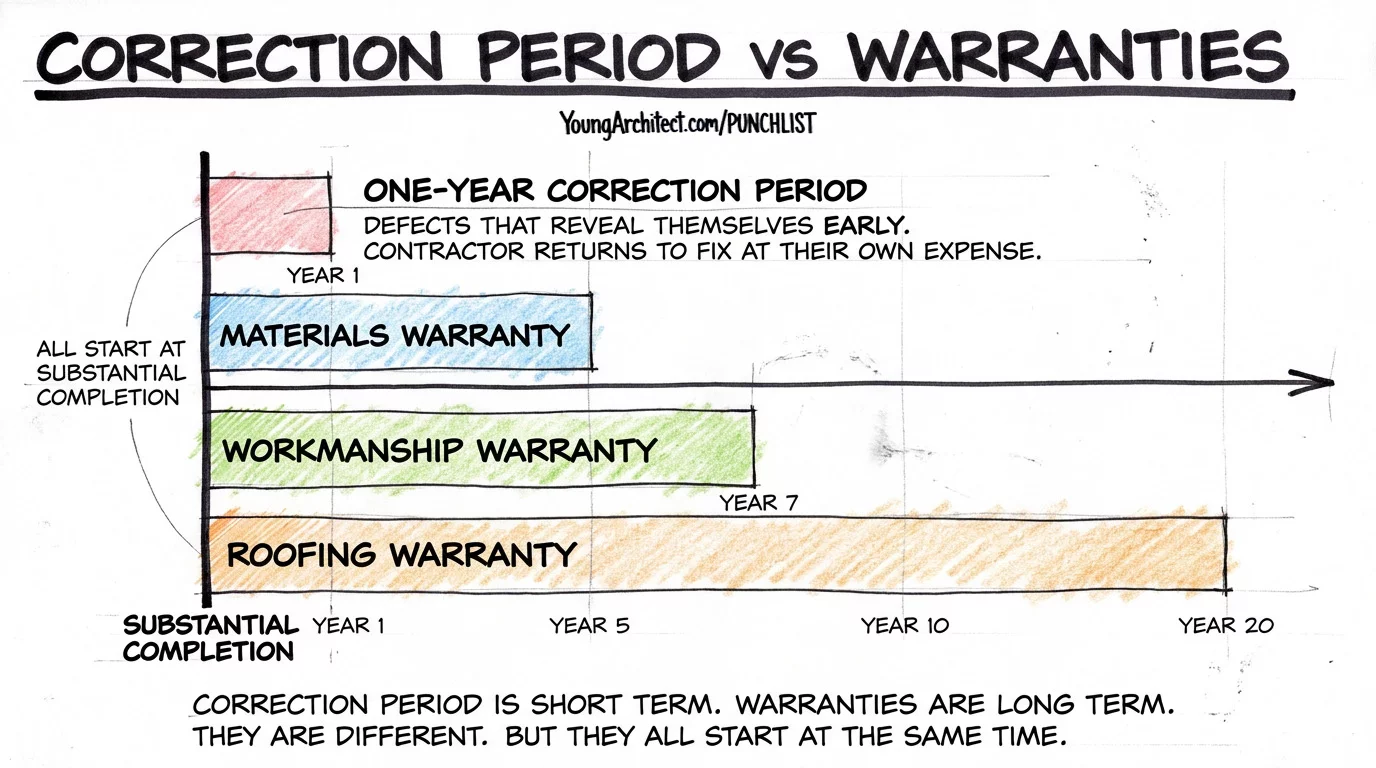
For exam purposes, make sure you understand the distinction between the correction period and warranties. This distinction falls squarely within NCARB’s CE objectives. Our CE 101 course includes practice questions specifically addressing this.
Best Practices for Managing Construction Punch Lists
Want to make your life easier during project closeout? Start early and stay organized.
Use rolling punch lists throughout construction. Don’t wait until the end to start identifying issues. Address problems as they come up during regular site visits. This dramatically reduces the size of the final punch list.
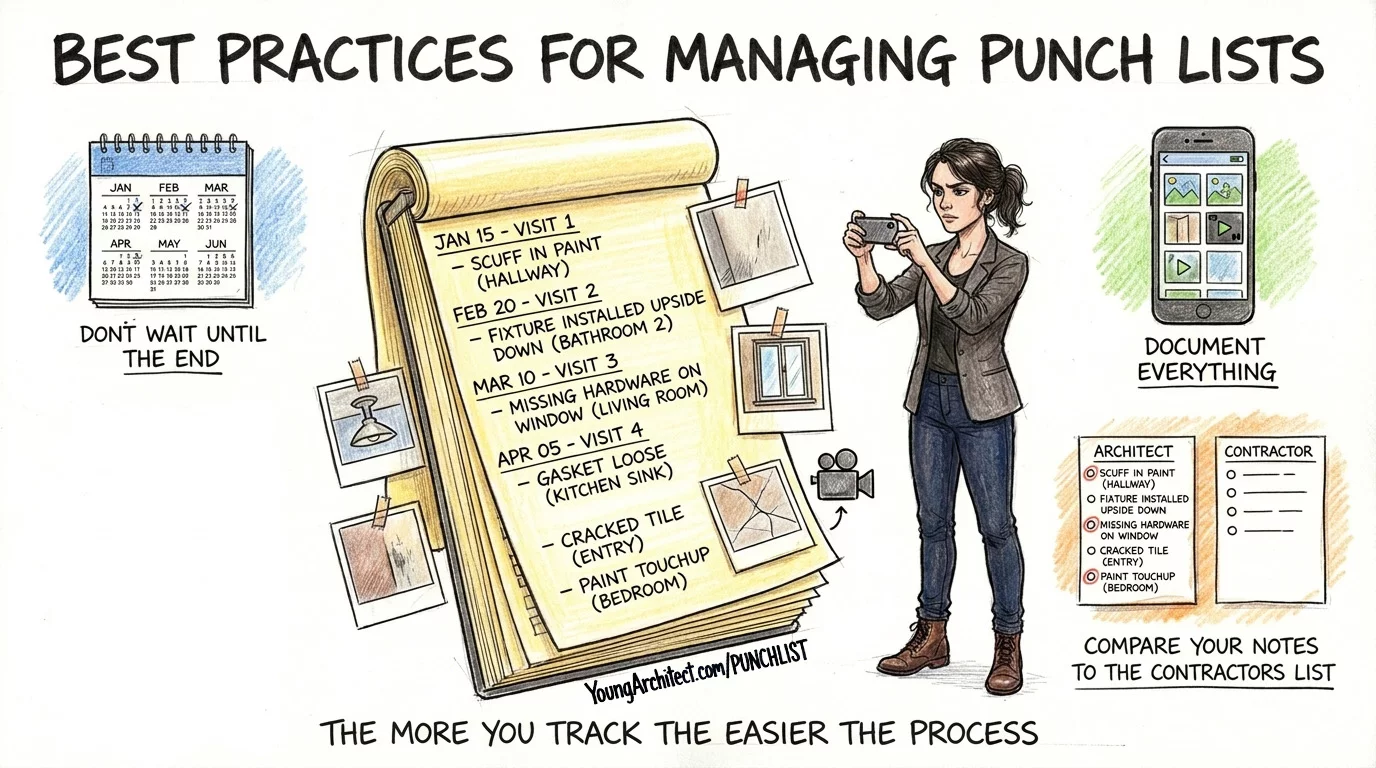
Document everything clearly. Take detailed photos. Write specific descriptions of each issue. Note the exact location (room number, floor, grid line). Date every observation. Vague notes like “fix wall” help nobody.
Prioritize your items. Not all punch list items carry the same weight.
- Critical: Affects life safety or building functionality
- Important: Affects aesthetics or long-term durability
- Minor: Small cosmetic details for final polish
Conduct pre-punch list inspections. Before the official punch walk, do your own walkthrough to catch major issues. This saves time during the formal review and shows professionalism.
Avoiding Common Punch List Problems
Even with great processes in place, things can go sideways. Here are the most common problems and how to prevent them.
Communication breakdowns. When stakeholders don’t understand their roles and responsibilities, things fall through the cracks. Establish clear communication channels and documentation methods from day one. If you’re seeing repeated misunderstandings about quality standards or completion criteria, that’s a warning sign.
Scope creep. Owners sometimes try to add new work or design changes during the punch list phase. This is not what punch lists are for. New work should be handled as a change order, which is a completely separate contractual process. Clear contract language defining what constitutes a punch list item versus new work is essential.
Timeline issues. Set realistic deadlines for completing punch list items. Factor in specialty material lead times, access to completed areas, coordination with tenant move-ins, and weather conditions for exterior work. Track progress regularly and communicate status updates to all parties.
Cost impacts. Extensive punch lists have real financial consequences. Labor costs for return trips, extended general conditions, and withheld retainage all add up. Unresolved punch list items can eat into the project’s construction contingency, creating budget strain at the worst possible time. Strong quality control throughout construction is the best way to minimize these costs at closeout.
Construction Punch List FAQ
What is a punch list in construction?
A punch list is a document that identifies all incomplete or defective work items that need to be finished or corrected before a construction project reaches final completion and final payment is released. It’s the last quality control checkpoint before the owner fully accepts the building.
Is it “punchlist” or “punch list”?
Both spellings are used across the industry. “Punch list” as two words is the more widely accepted and industry-standard spelling. You’ll see “punchlist” as one word in some software tools and informal communication, but two words is the safer bet for professional documents.
Who creates the punch list?
The contractor creates the initial punch list. This is explicitly required by AIA Document A201-2017. The contractor prepares and submits a comprehensive list of items to be completed or corrected, and then the architect reviews the list and may add additional items during the punch walk.
What is a punch walk?
A punch walk is the formal walkthrough conducted by the architect, owner, and contractor to review the project near completion. During this walkthrough, the team reviews the contractor’s punch list, identifies any additional issues, and the architect determines whether the project has reached substantial completion.
Who pays for punch list items?
The contractor pays for completing all punch list items. These are items that should have been completed correctly under the original contract. The cost of correcting or completing punch list work is the contractor’s responsibility, and final payment (including retainage) is typically withheld until all items are satisfactorily resolved.
What are AIA punch list standards?
The AIA addresses punch lists primarily through A201-2017, General Conditions of the Contract for Construction. Section 9.8.2 requires the contractor to prepare the initial punch list. Section 9.8.1 defines substantial completion. And Section 12.2.2.1 establishes the one-year correction period for defects discovered after completion.
What is the difference between a punch list item and a change order?
A punch list item is work that was already required by the contract documents but wasn’t completed correctly or at all. A change order is a modification to the original contract that adds, removes, or changes the scope of work. If an owner asks for something new during the punch list phase, that’s a change order, not a punch list item.
How long does a contractor have to complete punch list items?
The timeframe for completing punch list items is typically negotiated and specified in the contract or in the Certificate of Substantial Completion (AIA G704). There’s no single industry standard, but 30 to 60 days is common. Beyond that, the AIA’s one-year correction period provides an additional safety net for defects discovered after the project is complete.
Why is it called a punch list?
The term goes back to the old-school practice of physically punching a hole in a paper list next to each item as it was completed. Contractors would literally carry the list around the job site and use a hole punch to mark finished items. The method has evolved to digital tools and spreadsheets, but the name stuck and is still used industry-wide today.
What does “punch out” mean in construction?
“Punch out” in construction refers to the process of completing all remaining punch list items on a project. It’s essentially another way of saying “working through the punch list.” You’ll hear contractors say they’re “punching out” a project, meaning they’re systematically addressing every incomplete or defective item to get the building from substantial completion to final completion and close out the contract.
Understanding the construction punch list process is just one piece of the construction administration puzzle. If you’re preparing for your exams, these resources will help you master the full picture.
ARE 101 Course Membership covers all divisions of the Architect Registration Exam with practice questions, case studies, and content specifically addressing contract administration topics like punch lists and substantial completion.
CDT 101 goes deep on construction documentation, project delivery methods, and the roles and responsibilities outlined in AIA documents.
And if you want structured coaching with accountability, the ARE Boot Camp gives you a clear roadmap, weekly live meetings, and support until you’re fully licensed.
Start Your Exam Prep Journey Today →