Study motivation is the single biggest barrier for ARE candidates who have the books, the courses, and the study plan but can’t seem to open any of them. If exam stress and decision fatigue have you frozen before you even start studying, this post is your playbook. You’ll learn the 20-minute rule, micro-goals, and resource purging strategies to overcome overwhelm and finally get moving.
This podcast is also available on YouTube, Spotify, and Apple Podcasts.
Study Motivation Starts in the Parking Lot
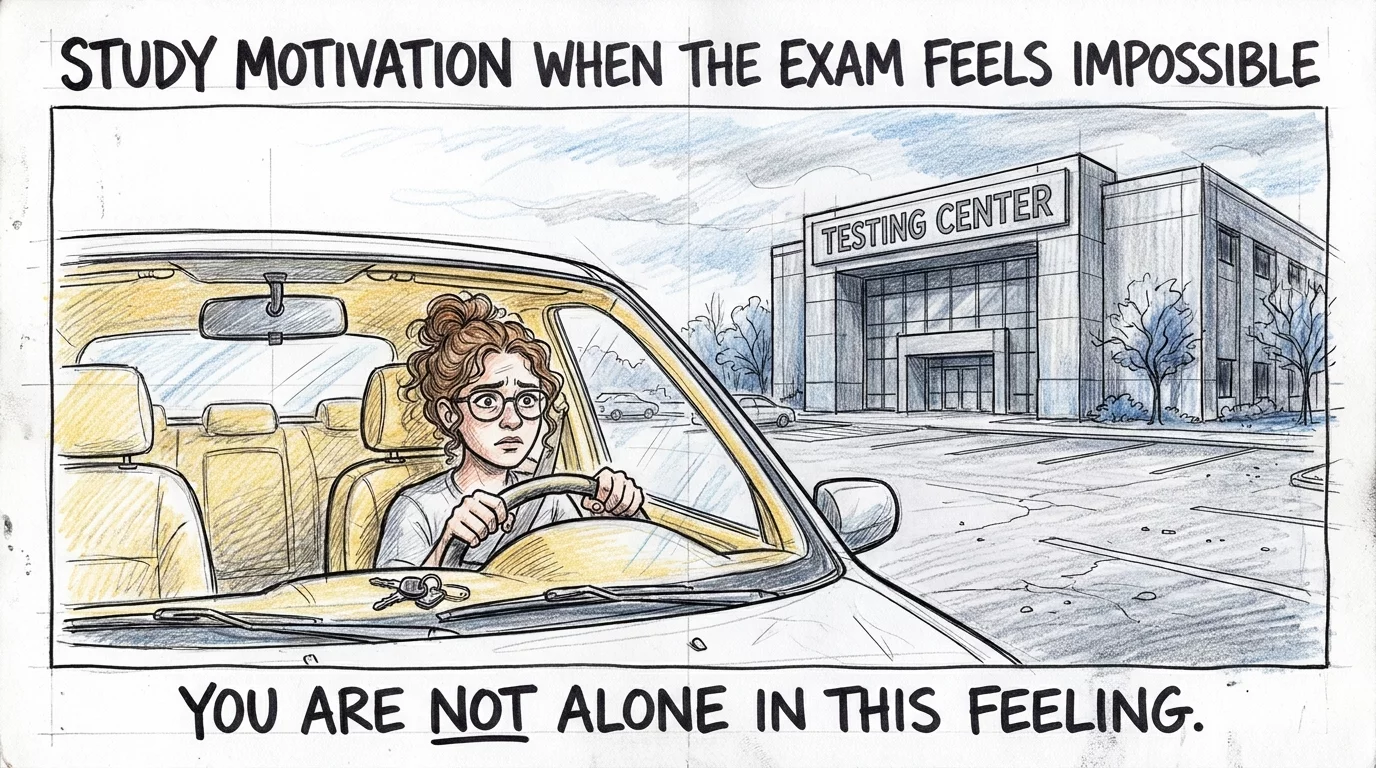
Emily sat in the parking lot of the testing center, keys still in the ignition, seriously considering just driving home.
Not because she hadn’t studied. She had. She had the books, the flashcards, the apps, the study group. She had a color-coded spreadsheet telling her exactly what to study and when.
She had prepared for everything except the ability to believe she was actually ready.
And that feeling didn’t start in the parking lot. It started months earlier.
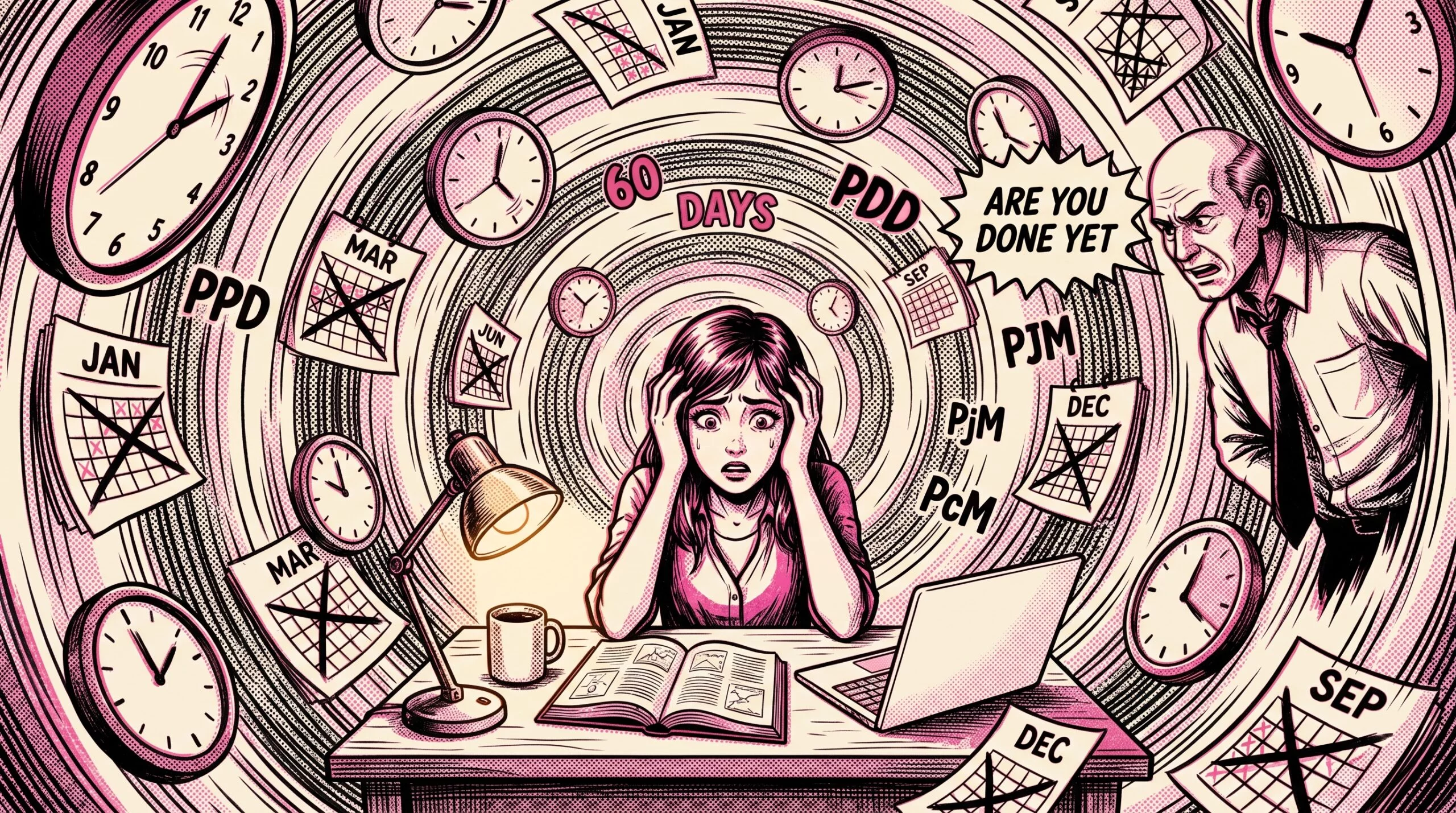
There was a stretch, weeks long, where Emily would open her laptop after work, stare at the material, feel her chest tighten, and close it. Every single night.
She’d tell herself she was tired. She’d tell herself she’d start fresh on Saturday. Saturday would come and she’d find something else to do.
Every week that passed without studying made the exam stress worse, because now she was behind the schedule she had made for herself. Which made the whole thing feel even more impossible.
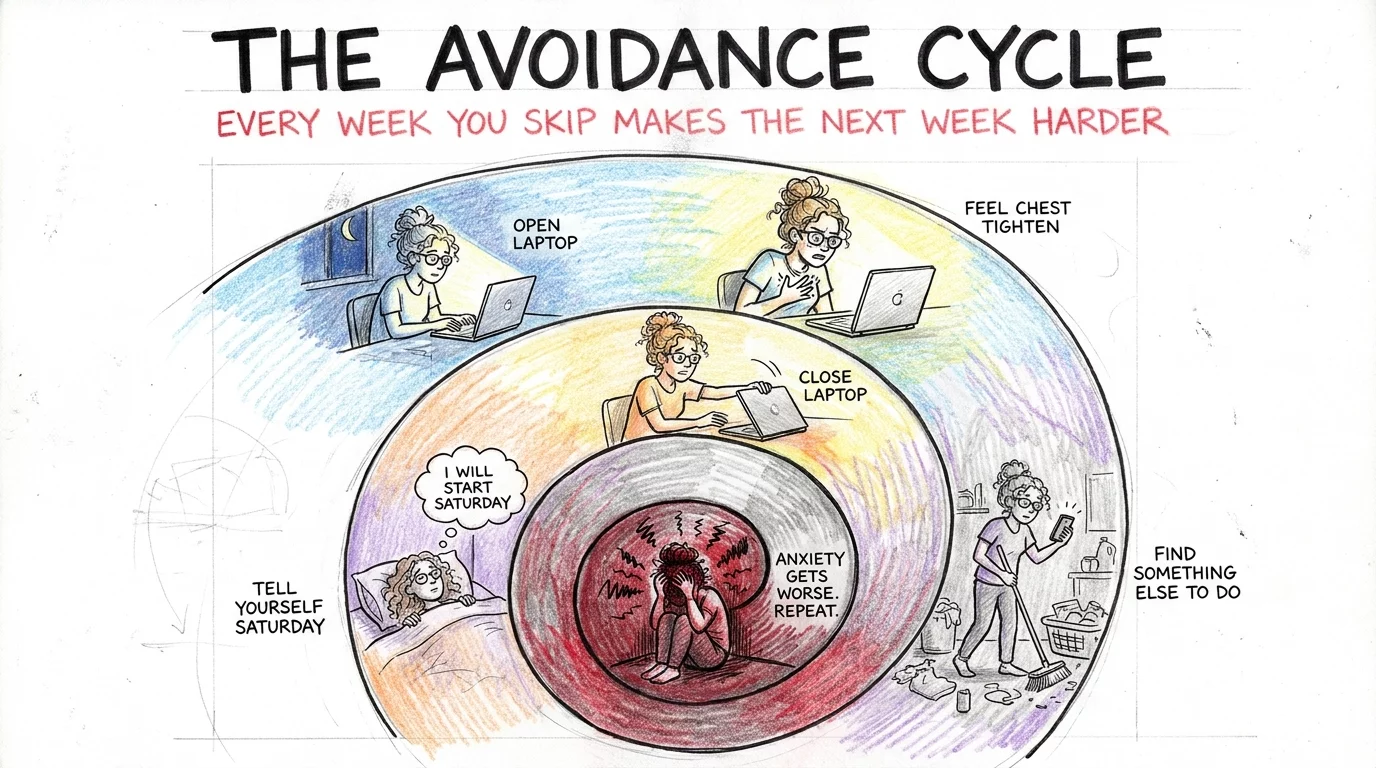
If that cycle sounds familiar, you’re not alone in it. And you’re not broken.
Most study advice assumes you’re already sitting at the desk with a book open. Every other resource assumes you’re already studying. This post is for the person who can’t even open the book.
This is the pre-study gap. The space between wanting to study and actually doing it. And it’s where most candidates get stuck for weeks or months at a time without anyone talking about it.
The 150-Book Trap
Your NCARB reference list feels like it has 150 books on it. You need maybe two of them for each division to pass.
The gap between those two numbers is where most candidates lose their minds.
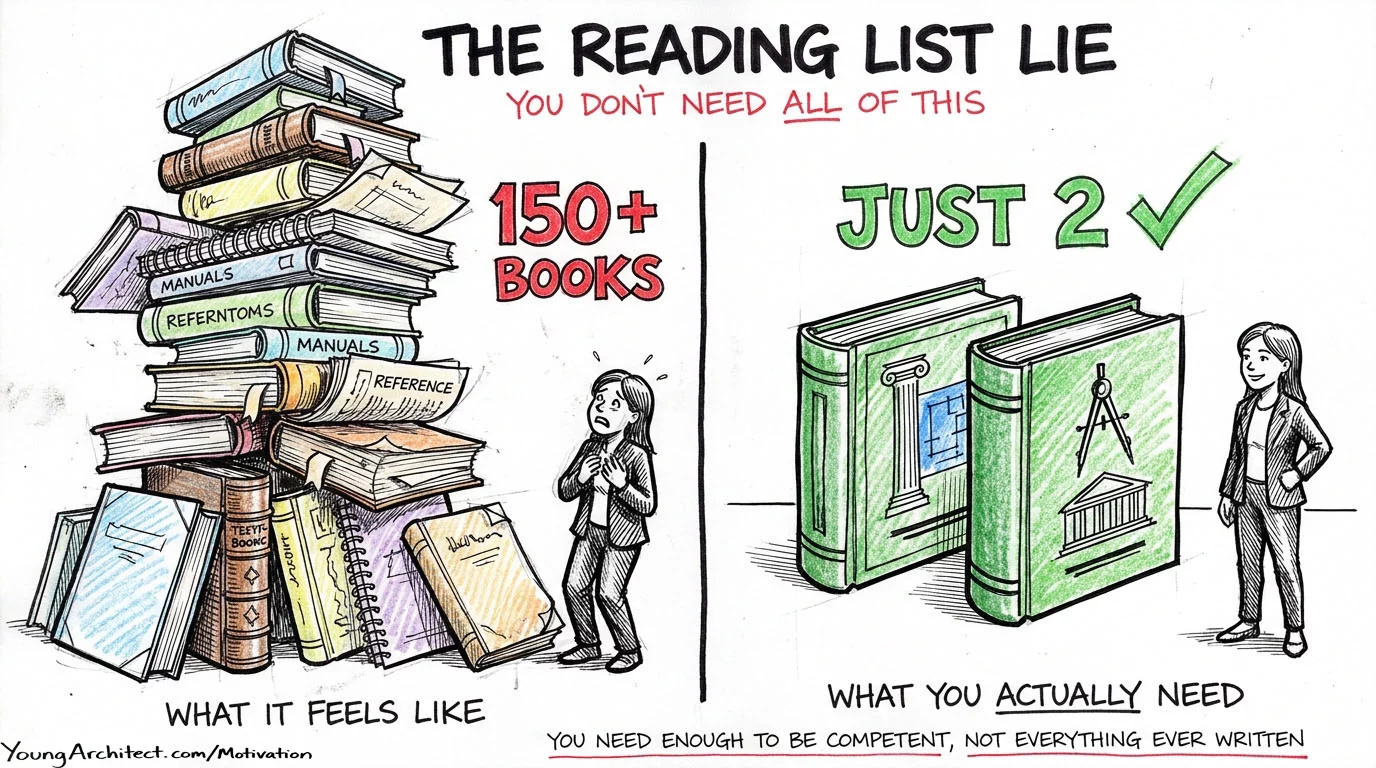
It feels like someone dropped a 50-pound box at your feet and said, “Learn all of this.” Your brain looks at that list, doesn’t know where to start, and just shuts down.
That’s not laziness. That’s not a character flaw. That feeling has a name: decision fatigue. You’re exhausted from choosing which resource to study, for how long, and whether there’s a better one you should be using instead.
And that exhaustion leads directly to overwhelm. Which leads directly to avoidance. Which leads to the cycle we just talked about.
This is not a “you” problem. There is nothing wrong with you. This is a professional-level marathon you’re training for, and it’s okay to feel small standing in front of it.
So here’s the promise for this post. By the end, you’re going to have one clear thing to do tonight. Not ten things. Just one.
Because that’s the whole secret to how to motivate yourself to study. You don’t study for “The Exam.” You study for one objective at a time. One resource. One topic. One question. One bite at a time.
Emily’s turning point was honestly kind of boring. It wasn’t a dramatic moment. She just sat down one night, opened the NCARB objectives for her division, picked one topic, read five pages, and stopped.
That was the whole session. Five pages. Maybe fifteen minutes.
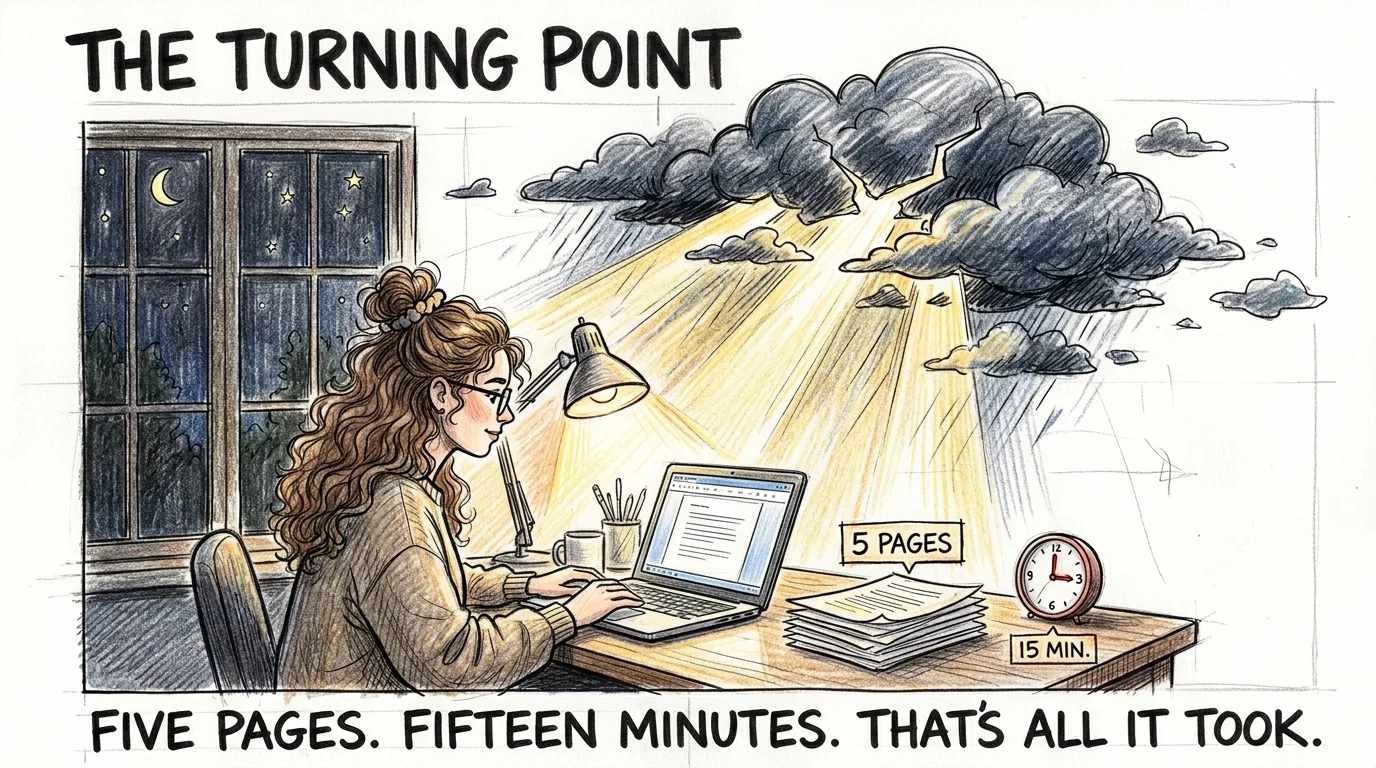
The next night, she did it again. And again.
And slowly, that tight feeling in her chest started to loosen. Not because she suddenly knew everything, but because she was finally moving.
That’s where we’re headed today. Small, real, doable steps that get you from frozen to moving.
Brain Dump Your Exam Fears
Before you study anything, before you open a single book, do one thing first.
Get honest about what’s actually scaring you.
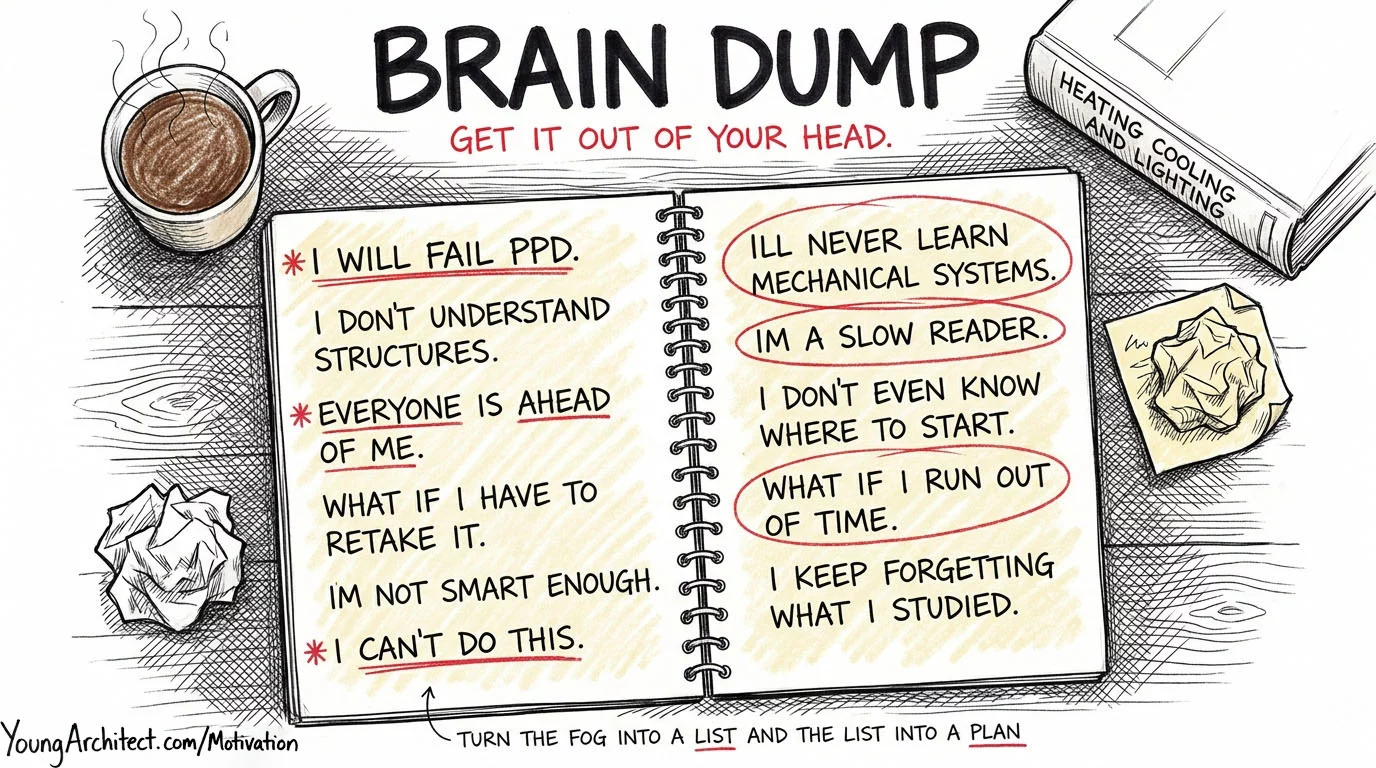
Right now, you have this big cloud of anxiety floating around in your head. It’s not specific. It’s just a heavy, vague feeling of “I can’t do this” or “I’m not ready.”
The problem with vague anxiety is that you can’t fight fog. You just stand in it and feel terrible.
So grab a piece of paper. A real piece of paper, not your phone. And write down every single fear you have about this exam.
- “I’m going to fail PPD.” Write it down.
- “I don’t understand structures.” Write it down.
- “I’m wasting money on study materials.” Write it down.
- “Everyone else is further along than me.” Write it down.
Get it all out. Every last one.
Here’s what happens when you do this. The anxiety shrinks.
Not because the fears go away, but because you turned fog into a list. And a list is manageable. A list has items you can look at one at a time. A list has things you can cross off.
Fog doesn’t have any of that.
Once you’ve turned the fog into a list, you’ve turned overwhelming exam stress into a set of specific problems. And specific problems have specific solutions. That’s a completely different kind of conversation to have with yourself.
Stop Hoarding Study Resources
This one might sting a little. But it needs to be said.
You need to do a resource purge.
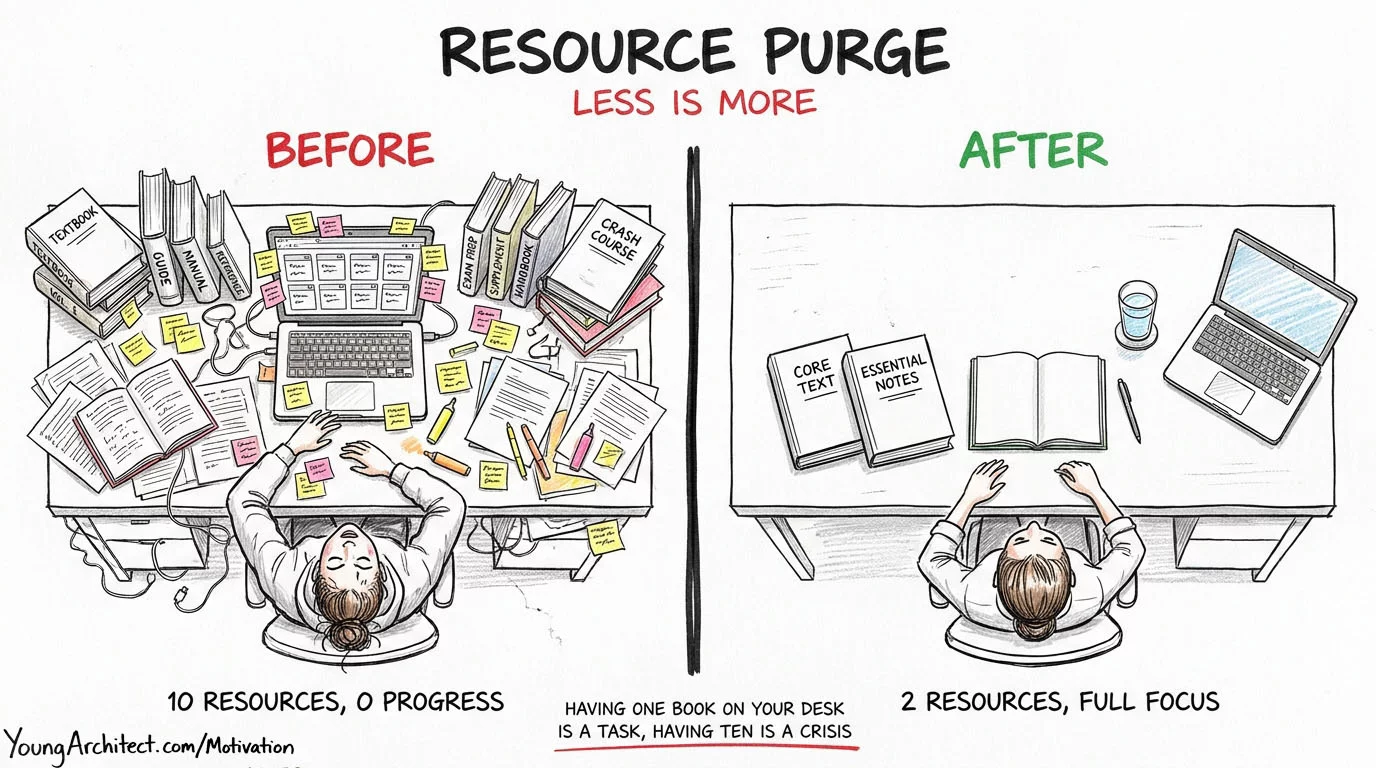
You’ve spent weeks, maybe months, collecting study materials.
- PDFs saved in three different folders
- Bookmarks for six different websites
- You bought Ballast, you bought the AHPP
- You downloaded someone’s Quizlet deck
- You’ve got three Reddit threads saved with “the best free resources”
Too many resources is worse than having too few.
A lot of that collecting? That organizing? That’s not studying. That’s a coping mechanism. It feels productive because you’re doing something related to the exam.
But downloading your tenth PDF and sorting it into a Google Drive folder is not the same as reading five pages and understanding a concept.
It’s busy work that gives you the feeling of progress without the actual progress.
And the worst part? Every new resource you add makes the pile bigger, which makes the overwhelm worse. It’s the opposite of what you need.
So pick two primary sources and commit to them for two weeks.
If you’re studying for PcM, grab the AHPP and one course you trust. That’s it. Close everything else. And I mean physically.
If you’ve got ten books on your desk, that’s a visual trigger for anxiety. Every time you sit down, your brain sees that stack and thinks, “I haven’t read any of those.”
Take the other eight books and put them in a closet. Out of sight, out of mind.
One book on your desk is a task. Ten is a crisis.
And one more thing. Stop Googling “best ARE study materials” every night. You’re reading forums at midnight comparing study plans. That’s not research. That’s avoidance.
Once you’ve committed to your two sources, make sure you’re actually using them, not just passively reading. Using multiple study methods with your chosen resources is far more effective than passively skimming ten books you never finish.
Pick your two sources and move.
Shrink the Problem
You cleared your desk. Now clear your scope.
Think about how most candidates approach the ARE. They look at all six divisions and treat it as one massive thing they need to learn.
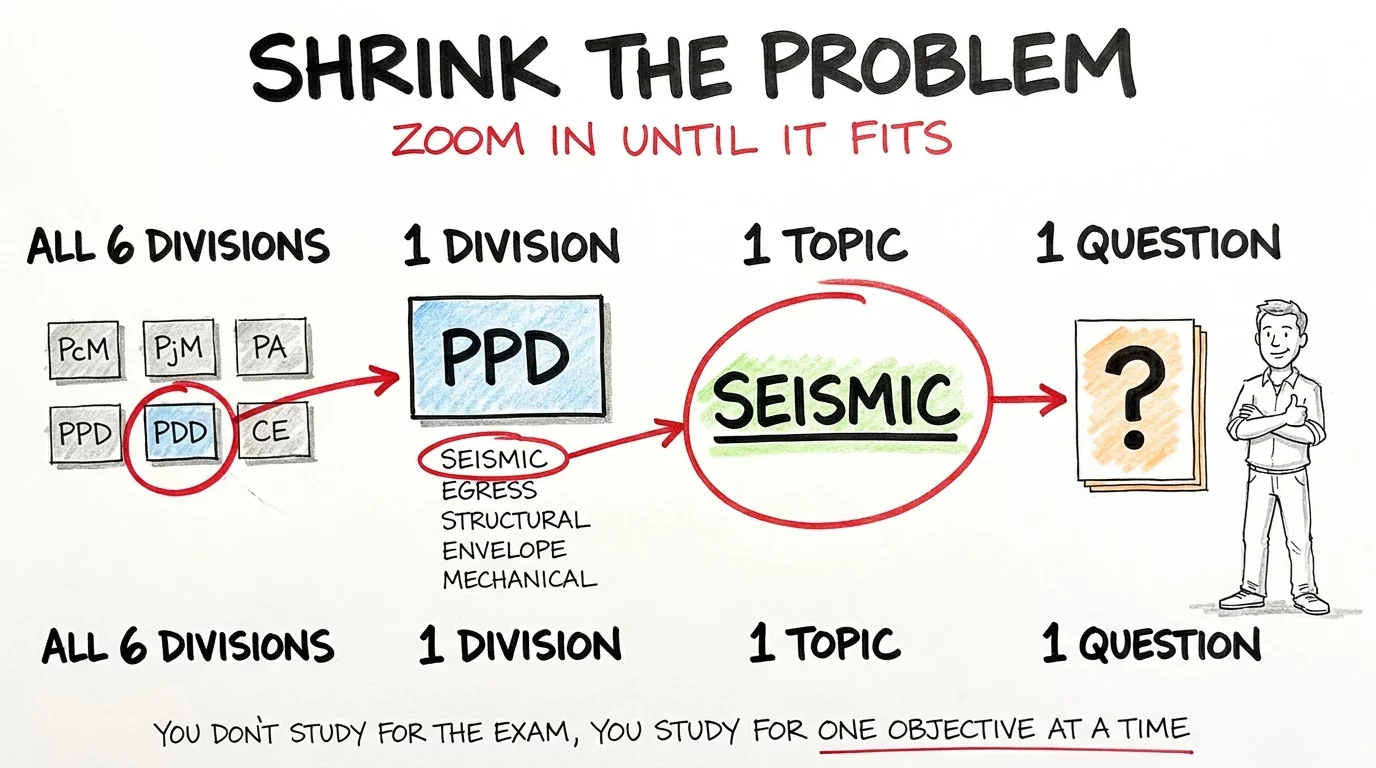
But you don’t take six exams at once. You take them one at a time.
So stop looking at all six. Pick one.
Now you’re looking at one division. But even one division has a ton of content. Dozens of topics, hundreds of pages.
So don’t look at the whole division either. Pick one topic from your NCARB objectives.
Now you’re looking at one topic. Do one practice question on that topic. Just one.
See what just happened?
You went from a massive, paralyzing mountain down to a single question you can answer in two minutes. That’s the whole strategy.
Shrink the problem until it’s small enough to actually do something about.
You don’t eat a steak in one bite. You cut it up. Same thing here. You don’t study for “the exam.” You study for one objective at a time. And that’s a completely different feeling.
Study One Topic at a Time
Once you’ve picked your topic, the key is to stay there. Don’t jump around randomly.
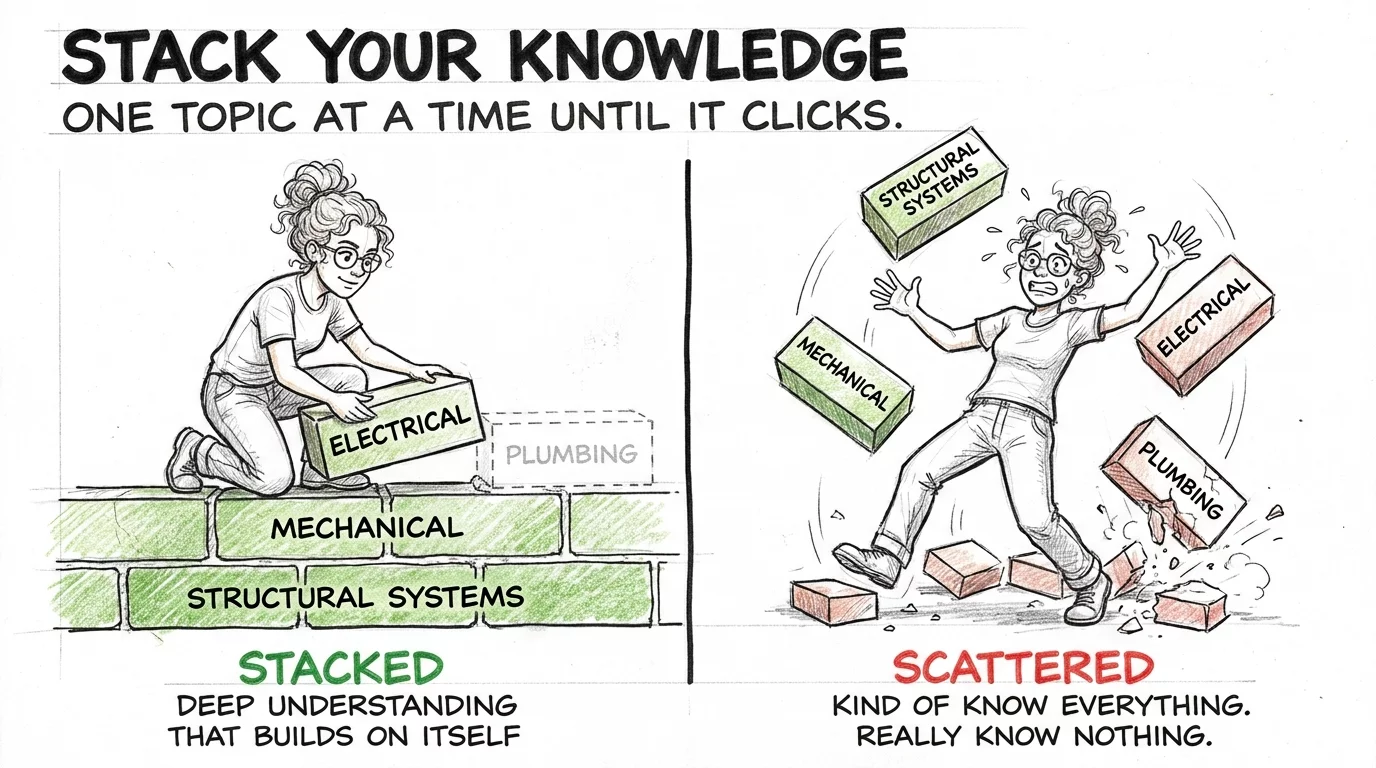
If you’re studying for a technical division like PPD, focus on one system until it clicks.
- Go through structural systems first. Get solid on those.
- Then move to mechanical.
- Then electrical.
- Then plumbing.
Don’t bounce around between all four in the same study session. That’s how you end up feeling like you kind of know everything but really know nothing.
If you’re on a pro practice division like PcM, same idea.
- Start with project delivery methods. Get solid.
- Then move to contracts.
- Then risk management.
Stack your knowledge before moving on.
This builds real confidence because you actually start to own something. Instead of having a shallow understanding of twenty topics, you have a deep understanding of three. And those three become your foundation for the next three.
That’s the difference between scattered studying and stacked studying. One gives you anxiety. The other gives you momentum.
Micro-Goals and the 20-Minute Rule
Use NCARB Objectives as Your Roadmap
The single most practical tool for building study motivation is something most candidates never even open.
Use the NCARB objectives for your division as your roadmap. Not your book’s table of contents. Not someone’s study guide. The actual NCARB objectives.
“If you’re not studying NCARB’s objectives, you’re not studying for the ARE.”
It sounds obvious, and yet so many candidates spend enormous amounts of time studying without ever once looking at what NCARB actually told them to learn. They’re reading random chapters, watching random videos, and never stopping to check the objectives.
The objectives are right there. Use them.
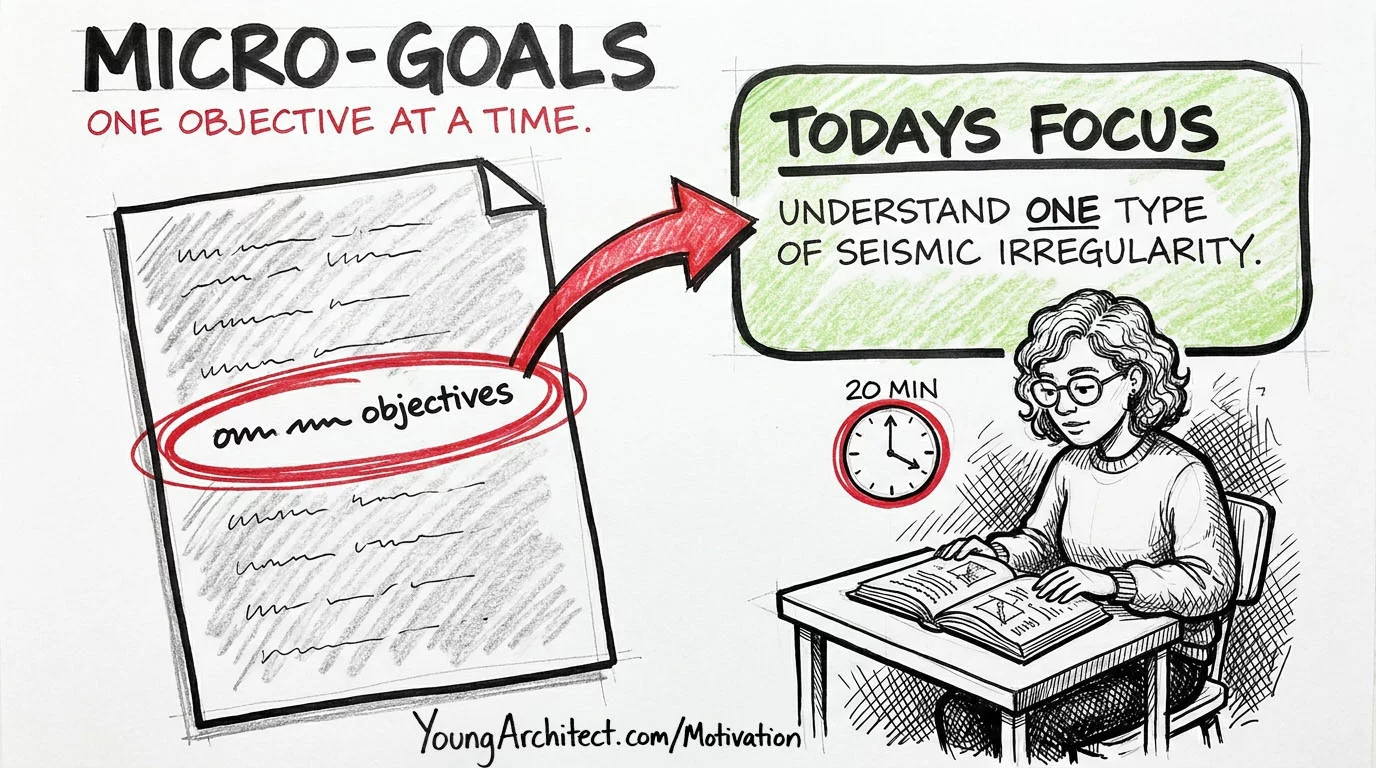
Every objective is basically NCARB saying, “Make sure you understand this.” So instead of telling yourself “I’m going to study PPD today,” which is way too vague, look at one objective and make it your micro-goal for the day.
If you’re on a technical division, that might sound like:
“I’m going to understand one type of seismic irregularity today.”
If you’re on a pro practice division like PcM, it might sound like:
“I’m going to spend 20 minutes understanding the difference between Basic Services and Additional Services under the B101.”
That’s specific. That’s doable. That’s your brick for the day.
When you’re creating a study plan that works, the NCARB objectives are the only starting point that matters. Everything else is supplemental.
And if you’re someone who knows you need external accountability to actually stick with this, that’s exactly what ARE Boot Camp gives you. A team, a coach, and a structured program so you’re not white-knuckling this alone.
The 20-Minute Rule
If even a micro-goal feels like too much, try this.
Just commit to 20 minutes. That’s it. Set a timer on your phone. Twenty minutes of focused studying.
If you want to stop after that, you can stop. No guilt.
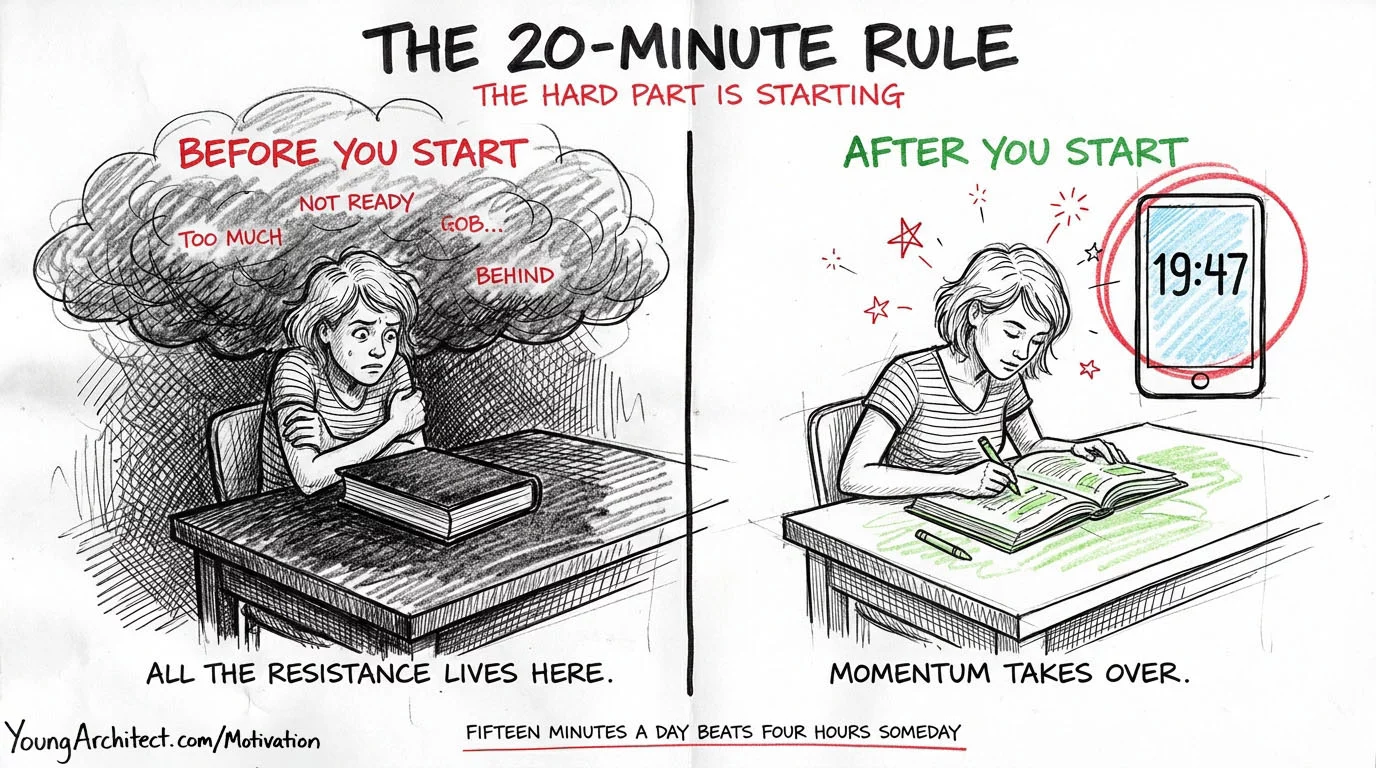
Most people expect the anxiety to show up during the studying. It doesn’t.
The anxiety doesn’t live in the studying. The anxiety lives in the transition to studying. It’s the moment before you open the book. That’s where all the resistance is.
But once you actually start, once you read the first page and highlight the first sentence, momentum takes over.
Nine times out of ten, you’ll blow past the 20-minute mark and not even notice.
Fifteen to twenty minutes a day beats four hours “someday.”
Every single time. Consistency is everything.
The person who studies 20 minutes a day for six months will crush the person who plans to study four hours every Saturday but never actually does it.
Author Steven Pressfield calls this invisible force Resistance, and if you’ve ever felt the pull to do anything other than study, you know exactly what he’s talking about. Understanding the tension between discipline vs motivation is one of the most important shifts you can make during exam prep.
And make it stupidly easy to start. Remove every barrier:
- Leave the book already open on your desk to the page you left off on
- Put the study app on your phone’s home screen
- Study at the same time every day, no negotiation
When you remove the decisions, you remove the resistance. That’s how to focus while studying. You don’t rely on willpower. You rely on systems.
Practice Exams Are Diagnostic Tools
You’ve been studying one topic at a time. Now take a practice quiz and see where you actually stand.
Most candidates are terrified of this step. They don’t want to see a low score. They don’t want confirmation that they’re not ready.
So they keep studying and keep putting off the practice exam. “I’ll take it when I’m ready.”
But the fear of not being ready is the exact thing keeping you from ever getting ready.
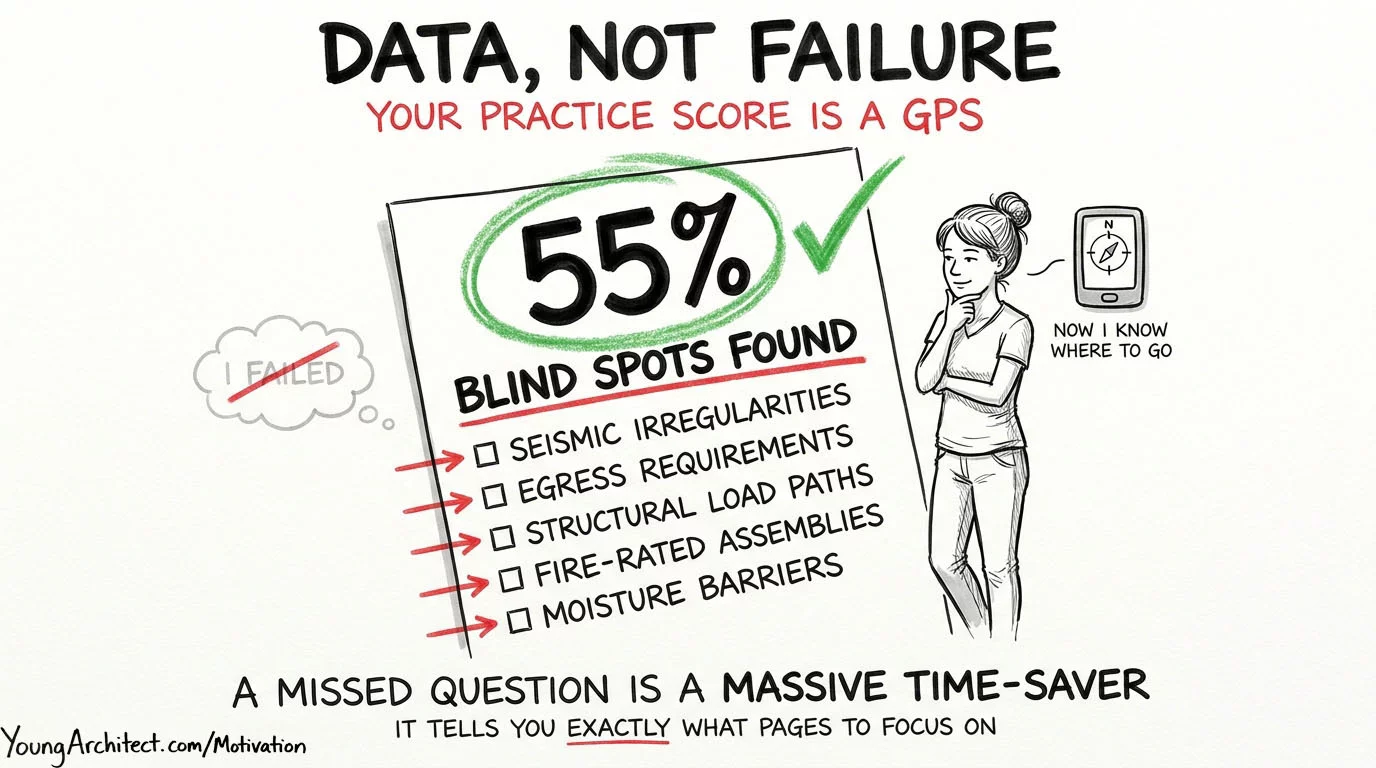
A practice exam is not a test. It’s a diagnostic tool.
Think of it like a GPS. You punch in your destination, and instead of just saying “drive north,” it tells you exactly where the road work is, where the detours are, where you need to slow down.
That’s what a practice exam does. It shows you exactly where your gaps are.
And the score? The score is almost irrelevant. The real value is in the answer explanations. Every question you miss is telling you something specific about what you don’t know yet. That’s not failure. That’s information.
A 55% three weeks before your exam is a massive win.
Let that sink in.
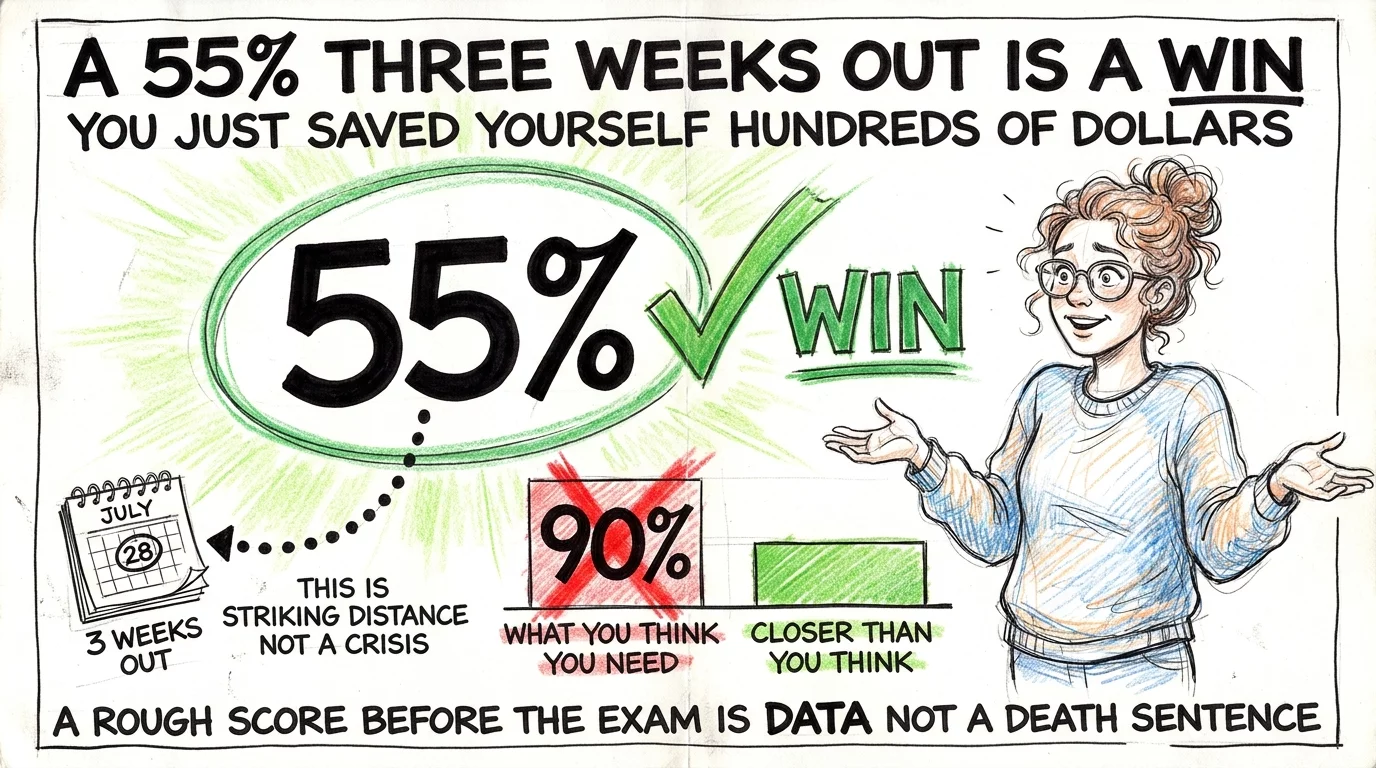
You just identified your blind spots before they cost you real money at the testing center. That 55% just saved you hundreds of dollars and weeks of unfocused studying.
A lot of candidates walk in thinking they need a 90% to pass, like this is a college final. That’s not how professional licensing exams work. A rough score three weeks out is striking distance, not a crisis.
When you’re ready for the real thing, having solid test day strategies makes the difference between walking in confident and walking in panicked. But that’s a separate conversation. Right now, we’re talking about using practice exams as a study tool, not a judgment.
What To Do With Practice Exam Results
Here’s the part most people skip. And it’s where the real learning happens.
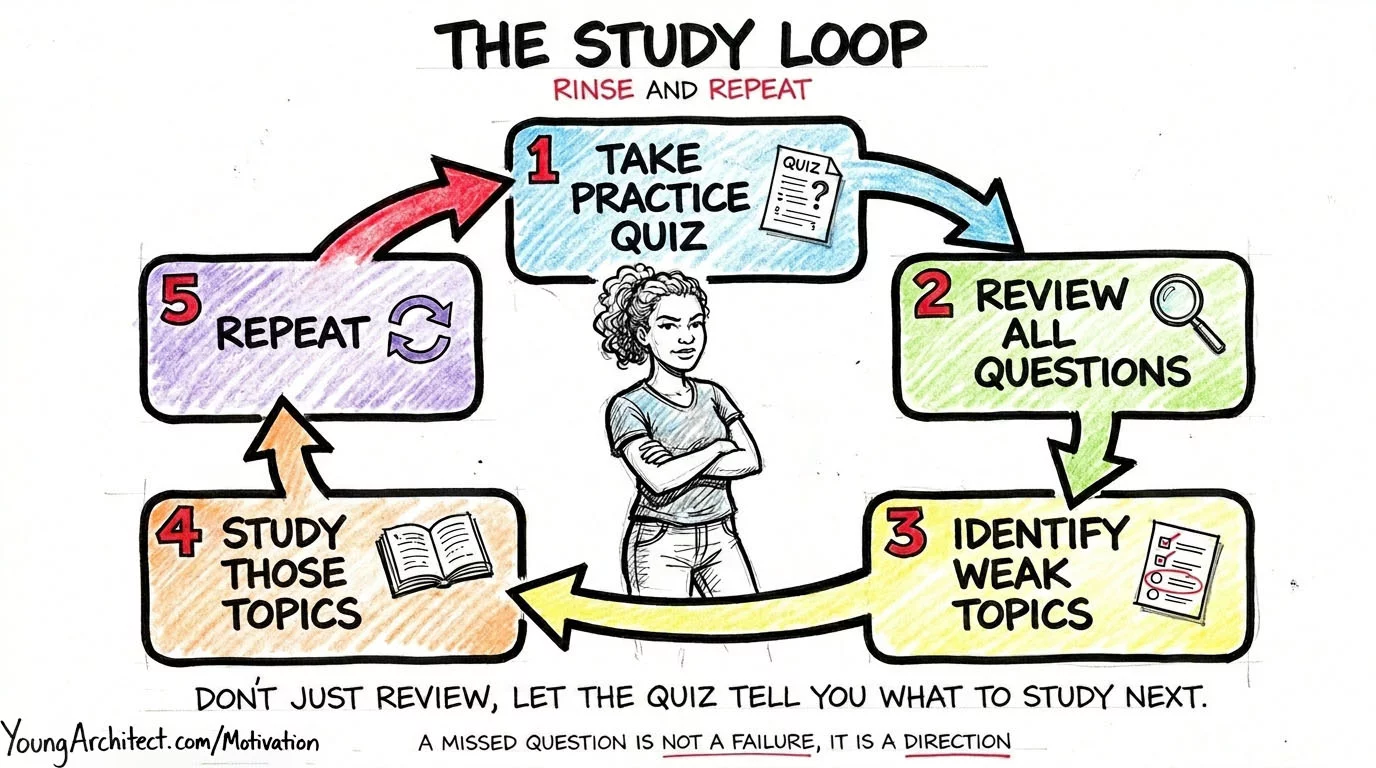
Go through every question you missed. Don’t just look at the correct answer. Read the explanation. Understand why the right answer is right and why your answer was wrong.
Train your brain to see that wrong answer as a good thing.
Every question you got wrong just pointed you toward a topic you need to spend more time on. It gave you direction. Instead of wandering through a textbook hoping you’re reading the right pages, the practice exam just told you exactly where to go.
That’s a gift.
After reviewing, sort your results into three categories:
- Questions you missed: These are your blind spots. The practice exam just handed you a focused study plan. Go learn those topics.
- Questions you got right but weren’t sure about: You know the ones. You narrowed it down to two answers and picked one because it felt right. Lucky guesses are still blind spots. Don’t let a correct answer hide a gap.
- Questions where you knew the answer but picked wrong anyway: You’ll review it and think, “Wait, I knew that. Why did I pick B?” That’s a fatigue issue, not a knowledge gap. Give yourself some grace on those.
After all of that, write down the topic areas where you’re weakest. Those topics become your study plan for the next week.
You don’t need a complicated spreadsheet. Just a list of what the practice exam told you to go study.
A missed question isn’t a failure. It’s a massive time-saver. It tells you exactly what pages to focus on and, just as importantly, what pages you don’t need to waste time reading.
Let the exam do the work of prioritizing for you.
Your action step: Take a practice quiz before you feel ready. Don’t wait until you’ve finished a book. Don’t wait until you feel confident. The mystery of the exam is scarier than the reality. The unknown is always worse than the known. So strip away the mystery.
Fix Your Study Environment
You’ve tackled your resources, your study scope, and your practice exams. Now fix one more thing: the space you’re studying in.
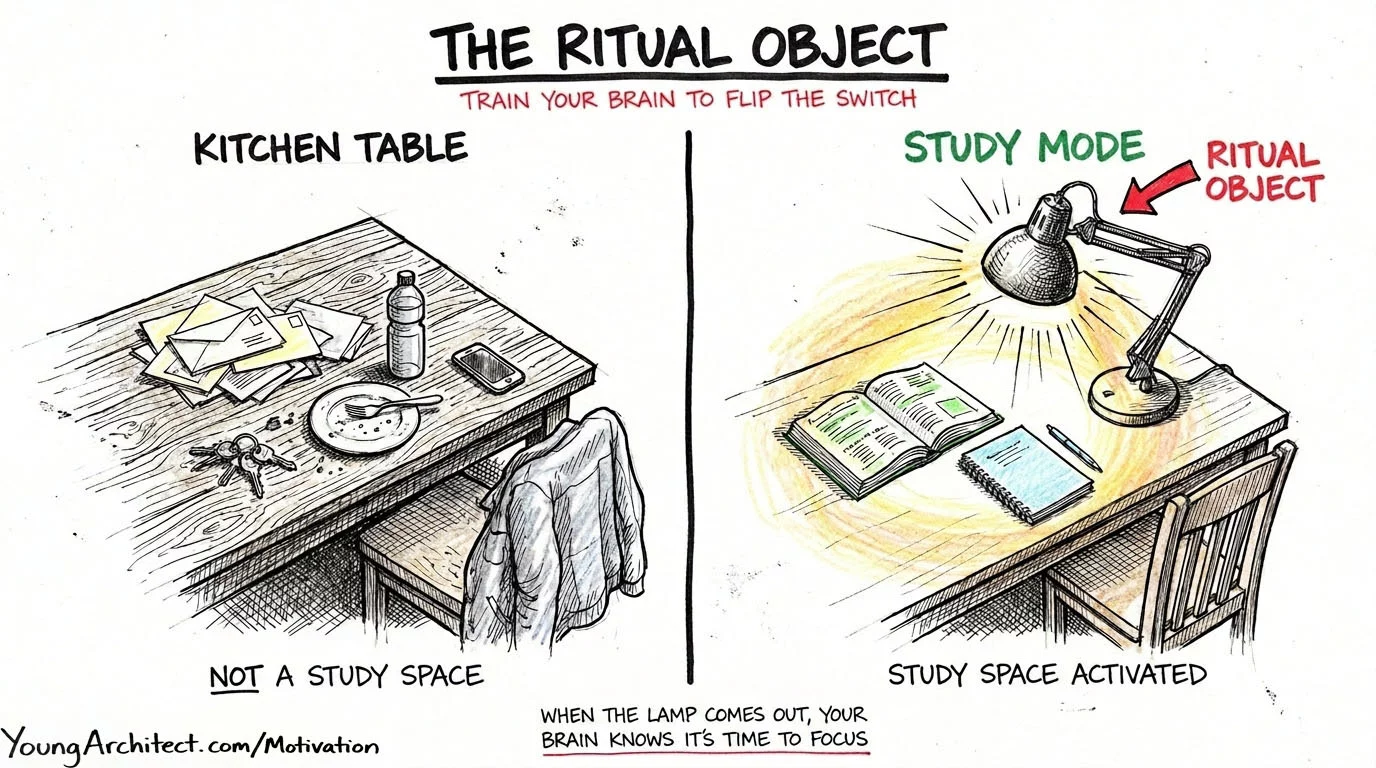
If your study space is messy, your brain is messy.
You don’t need a Pinterest-perfect home office. Just clear the desk. Get the dishes off of it. Get the mail off of it. Get everything off of it that isn’t related to what you’re studying tonight.
And please, don’t study in bed.
Your brain needs to associate your bed with sleep, not with the stress of trying to understand B101 Owner-Architect Agreements. When you study in bed, you ruin two things at once: your study focus and your sleep quality.
“But I live in a studio apartment. I don’t have a home office. My desk is my kitchen table.”
That’s totally fine. Here’s a trick that works in any space.
The Ritual Object technique.
Pick one object that is only present when you study:
- A specific desk lamp
- A desk mat
- A certain notebook
When that object comes out, your brain knows it’s time to focus. When you put it away, you’re done, and it’s your kitchen table again.
It’s a psychological boundary in a shared space. You’re training your brain to flip a switch.
And it works even if your study environment is also where you eat dinner, pay bills, and fold laundry.
Digital Detox for Exam Prep
Now let’s talk about your digital environment, because this one might be doing more damage than a messy desk.
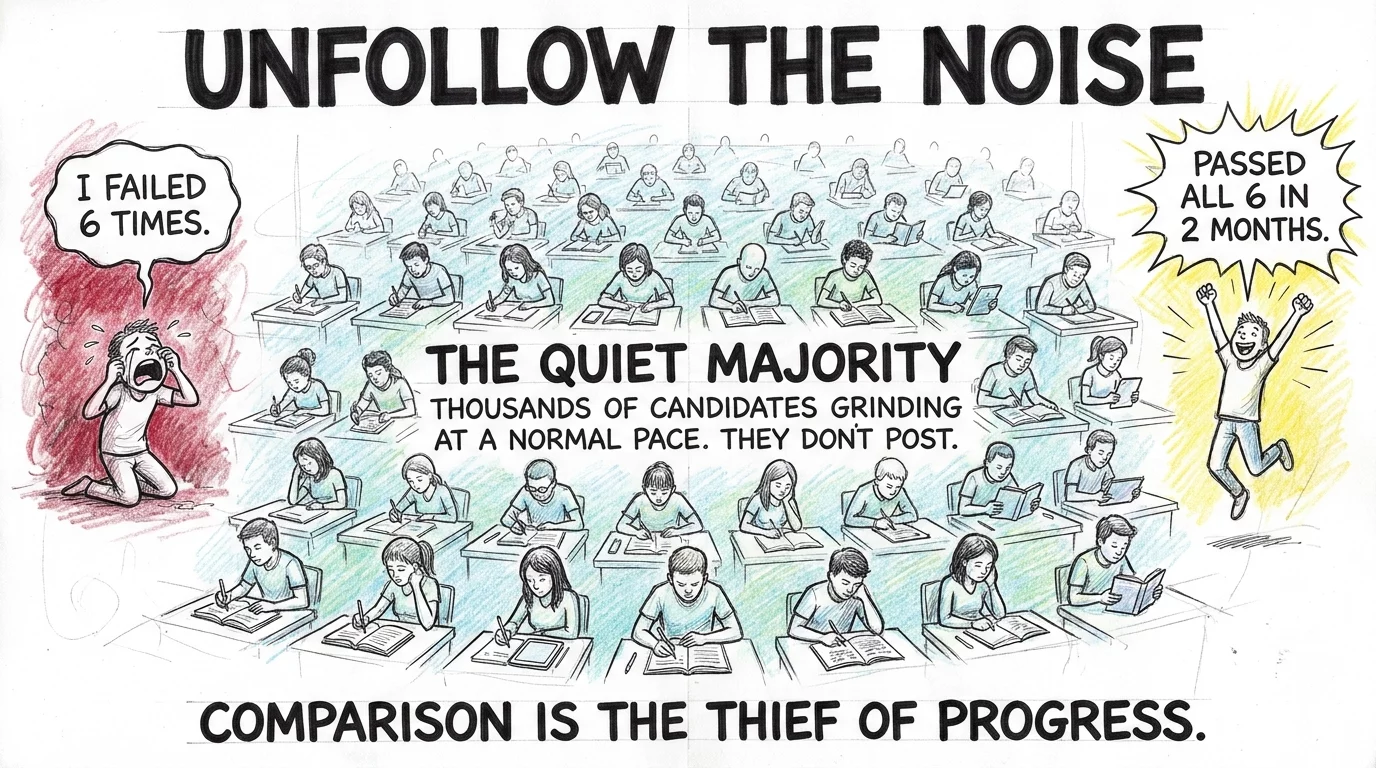
If you’re spending time on ARE forums, Facebook groups, or Reddit threads, and they make you feel behind, turn them off. Mute them. Unfollow them. Log out.
Those spaces trigger anxiety because the internet is an echo chamber of extremes.
The only people posting are:
- The person who failed six times and is devastated
- The person who passed all six in two months and wants to tell everyone about it
The quiet majority, the thousands of candidates who are just grinding through the middle at a normal pace? They don’t post. They’re too busy studying.
So when you scroll through those forums, you get a completely distorted picture of reality. You think everyone is either a genius or a disaster, and either way, you feel like you don’t measure up.
That’s not real. That’s the algorithm showing you extremes because extremes get engagement.
Unfollowing isn’t quitting. It’s protecting your headspace.
Comparison is the thief of progress, and those forums are comparison machines. If a platform doesn’t make you feel motivated to study, it doesn’t belong in your study routine. Period.
Self-Talk During Exam Prep
The last piece of this is the conversation you’re having with yourself. And it might be the most important one.
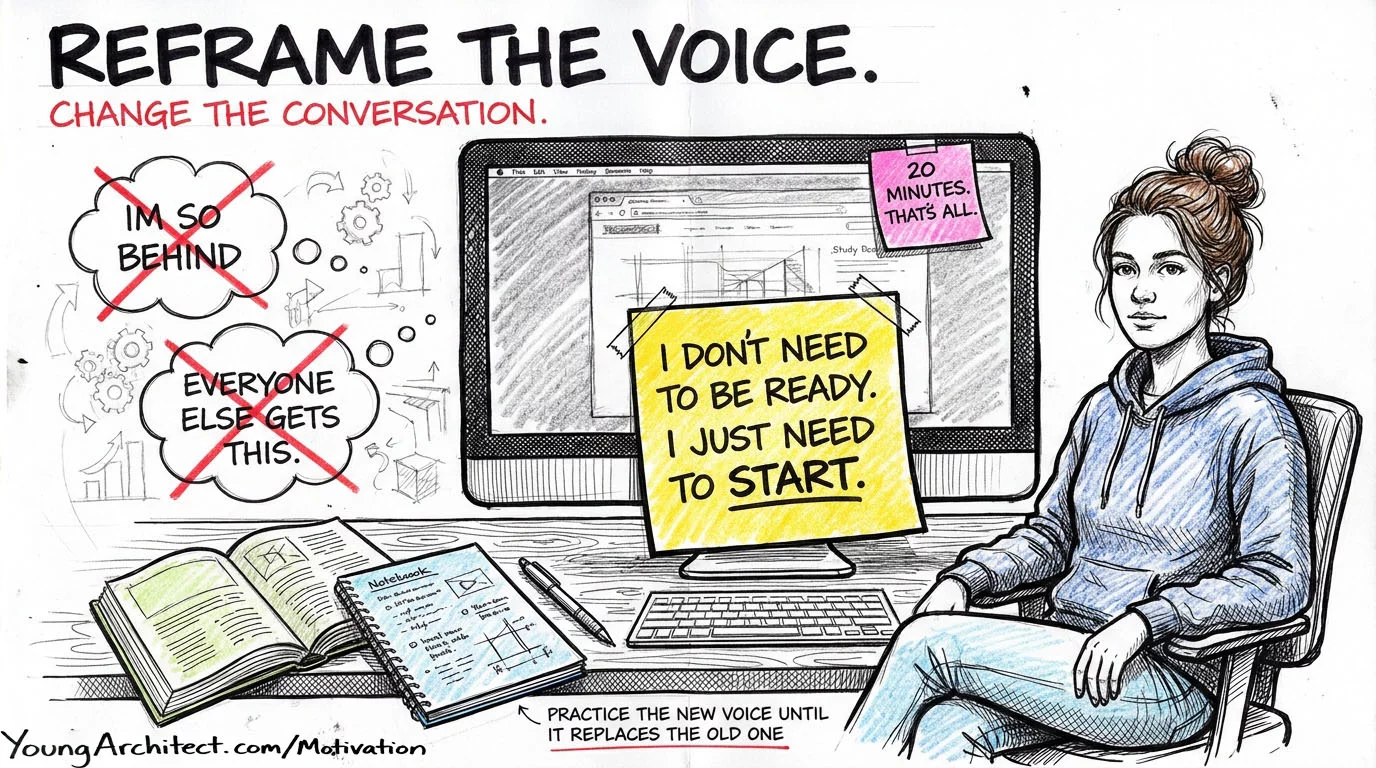
The internal voice matters more than you think. And most candidates are absolutely brutal to themselves without even realizing it.
Listen to the difference:
- “I’m so behind.” vs. “I’m starting now.”
- “Everyone else gets this.” vs. “This is hard and I’m doing it anyway.”
Same situation. Completely different energy. One keeps you frozen. The other gets you moving.
Think about it this way. If your best friend came to you and said, “I’m struggling with this exam, I feel stupid, I don’t think I can do it,” would you say, “Yeah, you’re right, you’re behind, everyone else is smarter than you”?
Of course not. You’d be kind. You’d be encouraging. You’d tell them they can do this.
So why are you talking to yourself that way?
One concrete thing you can do right now. Take a sticky note. Write a reframe on it.
Something like:
“I don’t need to be ready. I just need to start.”
Or simply: “20 minutes. That’s all.”
Stick it on your monitor, on your bathroom mirror, wherever you’re going to see it every day. When you catch yourself spiraling, read it out loud. Make it physical. Don’t just think it.
The voice in your head has been practicing the negative version for months, maybe years. You have to actively practice the new one.
And one more thing. If you have ADHD, a learning difference, or English isn’t your first language, everything in this post actually works even better for you.
Small, structured tasks. Twenty-minute sessions. One objective at a time. This entire approach is built on short, focused effort, not marathon reading sessions.
You’re not at a disadvantage. You just need the right system. And this is the system.
If you want to go deeper on study techniques that work with how your brain actually processes information, check out these active reading strategies designed specifically for exam prep.
You Have Permission to Be a Beginner
Every strategy in this post leads to the same place.
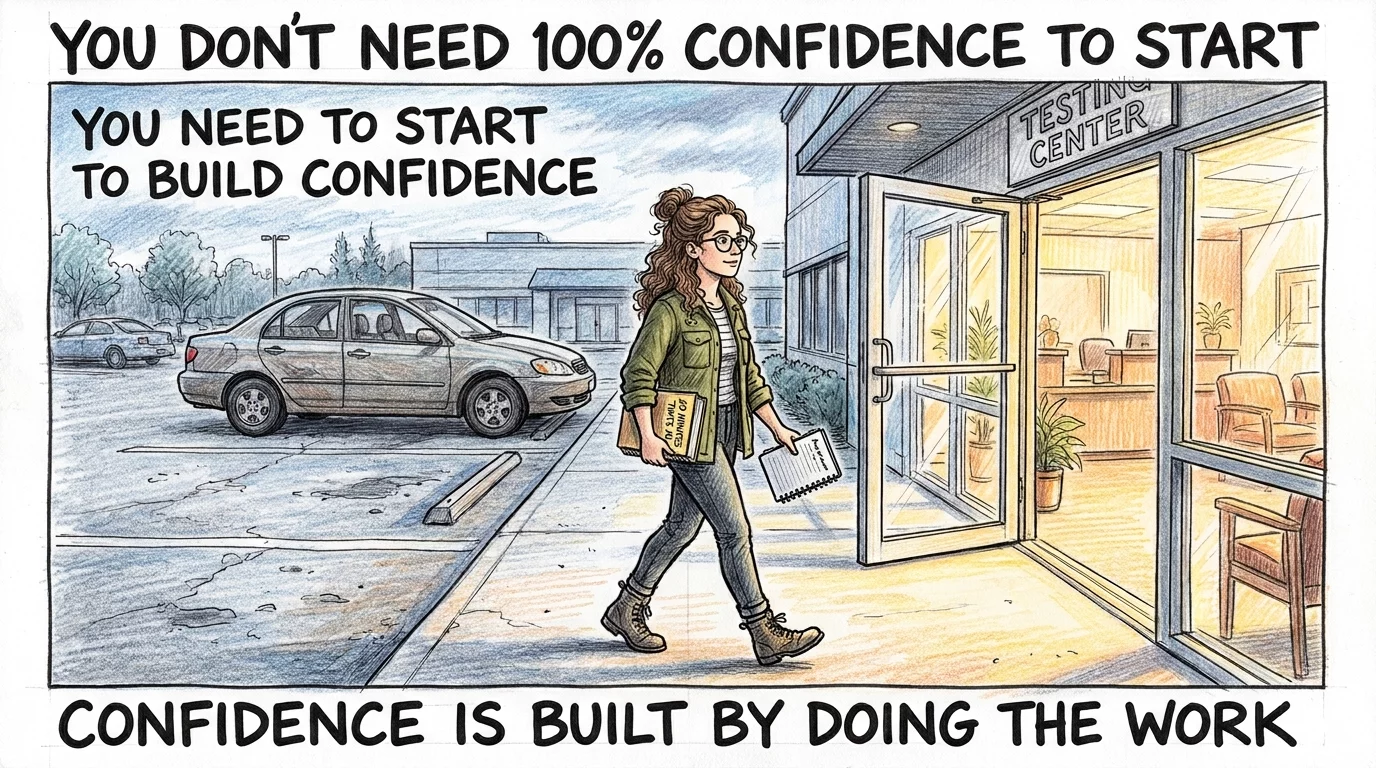
You are an architect in training. You are not an encyclopedia.
You do not need to memorize 150 reference books to pass this exam. You need to know enough to be a competent, safe professional. That’s the bar. And it’s a reachable bar.
You don’t need 100% confidence to start. You need to start to build that confidence.
Confidence isn’t something you find and then use to begin. It’s something you build by doing the work.
So tonight, read five pages. Set a timer for 20 minutes. Open one NCARB objective and learn one thing. That’s it.
If you want the full roadmap for structuring your ARE prep from start to finish, here’s how to study for the architect exam the right way.
If you want structure, accountability, and a team that keeps you moving forward, ARE Boot Camp is where candidates who need that structure end up, and it’s built for exactly this moment. And if you want to go at your own pace with comprehensive courses covering every ARE division, the ARE 101 Membership gives you access to everything in one place.
Either way, the first step is the same. Twenty minutes. Tonight.
Frequently Asked Questions
How do I find study motivation when I feel completely overwhelmed?
Start by shrinking the problem. Pick one division, one topic from the NCARB objectives, and commit to just 20 minutes. Overwhelm comes from looking at everything at once. Focus on one brick at a time and let small wins build momentum. Study motivation doesn’t come before you start. It comes after.
How do I focus while studying for the ARE?
Clear your desk of everything not related to tonight’s study topic. Use a single object like a desk lamp as a signal that it’s study time. Turn off forums and social media that trigger comparison anxiety. Study at the same time every day and remove decision-making from the process.
How many study resources do I actually need for each ARE division?
Two primary sources per division is enough. Pick one core text and one course you trust. Too many resources creates decision fatigue and gives you the feeling of progress without actual learning. Put the rest in a closet.
What should I do if I get a low score on a practice exam?
Celebrate it. A 55% three weeks before your exam means you found your blind spots before they cost real money. Go through every missed question, understand why you got it wrong, and use those weak topics as your study plan for the next week.
Is 20 minutes of studying a day really enough?
Twenty minutes daily is far more effective than planning a four-hour Saturday session that never happens. Consistency builds knowledge over time. Most candidates blow past the 20-minute mark once they actually start, because the hard part is the transition, not the studying itself.
How do I stop procrastinating and start studying for the architect exam?
Remove every barrier between you and the first page. Leave the book open on your desk. Put the study app on your phone’s home screen. Write down your fears to turn fog into a list. Then commit to 20 minutes tonight. Just tonight. If procrastination during exam prep has been costing you months, this is how you break the cycle.