
ARE Podcast: PA Programming and Analysis

Black and white logo for the Architect Exam Podcast with bold text and a circular emblem in the word “Podcast.”

Free ARE PA podcast episodes designed to help you pass the Programming and Analysis exam. Each episode breaks down NCARB’s objectives so you know exactly what to study – and what to skip.

PA covers the research and analysis that happens before any design work begins. Topics include:

  • Environmental and contextual conditions
  • Codes and regulations
  • Site analysis and programming
  • Building analysis and programming

PA is the “define it” exam. Before you can design anything, you have to understand the site, the codes, the client’s needs, and the constraints. Get PA right and the rest of the technical exams start to make a lot more sense.

No need to take notes while you listen. For many episodes, we’ve already made a free two-page set of study notes for you – just go to the episode page and grab them.

Ready for more than a podcast? Check out our complete PA 101 course with 14+ hours of video lessons, 270+ practice questions, and 270+ flashcards.

What does the ARE PA exam cover?

PA covers everything that happens before design startssite evaluation, zoning research, code analysis, building programming, and client needs assessment. It’s one of the four technical exams on the ARE 5.0 and a natural starting point after you’ve finished the pro practice exams.

Should I take PA before PPD and PDD?

Yes, most candidates take PA before PPD and PDD. PA builds the foundation – site analysis, codes, and programming – that PPD and PDD build directly on top of. Taking them in order makes the content click much faster.

Where can I get free PA study notes?

Many episodes include a free two-page set of study notes. Just go to the individual episode page, enter your email, and download them. No note-taking required – just listen.

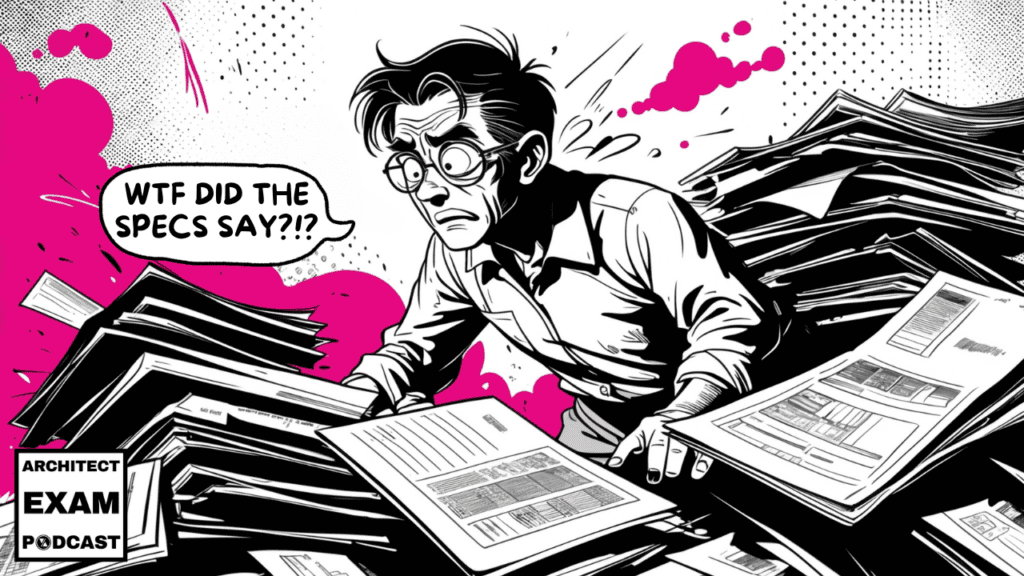
Overwhelmed architect buried in paperwork, panicking over unclear documents, symbolizing the chaos of poor construction specification writing.

Top 10 Construction Specification Writing Errors & Solutions

Construction specification writing might not be the sexiest part of architecture, but it’s absolutely critical to bringing your designs to life correctly. Despite its importance, most architects repeatedly make common mistakes when writing specifications—often because...
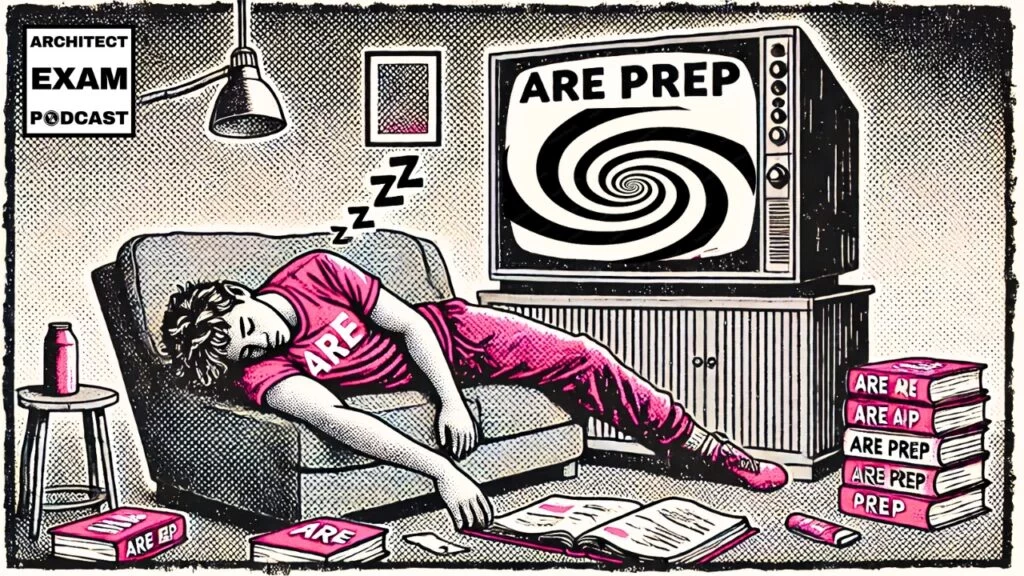
Exhausted visual learner falls asleep studying for the ARE exam, surrounded by prep books and a hypnotic TV screen labeled “ARE PREP.”

Visual Learner Myth: Why You Need Multiple Study Methods

Have you ever spent hours watching ARE prep videos, feeling productive and confident, only to completely freeze when facing actual exam questions? You’re not alone—and contrary to popular belief, being a “visual learner” might be...
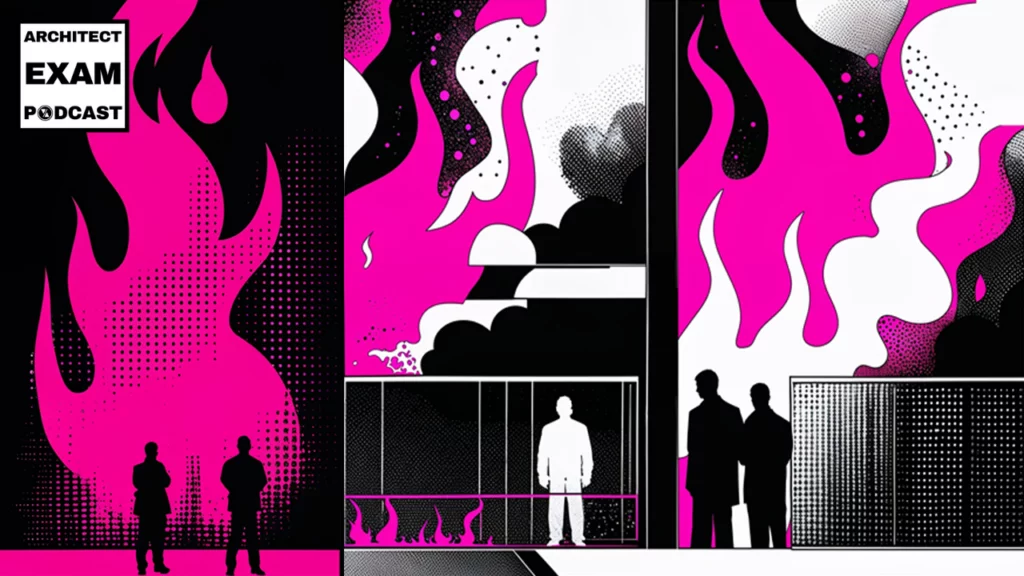
Diagram-style graphic showing people separated from rising flames by distinct fire wall, fire barrier, and fire partition assemblies in a building.

Fire Wall, Fire Barrier, Fire Partition: Key Differences

This comprehensive guide breaks down the critical differences between fire walls, fire barriers, fire partitions, smoke barriers, and smoke partitions in building construction. Understand the specific fire-resistance ratings, continuity requirements, and applications for each system...

Illustration comparing construction types I through V, showing concrete, steel, masonry, heavy timber, and wood frame structures.

Construction Types 1-5: IBC Building Classifications

Construction types are fundamental building classifications that determine everything from fire resistance to allowable heights and materials. This guide breaks down all five types of building construction as defined in the International Building Code (IBC),...
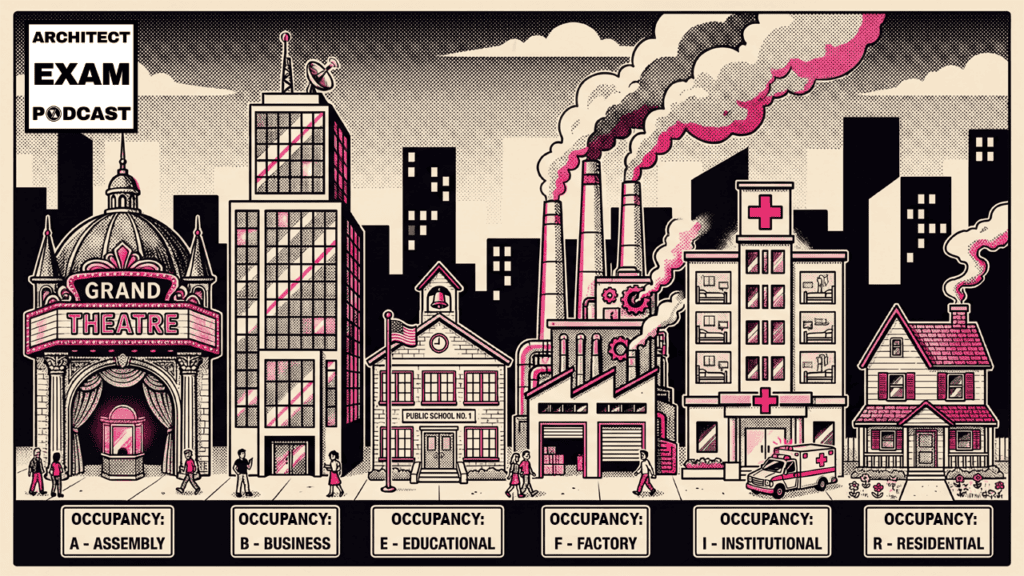
City scene illustrating occupancy classifications including assembly, business, educational, factory, institutional, and residential buildings.

IBC Occupancy Classifications: All 10 Groups Explained

Mastering occupancy classifications are essential for ARE success. This guide breaks down IBC's classification system and shows how it affects design, code compliance, and safety. Learn to confidently classify any project and avoid costly compliance...
Giant monster looms over a chaotic construction site, symbolizing unexpected issues and the need for construction contingency planning.

Construction Contingency: Planning for the Project’s Unknown

In the world of architecture and construction, one truth remains constant: something will always go wrong. No matter how meticulously you plan, how carefully you design, or how thoroughly you prepare your construction documents, the...
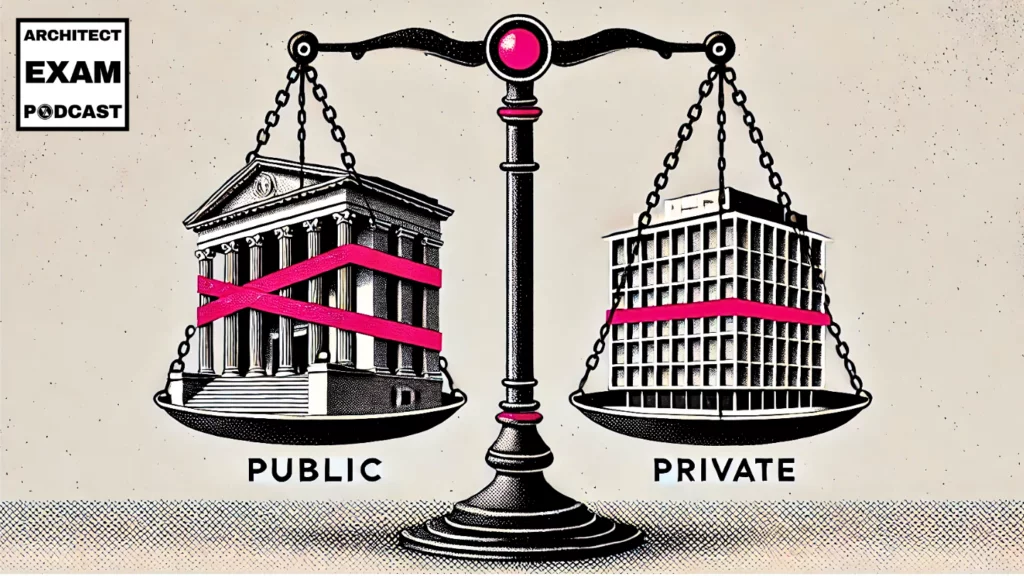
A classical courthouse and a modern office building balanced on a scale, symbolizing the comparison of public works projects vs private construction projects.

Public Works Projects vs Private: 12 Key Differences

Public works projects and private projects follow completely different rules for procurement, contracts, and decision-making. Whether you’re working with government agencies or private architecture clients, understanding these differences changes how you practice. This guide breaks...