
Steven Pressfield’s The War of Art explains why you keep sabotaging your architect exam prep and how to stop. This war of art summary breaks down Pressfield’s concept of Resistance, the invisible force behind your procrastination, self doubt, and fear, and shows you exactly how to beat it on your path to getting licensed.
This podcast is also available on YouTube, Spotify, and Apple Podcasts
Does Any of This Sound Familiar?
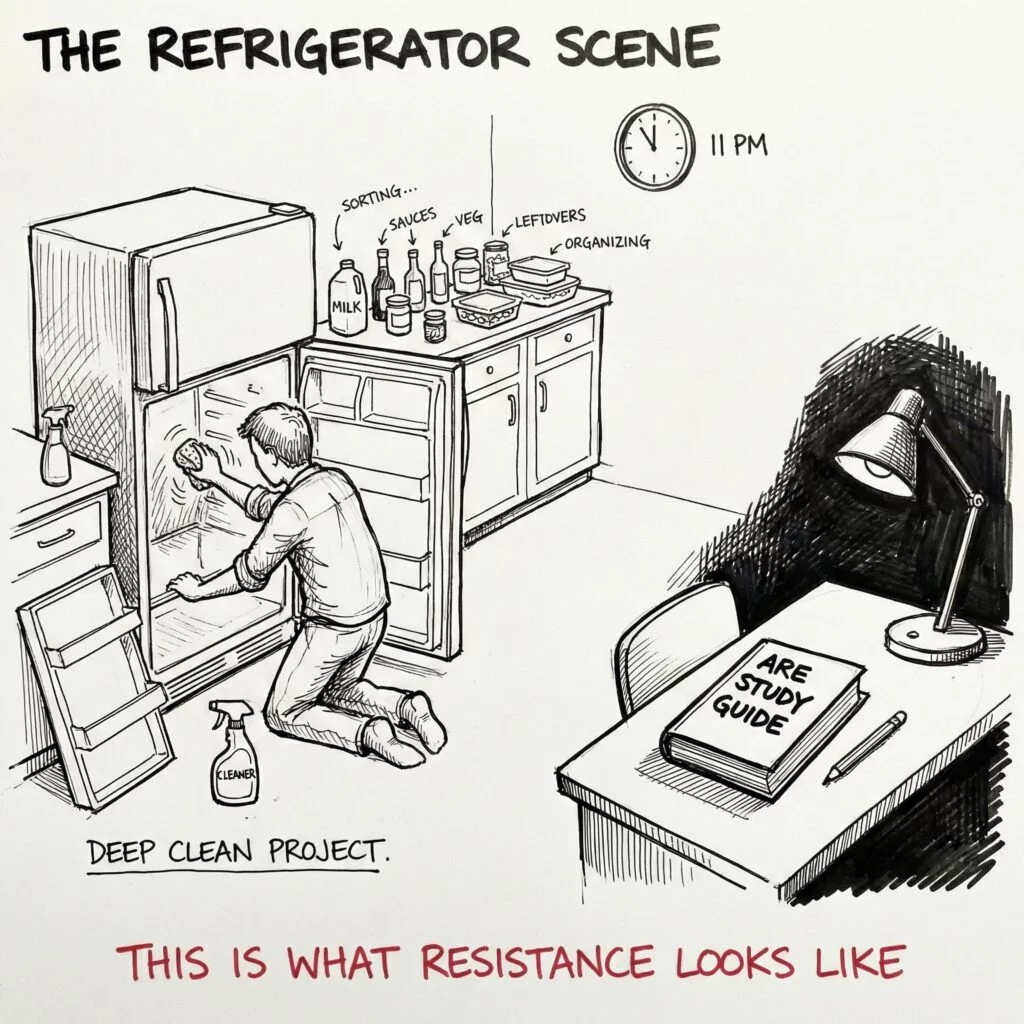
You commit to studying tonight. You sit down, open your laptop, and suddenly your brain decides the refrigerator needs to be cleaned. Like, right now. It feels more urgent than it has any right to.
Or you tell yourself you don’t have the right materials yet.
“Once I get that one study guide everyone’s talking about, then I’ll really be able to study.”
So you spend three hours researching ARE prep materials instead of actually studying.
Or you open your notes and your brain starts talking.
“I barely passed structures in school. Who am I kidding?” So you close the book.
Or you’ve been studying for months but you won’t schedule the exam. You haven’t read every single page yet. You need to be completely prepared first.
So you keep studying. And studying. And never actually taking the test.
If any of these sound like you, here’s what I want you to know.
None of this is a coincidence.
It’s not bad timing.
It’s not you being lazy or undisciplined.
It has a name. It’s called Resistance.
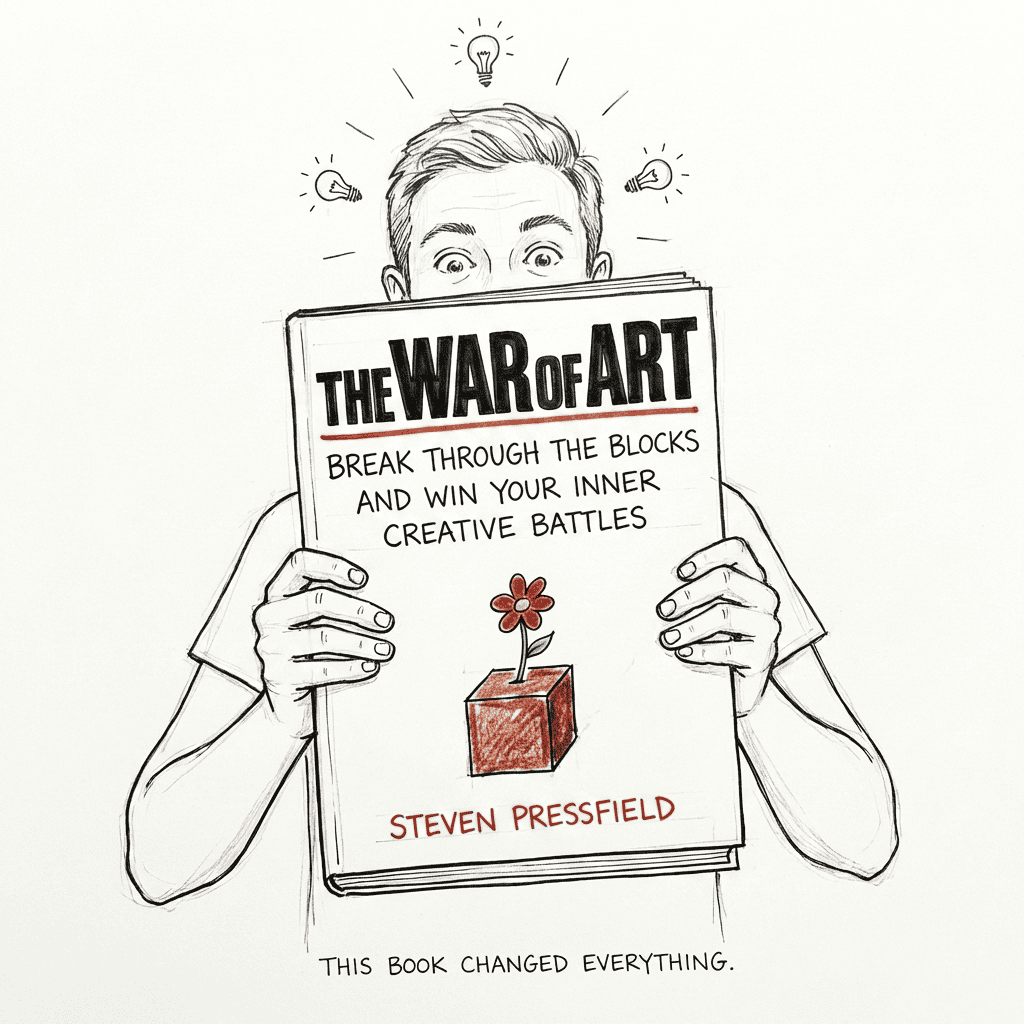
And a book called The War of Art by Steven Pressfield completely changed how I understand it.
The War of Art Summary: What Steven Pressfield Teaches About Resistance
Pressfield wrote The War of Art for artists, writers, and creatives. But it applies to anyone trying to do meaningful, difficult work.
And passing the Architect Registration Examination (ARE)? That qualifies.
The core idea is simple.
There’s an internal force that stops you from doing the work you know you need to do.
Pressfield calls it Resistance.
Resistance isn’t about your schedule being too full or your materials not being good enough. It’s not external. It’s entirely internal.
It lives inside your head, and it has one job: keep you from doing your work.
Here’s what makes Resistance so effective:
- It’s fueled by fear, self doubt, procrastination, and perfectionism
- It gets stronger the more important the work is to your growth
- It never goes away completely
- It can’t be reasoned with or bargained with
- It has no power of its own. All its strength comes from you
“The more important a call or action is to our soul’s evolution, the more Resistance we will feel toward pursuing it.”
Think about that.
Getting licensed is one of the most meaningful goals you’ll ever pursue.
You’ve been working toward this since the day you decided to go to architecture school.
It defines your career, your identity, and your future opportunities.
Of course Resistance is massive.
The difficulty isn’t a sign you should quit. The difficulty is proof that this matters.
My Story: How This Book Changed My Path
I was in special education from third grade through twelfth grade. Severe ADD. I struggled badly with reading and writing. Nobody expected me to go to college.
Somehow I ended up in architecture school. Turns out I was good at everything except reading and writing. A’s in design studios because I genuinely loved architecture and the work involved. I pulled C’s and D’s in everything else.
Then I graduated and started taking the ARE. And I hit a wall. Hard. All the old problems came rushing back.
So I did what a lot of people do.
I quit.
I took about a year and a half off, learned new hobbies and had a very active social life. I did everything except study.
Then I found The War of Art. Something clicked.
It gave me a framework for what had been happening. I wasn’t lazy. I wasn’t stupid. I wasn’t “not cut out for this.”
I’d been losing a battle I didn’t even know I was fighting.
Pressfield calls the solution “turning pro.” And I decided right then to go all in.
After I got licensed, I maintained that same discipline and work ethic. Except instead of studying, I redirected it into building Young Architect. That was 2013.
Here’s why I’m telling you this.
If someone who was in special ed for a decade, who has ADD, who struggled with reading and writing his entire life, can pass the ARE by getting his mindset right, then the technical stuff isn’t your biggest problem.
Your mindset is.
And your mindset is something you can actually change.
Five Ways Resistance Shows Up on the Architect Exam
Self defeating behavior is any pattern where your actions work against your own goals.
You genuinely want to get licensed, but something keeps pulling you away from the work.
Pressfield’s framework gives this a name: Resistance.
It’s not a character flaw. It’s a universal human response to meaningful, difficult work.
Am I self sabotaging? If you’re doing any of these, the answer is probably yes:
- Researching study materials instead of actually studying
- Cleaning the house instead of opening a book
- Scrolling Reddit threads about the ARE instead of doing practice questions
Here are the five specific forms self sabotage takes on the architect exam.
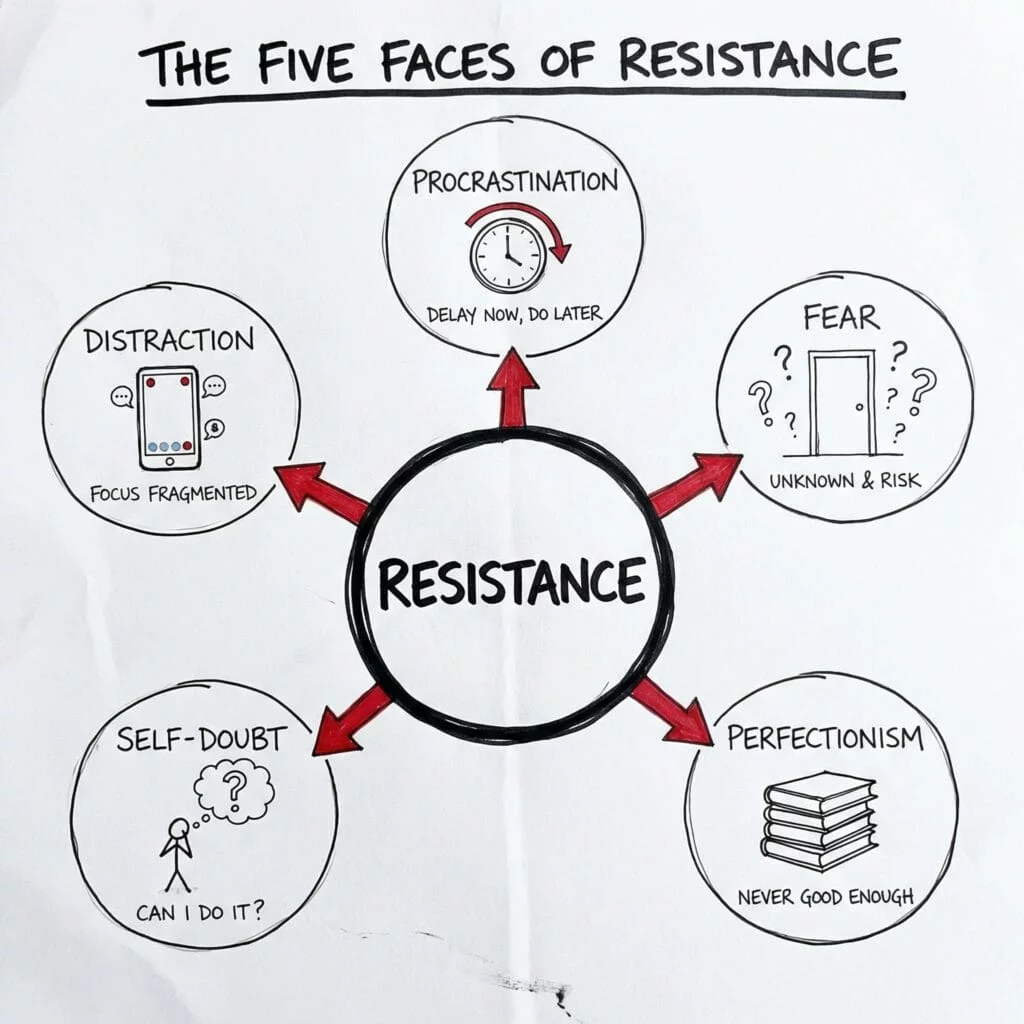
Procrastination Is Not Laziness
Let’s get this straight. Procrastination is not laziness.
Laziness is not caring about the outcome. Procrastination is caring deeply but avoiding the work because of fear.
“I’ll study after this busy season at work ends.”
But there’s always another busy season.
“I’ll wait until summer when I have more time.”
Summer comes and goes.
Pressfield warns that procrastination can become a habit. You don’t just put off studying today. You put it off until it’s too late.
And procrastination is one of the biggest threats to your licensing timeline.
Every time you push the start date back, Resistance gets stronger and you get further from the finish line.
Perfectionism and Procrastination
“I need to read every single page of every study guide before I schedule my exam.”
You’ll never feel perfectly prepared. That’s the trap.
“I’ll take a practice test when I’m more prepared.”
But you’re never more prepared because you never actually test yourself.
This is Resistance disguised as being thorough. Perfectionism and procrastination feed off each other in a loop:
- Impossible standards lead to paralysis
- Paralysis leads to guilt
- Guilt leads to more avoidance
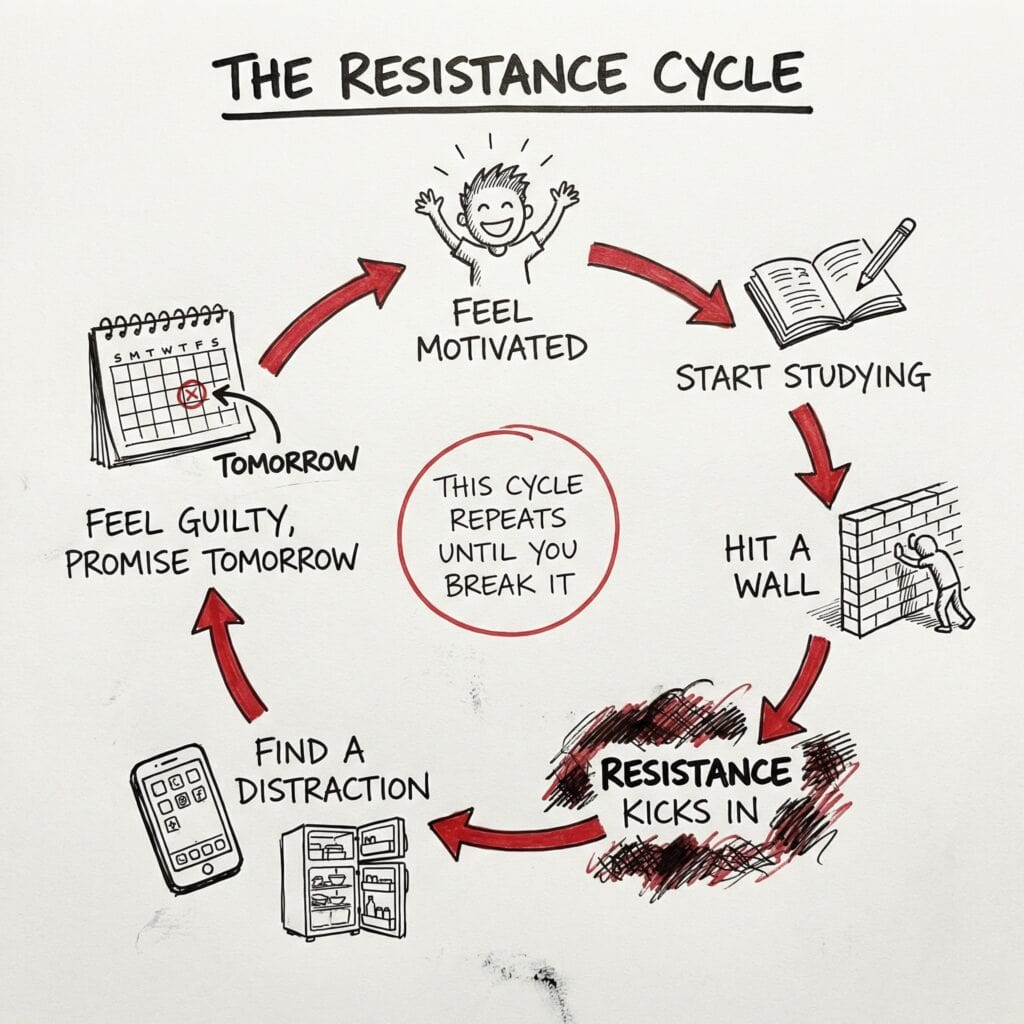
It feels productive. It looks responsible. But it keeps you stuck in the same place for months.
Fear of Failure and Fear of Success
Fear of failure is the obvious one. You failed an exam. The shame is so intense you can’t bring yourself to schedule again.
You tell yourself you’ll study more first. But really you’re just avoiding the possibility of failing again.
If that’s you, here are some strategies for managing test day anxiety that can help you get past that wall.
But fear of success is the sneaky one.
What actually changes if you get licensed? New expectations. More responsibility. A changed identity. People will expect more from you.
Fear of success vs fear of failure leads to the same place: not taking the exam.
Pressfield’s insight nails it. The more important something is to your growth, the more Resistance you’ll feel toward pursuing it. Getting licensed matters enormously. That’s exactly why the fear is so strong.
Self Sabotage Examples on the ARE
Let me get specific. Here are self sabotage examples I see constantly:
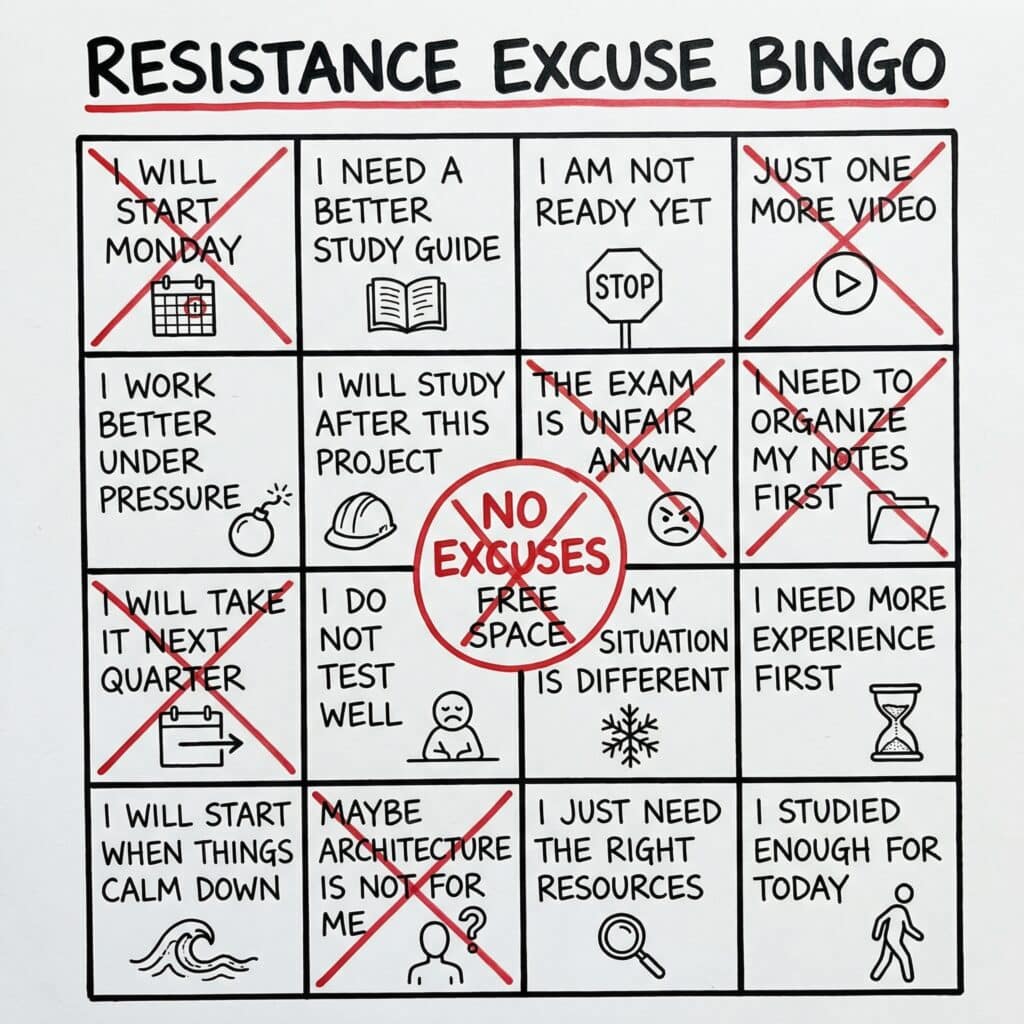
- Not scheduling the exam because you “aren’t ready yet” despite months of study
- Quitting after one failed attempt
- Buying every study guide but never finishing any of them
- Creating drama or emergencies that conveniently prevent studying
- “The exam is too expensive to fail, so I need to wait.” Meanwhile years go by.
Here’s how it works.
Rationalization gives you the excuse. Self doubt gives you the reason to believe it. They tag-team you and you don’t even realize it’s happening.
“I barely passed structures in school. There’s no way I can pass this exam.” So you never even schedule it.
“Other people in my office are smarter than me. They’ll pass but I probably won’t.”
So you wait. And wait. And wait.
Drama, Distraction, and Blame
Work is crazy. Your relationship needs attention. You’re renovating your house. Your kid needs help with school.
These things are real. I’m not dismissing them.
But isn’t it interesting how they all seem to require your immediate attention right when you’re supposed to be studying?
And when distractions aren’t enough, Resistance starts pointing fingers.
“NCARB makes these tests impossible.”
“The pass rates are designed to fail us.”
“My study materials weren’t good enough.”
You might be right about some of that. But as long as you’re focused on everything and everyone else, you don’t have to face your own Resistance.
And that’s exactly where Resistance wants you.
Turning Pro: Discipline vs Motivation
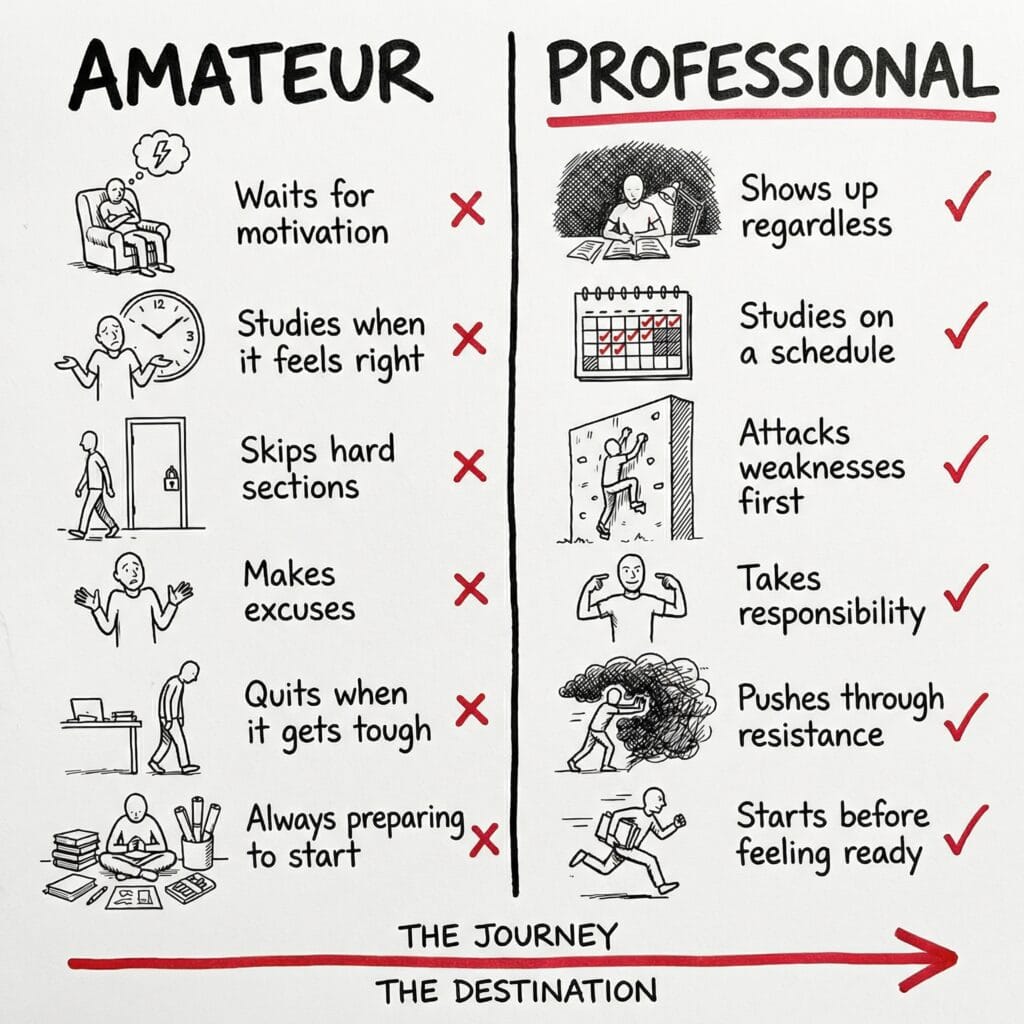
Pressfield’s answer to Resistance is simple but not easy. Stop being an amateur. Turn pro.
The difference between discipline vs motivation is the difference between amateur vs professional:
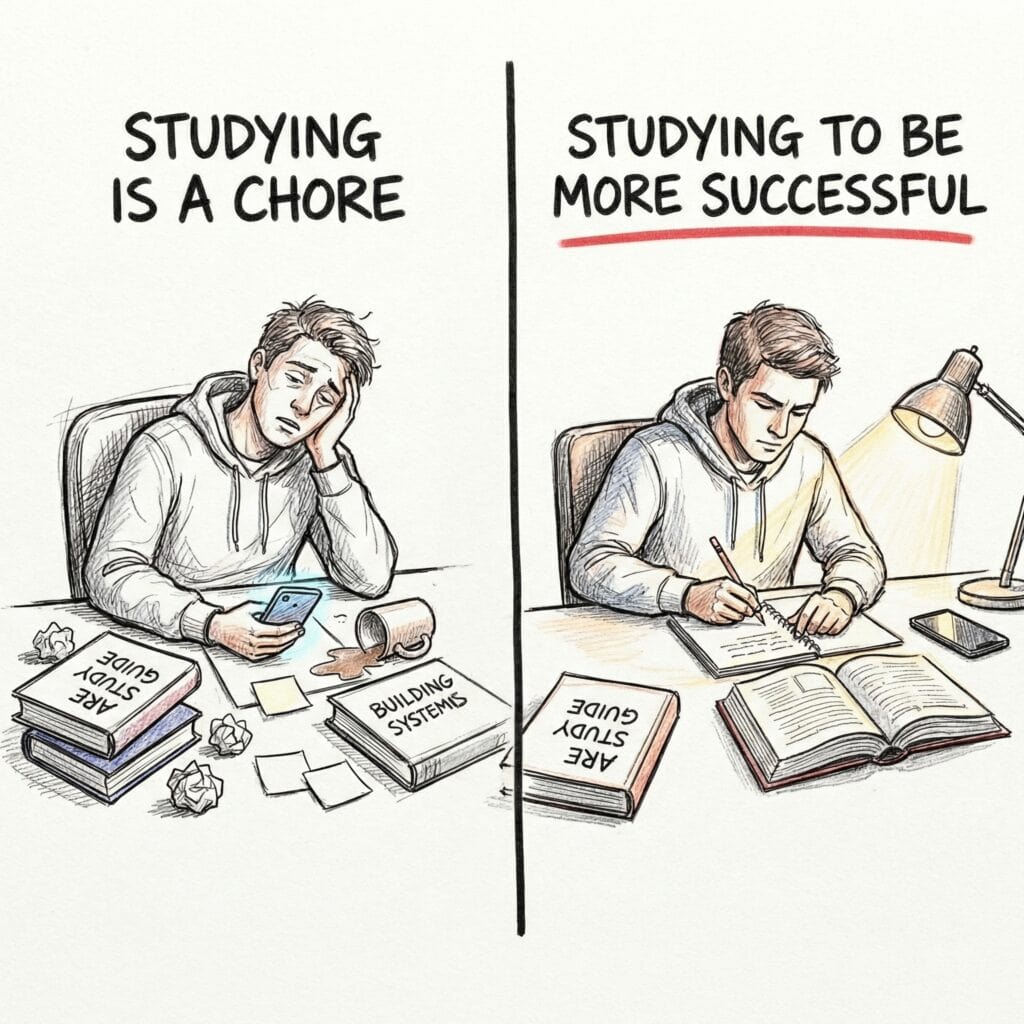
- Amateurs study when inspired. Professionals study on a schedule.
- Amateurs obsess over the outcome. Professionals focus on the work.
- Amateurs expect quick results. Professionals are patient.
- Amateurs make excuses. Professionals accept none.
Motivation is a feeling that comes and goes. Discipline is a decision to show up regardless of how you feel.
That’s the turning pro mindset.
And this shift from amateur to professional is exactly what ARE Boot Camp is built around: structure, accountability, coaching, and a community that holds you to a higher standard than you’d hold yourself.
Show Up Every Day
Thirty minutes a day beats an eight-hour Saturday binge session. Every time.
Consistency vs intensity isn’t even close. The person who studies 30 minutes every single day will beat the person who crams once a week.
Professionals focus on studying well, not on passing.
“Did I put in good study time today? Did I understand this concept?”
Passing the Architect Exam comes as a byproduct of showing up consistently.
The schedule is the strategy.
If you haven’t built one yet, start with building a realistic ARE study schedule and make sure you’re using multiple study methods rather than just rereading the same material.
Show up every day. That’s the exam motivation that actually works.
Do the Work Despite Fear
Fear never goes away. Ever.
“The professional knows that fear can never be overcome. He knows there is no such thing as a fearless warrior or a dread-free artist.”
You’re waiting to feel confident before you schedule your exam. That confidence isn’t coming. Not before the exam. Maybe not even during it.
Schedule the exam even though you’re scared. The deadline forces you to show up. Without a date on the calendar, there’s no urgency, and Resistance thrives in the absence of urgency.
Do it scared.
Don’t Overidentify with Results
You are not your test score.
A failed exam is data. It tells you what to work on. That’s it. It doesn’t define who you are as a person or as an architect.
I failed 4 exams. Emily, Layla, and Lorenzo all failed 4 to 6 exams. We all got licensed. We’re all successful.
Professionals fail and keep going. Failure isn’t the enemy. Giving up is the enemy.
Accept No Excuses and Be Patient
Life is always busy. Work is always demanding. There are always reasons not to study.
Professionals study anyway. Not because they’re superhuman. Because they’ve decided this matters enough to make it happen regardless.
And they don’t expect overnight results. This takes months or years of consistent daily effort. Not two weeks. Not even two months for most people.
“A pro knows that if he caves in today, he’ll be twice as likely to cave in tomorrow.”
Every time you make an excuse, Resistance gets stronger. Every time you show up, you get stronger.
If you haven’t figured out your exam sequence yet, start by choosing the right exam order and understanding what each exam actually tests.
Take action. Make a plan. Schedule the first one.
The War of Art Quotes That Apply to the ARE
Here are some of the best War of Art quotes and how they connect to your architect exam journey.
“The more scared we are of a work or calling, the more sure we can be that we have to do it.”
If the ARE terrifies you, that’s not a sign you’re in the wrong profession. It’s a sign this matters. The fear is pointing you exactly where you need to go.
“The warrior and the artist live by the same code of necessity, which dictates that the battle must be fought anew every day.”
You don’t beat Resistance once and move on. You beat it today. Then you wake up tomorrow and beat it again. That’s why study discipline is a daily practice, not a one-time decision.
“The most pernicious aspect of procrastination is that it can become a habit. We don’t just put off our lives today; we put them off till our deathbed.”
Every month you delay is a month you don’t get back. There’s no “right time” that’s magically going to appear. The right time is when you decide to stop waiting.
“Are you paralyzed with fear? That’s a good sign. Fear is good. Like self-doubt, fear is an indicator.”
Stop waiting to feel ready. Stop waiting to feel confident. The fear isn’t a warning sign. It’s a signal that this work matters. You study and schedule and sit for the exam anyway. That’s what overcoming resistance actually looks like.
Read The War of Art by Steven Pressfield
Go read this book. It’s short. You can finish it in a few hours.
You can get The War of Art by Steven Pressfield in hardcover, ebook, or audiobook. I personally listen to the audiobook every year or two to recenter myself and reconnect with the professional mindset that got me through the exams and built this business.
If you want to go deeper, check out Do the Work, Pressfield’s follow-up book that serves as a companion guide. Same principles, more practical application.
You can also explore more of Pressfield’s writing at Steven Pressfield’s website.
But here’s the thing. Reading the book won’t pass your exam. Doing the work will.
Recognize Resistance. Then Beat It.
The next time Resistance shows up, and it will, probably tomorrow when you’re supposed to study, I want you to recognize it for what it is.
It’ll say “I’m too tired today. I’ll study tomorrow.”
And you’re going to say “That’s Resistance. I’m studying anyway.”
It’ll say “I’m not ready to schedule this exam yet.”
And you’re going to say “That’s Resistance lying to me. I’m scheduling it this week.”
It’ll say “I failed once so I’m probably going to fail again.”
And you’re going to say “That’s Resistance using my past against me. I’m signing up to retake it.”
You’re not alone in this fight. Every architect who came before you faced the same enemy. Every one of them heard the same lies. Every one of them felt the same fear.
And they won by showing up, doing the work, and refusing to quit.
If you’re ready to stop fighting this battle alone and want the support of a coach and a community that won’t let you quit, check out ARE Boot Camp.
And if you want to start studying on your own right now, the ARE 101 Membership gives you access to every course we offer, month-to-month, cancel anytime.
Go read The War of Art. Then go do your work.
What is The War of Art about?
The War of Art by Steven Pressfield is about an invisible force called Resistance that prevents people from doing meaningful, difficult work. The book explains how procrastination, fear, self doubt, and perfectionism are all forms of Resistance, and the solution is to “turn pro” by showing up consistently and doing the work regardless of how you feel.
What is self defeating behavior?
Self defeating behavior is any pattern where your actions work against your own goals. Common examples include procrastinating on important tasks, making excuses to avoid challenging work, and quitting after a setback instead of trying again. Steven Pressfield calls this force Resistance in The War of Art, and it shows up any time you’re trying to do something that matters.
Is procrastination the same as laziness?
No. Procrastination is not laziness. Laziness is not caring about the outcome. Procrastination is caring deeply but avoiding the work because of fear, perfectionism, or self doubt. Steven Pressfield describes this as Resistance in The War of Art. You are not lazy for procrastinating on something important. You are experiencing a normal human response to meaningful, difficult work.
What is the difference between discipline and motivation?
Motivation is a feeling that comes and goes. Discipline is a decision to show up regardless of how you feel. Steven Pressfield calls this “turning pro” in The War of Art. Professionals do not wait to feel motivated. They follow a schedule and do the work whether they feel like it or not. For exam preparation, discipline beats motivation every time because consistency produces results.
What is fear of success?
Fear of success is the hidden worry about what changes if you actually achieve your goal. While fear of failure is obvious, fear of success is harder to recognize. Getting licensed means new expectations, more responsibility, and a changed identity. Steven Pressfield writes that the more important something is to your growth, the more Resistance you will feel toward pursuing it.
Am I self sabotaging my exam preparation?
If you keep finding reasons to delay scheduling your exam, research study materials instead of actually studying, tell yourself you are not ready yet despite months of preparation, or quit after a failed attempt, you are likely experiencing self sabotage. Steven Pressfield calls this Resistance. Recognizing it is the first step to overcoming it.